Affenpinscher
Equal parts comedian and head of security.
In February 2013, a five-year-old Affenpinscher named Banana Joe stood in the ring at Madison Square Garden — all ten pounds of him — and won Best in Show at Westminster, the first of his breed ever to do it. The judge said he was “on” from the minute he walked in. Then he retired, as champions do, and flew home to the Netherlands. No one who knows an Affenpinscher was surprised by any of it. This is a small dog with no working theory of their own smallness — a wiry, bearded companion who assumes, reasonably, that the room was already theirs.


Living very large
Start with the names, because the names are a character study. The Germans called them the Affenpinscher — monkey terrier — for that flat, whiskered, almost-human face. The French went further: diablotin moustachu, the mustached little devil. The internet, four centuries later, settled on Ewok. The AKC calls them “fearless out of all proportion to his size,” which may be the most honest sentence in the registry — breed lore includes a dog who faced down a rat nearly its own size, and another said to have run off a grizzly bear.
Living with one is mostly a comedy, with occasional drama. Affens bond hard to their people and install themselves at the center of household operations — supervising dinner, auditing the mail. They are affectionate on their own terms, bore easily, and treat commands as opening offers; left under-occupied, they will invent projects you did not approve. They suit an apartment as well as a farmhouse, provided the building understands who runs security. The tousled little face at the door is not asking to be part of your life. They are presiding over it.
Keeping one happy
Grooming
The rough, wiry coat wants brushing twice a week — brush first, then a metal comb — with a facial trim every few months. Shedding is famously light. Resist over-styling: the standard calls for a neat but shaggy appearance, and the bed-head is the breed. Nails, ears, and teeth on the usual schedule.
Training
Smart, willing, and completely uninterested in repetition. Keep sessions short, frequent, and framed as games they are winning; positive reinforcement beats pressure every time. Housetraining can take patience. Socialize early — that outsized confidence is easier to steer once the world stops being a surprise to them.
Exercise
Moderate, honestly. A brisk walk or two a day plus real indoor play covers the body; puzzle toys and new tricks cover the mind, which is the part that gets them into trouble. Affens are companions first — happiest when the activity, whatever it is, includes you.
Diet
A high-quality food matched to their life stage is the whole program, portioned carefully — on a dog this size, a few extra treats add up fast. Fresh water, always. If you are tempted by home cooking, talk to your vet first; small dogs run on small margins.
From the stable floor to the sofa
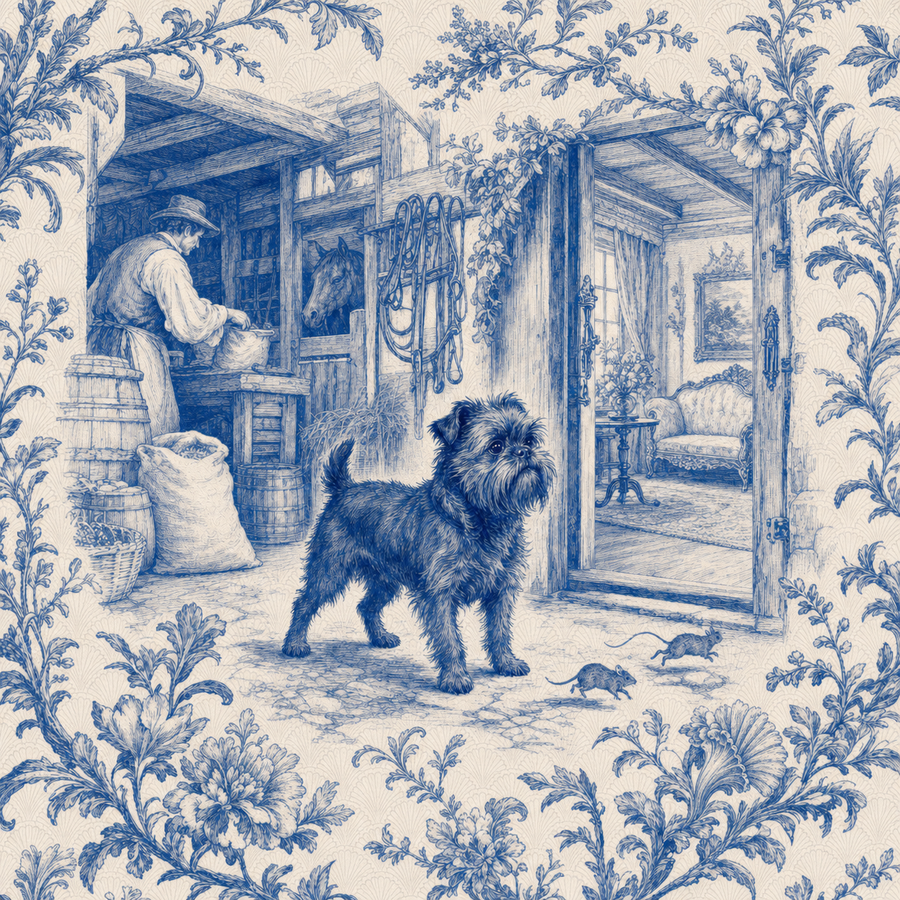
The Affenpinscher earned a living in seventeenth-century Germany as a ratter, clearing vermin from stables, shops, and kitchens. The talented ones charmed their way indoors, off the clock, and became companions — first to shopkeepers, then to ladies of the house, eventually to anyone with a warm lap. The first American litter arrived in 1935; AKC recognition followed in 1936.
Questions, answered
Does the Affenpinscher shed much?
Not much — the wiry coat is a light shedder, so brushing is mostly about keeping it healthy and tidy.
Is the Affenpinscher hypoallergenic?
It’s often a good choice for allergy-sensitive homes, though no dog is truly 100% hypoallergenic.
Are they good with kids?
Better with respectful older kids. Affens don’t love rough handling or having their things tested — supervise around little ones.
How long do they live?
Typically 12–15 years with good care — a long run for a very small dog.