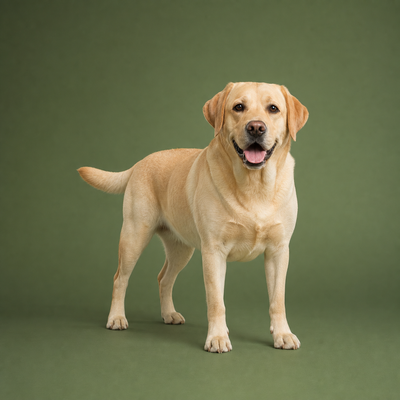
Golden Retriever
Few dogs give themselves away as completely as a Golden.
When Gerald Ford wanted to end a meeting politely, he had a system: a silent signal to Liberty, his Golden Retriever, who would rise from her spot in the Oval Office and go make friends with the visitor — and just like that, the conversation found its natural exit. Liberty answered her fan mail with a rubber stamp of her paw, and in 1975 she delivered a litter of puppies in the White House itself. It was typecasting, honestly. The Golden Retriever has spent a century as America’s designated welcome committee: patient, biddable, and constitutionally glad you came.

Goldens we love
Born to mingle
Goldens are outgoing by nature and want, more than anything, to make you happy. They read a room, lean into a crowd, and treat every visitor as a friend they simply haven’t fetched a ball for yet. That easy warmth — paired with a moderate size and a level head — is what makes them such steady family dogs. They’re clever, too. Bred to retrieve game without a mark on it, they carry things gently and learn quickly — which is why Goldens work as guide dogs, therapy dogs, and search-and-rescue partners.
The famous softness is real, but don’t mistake it for low maintenance. A Golden is a sporting dog with a sporting dog’s engine: they need genuine daily exercise, something to carry, and a family that includes them in everything, because being left out is the one thing they cannot process. Expect hair — on the couch, in the car, occasionally in dinner — and expect adolescence to last a while. Mostly, though, they’ll just make you laugh: a dog built for work whose favorite job, by a wide margin, is you.
Keeping one happy
Grooming
A medium-length double coat that sheds year-round, with two bigger seasonal sheds in spring and fall. Brush every one to three days — more during a blowout — paying attention to the feathering behind the ears, elbows, and hind legs where mats form. Rinse after swims and keep the ears dry to head off trouble.
Training
Quick, willing learners who thrive on positive reinforcement — treats, toys, and praise. Their soft-mouthed retrieving instinct makes them a joy to teach; lean into games that give them a job. Keep it kind and keep it fun, and let the goofiness be part of the deal.
Exercise
A Golden needs real physical and mental exercise, and they’d always rather do it with you than alone. Fetch, swimming, long walks, scent games, and puzzle toys all fit the bill. A tired Golden is a happy Golden — and a calmer one at home.
Diet
Feed a complete, balanced food matched to their life stage, and keep an eye on weight — Goldens love to eat. If you notice itchy skin or a lot of licking, talk to your vet about possible food sensitivities.
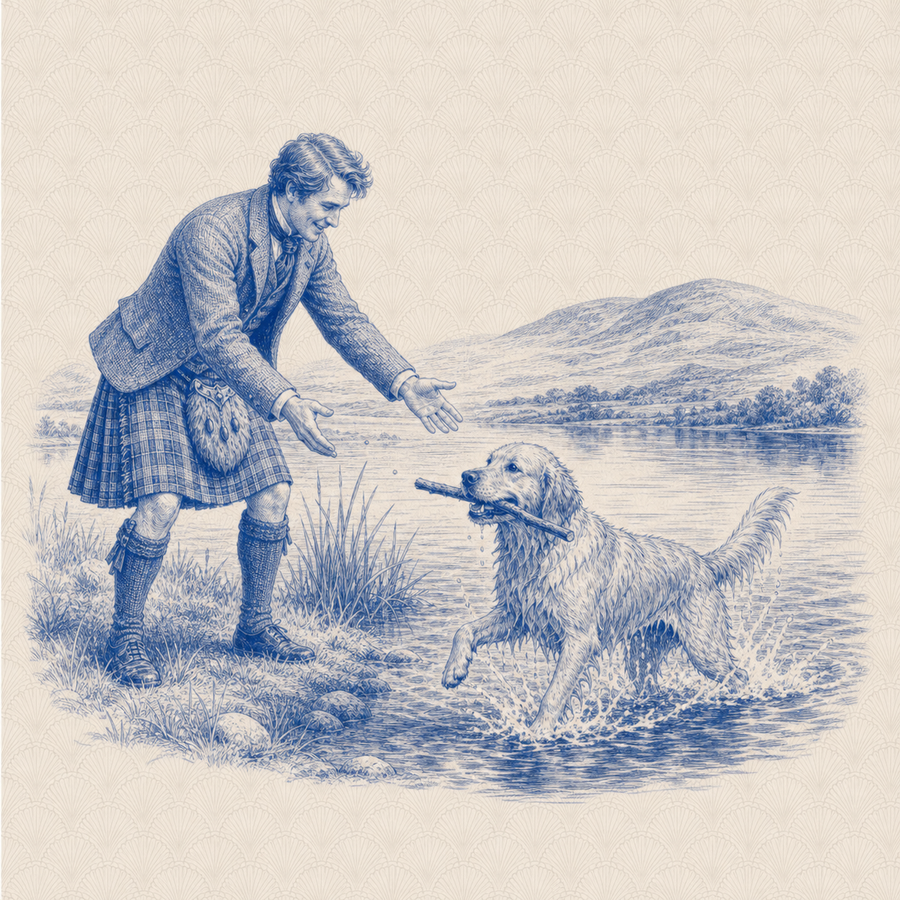
From a Scottish highland estate
The breed was shaped in the 1860s by Lord Tweedmouth, who crossed a Yellow Retriever with the now-extinct Tweed Water Spaniel to make a dog that could retrieve on land and water alike. Goldens reached America by the early 1900s and were recognized by the AKC in 1925 — and have been at the center of family life ever since.
Questions, answered
Do Golden Retrievers shed a lot?
Yes — they’re heavy shedders with two big seasonal sheds a year. Regular brushing keeps it manageable and your floors a little clearer.
Are they hypoallergenic?
No. Goldens are not considered hypoallergenic, so they aren’t the best match if someone in the home is allergic to dander.
Are there different “types” of Golden?
Not really. English cream, Canadian, and American Goldens are all simply Golden Retrievers — the differences in shade and build come from breeding for particular traits.
How long do Goldens live?
Typically 10–12 years, though a healthy, well-kept dog can reach 13 or 14.