Poodle
The haircut was work gear all along.
In the autumn of 1960, John Steinbeck outfitted a pickup camper he named Rocinante, after Don Quixote’s horse, and drove ten thousand miles around America to take the country’s temperature. He brought exactly one companion: Charley, his wife’s ten-year-old standard poodle. “Travels with Charley” (1962) made the dog a figure of American letters — Charley the diplomat, deployed to open conversations with strangers, the book’s other main character and frequently its wiser one. A Nobel laureate, choosing one traveling partner for a portrait of a nation, picked a poodle. He knew something the stereotype forgot.
The brains under the topiary
What the stereotype forgot is that this is a German duck dog. The name comes from pudel, from a word meaning to splash — the breed was a working water retriever, and even the notorious haircut began as gear: hunters sheared the body to lighten the swim and left wool over the chest and joints against cold water. The French adored the dog into a national symbol, and by the eighteenth century poodles were headlining circuses — because along with the athlete came the sharpest learning curve in dogdom.
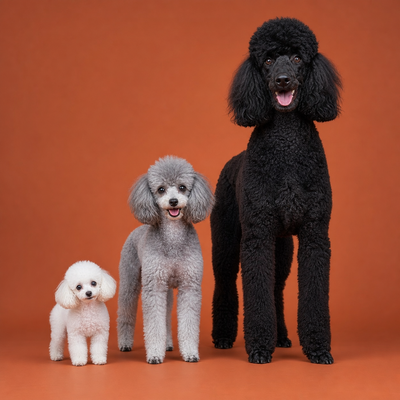
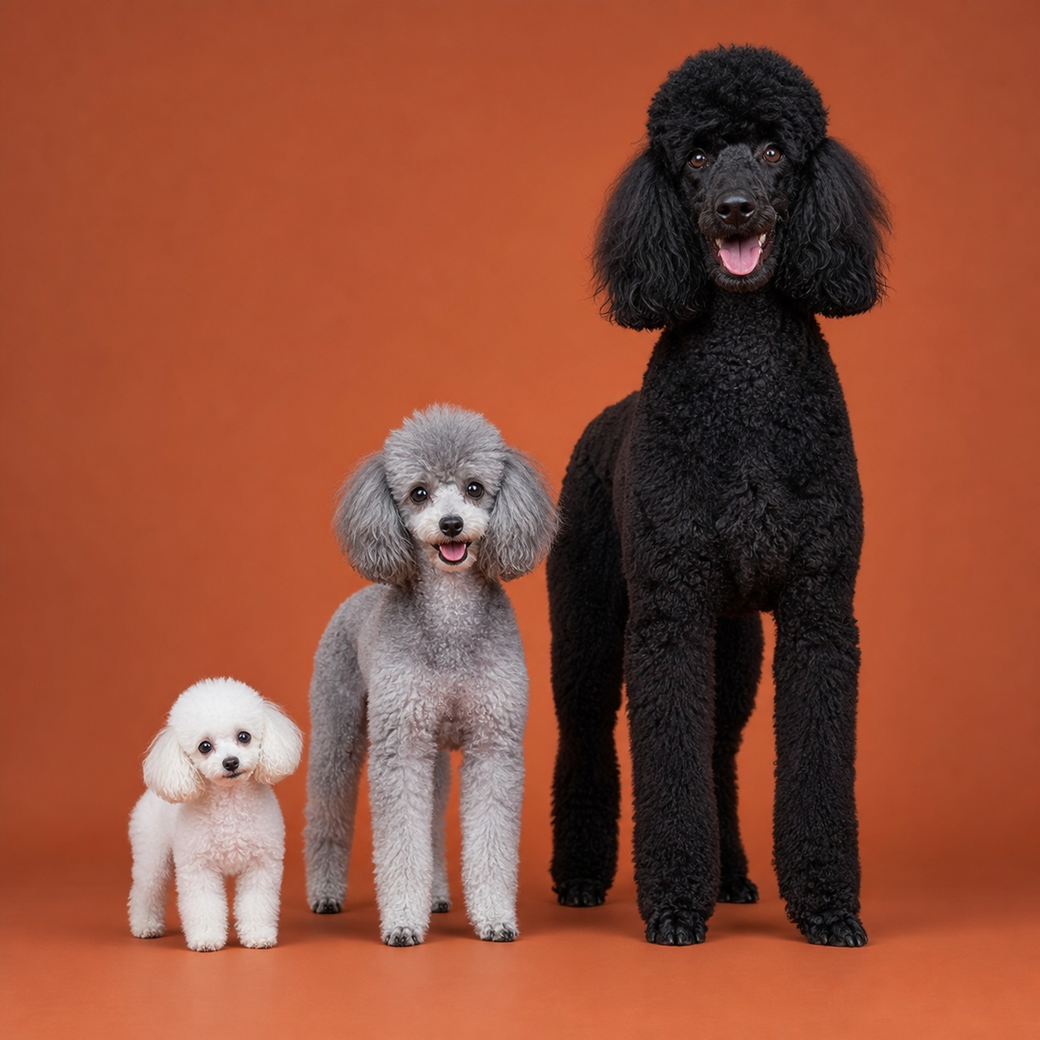
Living with one means staying interesting. Poodles are ranked among the most intelligent of all breeds, and the intelligence is not decorative: an unemployed poodle invents work, and you may not approve the projects. They are athletic, funny, deeply people-oriented, and touchy about being left out. The coat barely sheds but grows relentlessly — grooming is a standing appointment, not a suggestion. Three sizes offer the same dog at different volumes. Give them jobs, games, and inclusion, and there is no more capable companion in the catalog.
Keeping one happy
Grooming
The curly coat sheds little and grows always: brush to the skin every day or two to prevent mats, with a full clip every four to six weeks. Skip the show trims — a plain sporting clip is what most working owners use. The ears need regular checks and plucked-hair upkeep.
Training
The famous student: poodles learn nearly anything, quickly, and enjoy the process — obedience, agility, retrieving, scent work, tricks invented to amuse you. The obligation runs the other way: keep it varied and fair, because they notice everything, including your mood. Boredom, not defiance, is the only training problem they have.
Exercise
An hour or so daily, with variety: walks, fetch, and — for the breed that invented the job — swimming, which they take to like the retrievers they are. Standards need the most, toys the least, and every size needs mental work besides. A tired poodle is a philosopher; a bored one is a contractor.
Diet
Measured meals twice a day, portioned to the size in question — a toy and a standard live on very different rations. Standards are deep-chested and carry real bloat risk: calm mealtimes, no hard exercise right after eating, and know the emergency signs. Keep every size lean and athletic.
Germany’s retriever, France’s icon
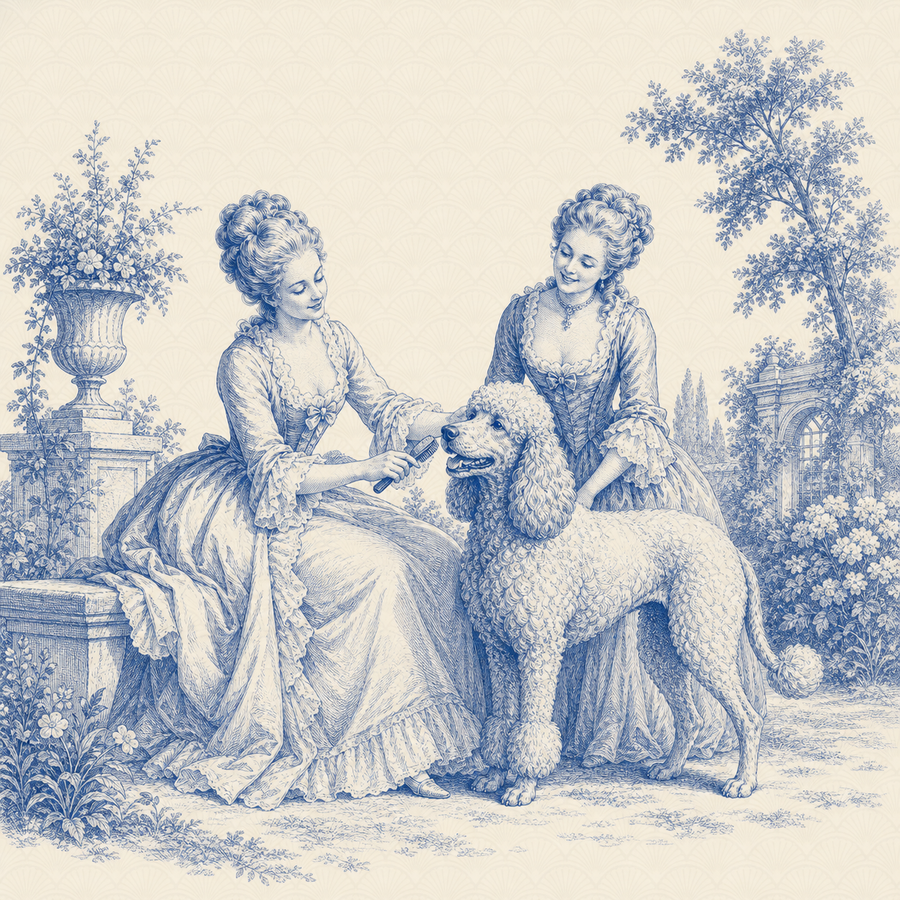
A water retriever of medieval Germany, fetching ducks from cold marshes, the poodle crossed into France and became an institution — eventually the national dog, bred down over time into miniature and toy sizes with the standard’s temperament intact. The AKC recognized the breed in 1887. The wig-and-ribbon reputation is French fashion history; the dog underneath has always been a working athlete.
Questions, answered
Are Poodles hypoallergenic?
The famously low-shedding coat makes them one of the better choices for allergy-sensitive homes — but no dog is truly 100% hypoallergenic. Spend time with one first.
What sizes do Poodles come in?
Three: standard (over 15 inches), miniature, and toy — the same breed and temperament at different scales, per the AKC.
Are Poodles good family dogs?
Among the best — smart, playful, gentle, and durable, with the standard especially patient with kids. The requirement is engagement; a bored poodle freelances.
Do Poodles need haircuts?
Yes — the coat grows continuously and mats without care, so plan on clipping every four to six weeks plus brushing between. Low shedding, high maintenance.