French Bulldog
A big-city dog in a small, unbothered body.
In 1897, Henri de Toulouse-Lautrec painted a French Bulldog named Bouboule — the house dog of Madame Palmyre, proprietress of the Montmartre café La Souris. It is the breed’s whole biography in one image: a Paris establishment, a slightly imperious little dog who plainly belongs there, and an artist who found the face worth studying. Frenchies have been café society ever since — the dog of shopkeepers, artists, and people who like their company close and their walks short. A century on, the address book has changed from Montmartre to everywhere. The self-possession never did.
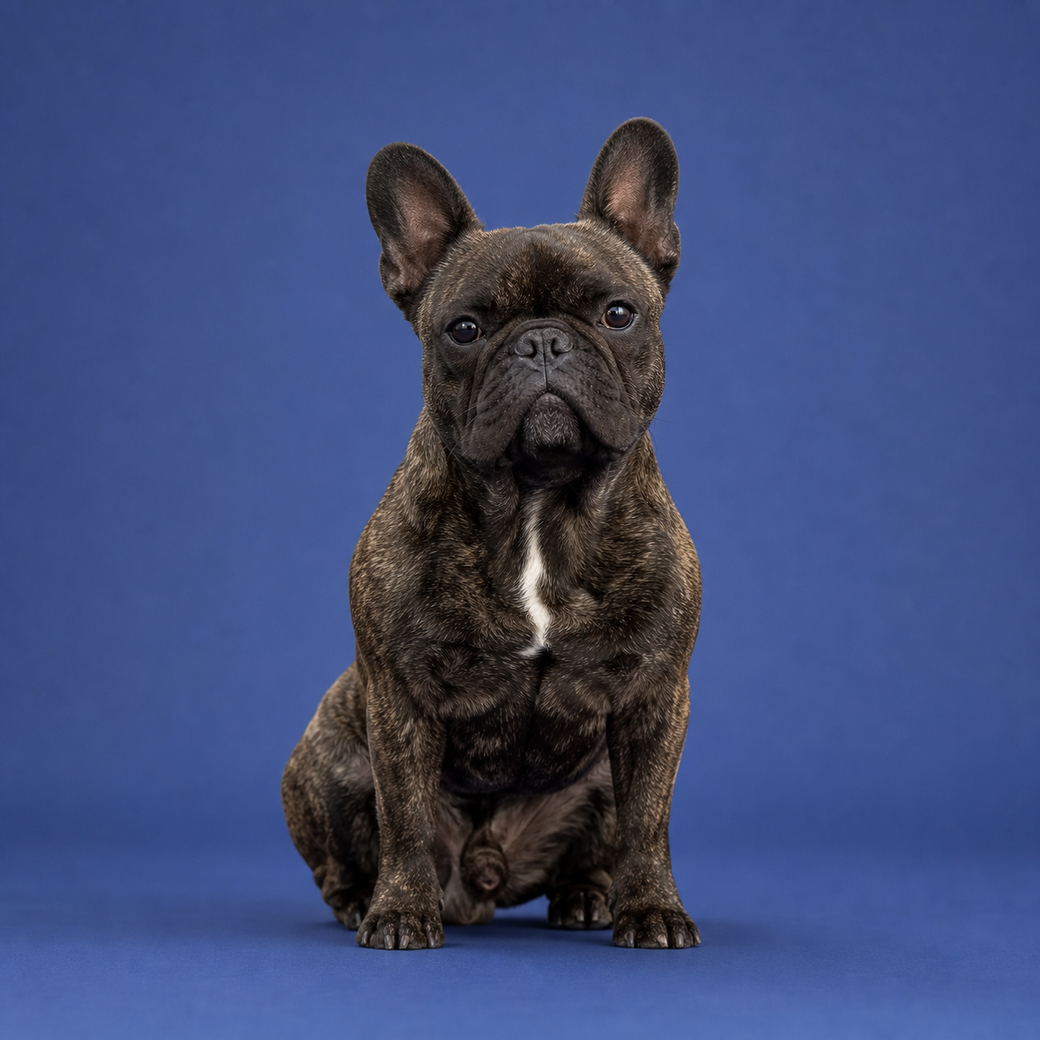
French Bulldogs we love
Charming, and knows it
Frenchies are affectionate, alert, and endlessly entertaining — clowns who want to be wherever you are. They bark little, adapt to small spaces beautifully, and would happily spend the whole evening pressed against your leg on the sofa. The bat ears and the flat, thoughtful face do half the talking; the rest is a repertoire of sighs, snorts, and theatrical flops that owners learn to read like a second language. Bred purely for companionship, they took the job seriously and have never once filed for a transfer.
That devotion has a flip side: they do not do well left alone for long, and a stubborn streak means training takes patience and a sense of humor. The flat face carries real responsibilities too — heat is a genuine hazard, hard exercise is off the menu, and most Frenchies cannot swim, so pools are fenced territory. None of this is fine print; it is the owner’s half of the deal. Keep them cool, keep them company, and a Frenchie repays it with a decade of very good seats at the café.
Keeping one happy
Grooming
The short, fine coat is genuinely wash-and-go and sheds only lightly. The real work is the face: wipe and dry the skin folds regularly to keep them clean, and dry the ears and tail pocket well. A weekly once-over keeps everything comfortable.
Training
Smart but proudly stubborn, Frenchies respond best to short, upbeat, food-motivated sessions. Keep it playful and consistent, start socializing early, and don’t expect drilling to hold their interest — they’d rather make you laugh than take orders.
Exercise
A couple of short walks and some indoor play is plenty — this is not a distance dog. Crucially, avoid heat and overexertion: as a flat-faced breed they overheat fast and breathe hard, so keep activity cool and easy.
Diet
On a small frame, extra weight comes on quickly and adds strain to breathing and joints. Feed measured, balanced meals, keep treats modest, and ask your vet about the right food and portions for your dog.
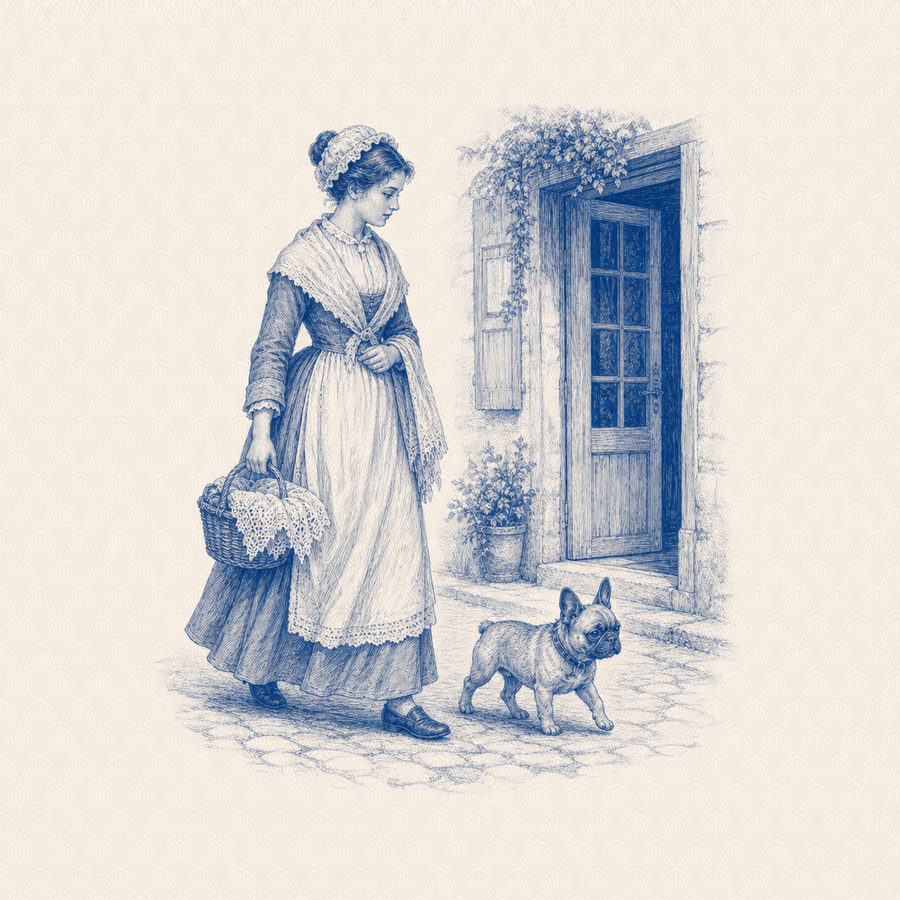
From Nottingham lace to Paris cafés
The French Bulldog descends from toy bulldogs carried to France by English lace workers during the Industrial Revolution. In Paris they were embraced by shopkeepers, artists, and the demimonde, and the distinctive “bat ear” was fixed by fanciers there. The AKC recognized the breed in 1898, and it has been a city favorite ever since.
Questions, answered
Can French Bulldogs swim?
Most can’t — a heavy front, short legs, and flat face make swimming dangerous. Never leave a Frenchie unsupervised near pools or open water.
Are they sensitive to heat?
Very. As a flat-faced (brachycephalic) breed they overheat and struggle to breathe in hot weather, so keep exercise cool and easy and never leave them in a warm car.
Do they bark a lot?
No — Frenchies are generally quiet and are one of the better-suited breeds for apartment living.
How long do French Bulldogs live?
Typically 10–12 years. Keeping them lean and cool goes a long way toward a comfortable life.