Afghan Hound
Glamour, with a hunting engine underneath.
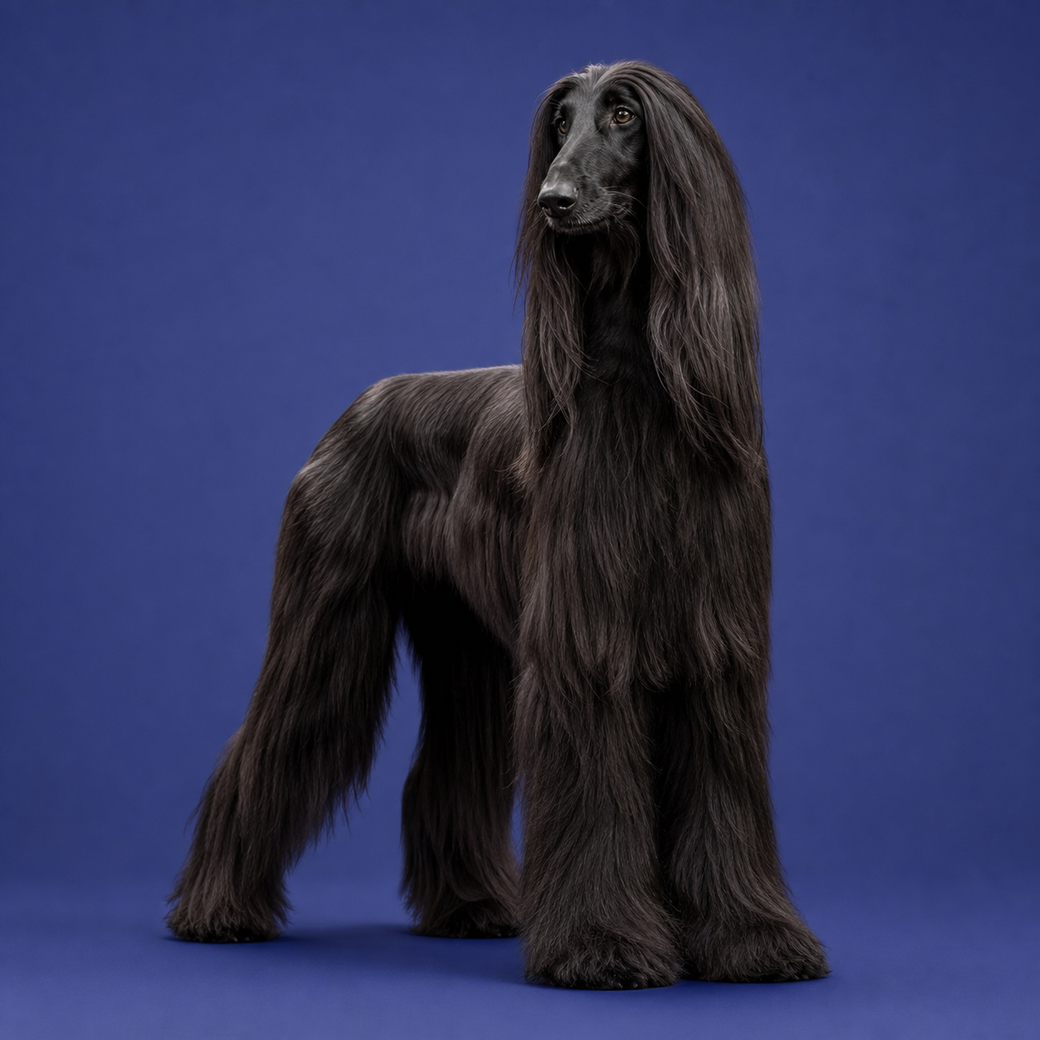
Pablo Picasso, who could have any beautiful thing he wanted, chose an Afghan Hound. Kaboul — named for the Afghan capital — arrived around 1960 and stayed to the end, turning up in Picasso’s portraits of his wife Jacqueline, that long nose slipping into the frame of art history. It makes sense. The Afghan is the most painterly of dogs: a silk coat over a greyhound’s architecture, an expression that suggests they are thinking about something older than you. Afghans were bred to hunt in high mountain country. The elegance was never the point. It just happened.
Independent, by design
Science, oddly, agrees that this dog is singular. When Seoul researchers produced the world’s first cloned dog in 2005, the animal they copied was an Afghan Hound — Snuppy, named by Time magazine the invention of the year. Yet the breed resists duplication in every way that matters. Afghans rank dead last in the famous obedience-intelligence tables, a statistic their people cite with something close to pride, because obedience measures the wrong thing: this is a sighthound bred to hunt beyond earshot, making its own decisions at full sprint.
At home they are quiet, watchful, and surprisingly silly — the dignified profile dissolves into clowning once they trust you. Affection arrives on their schedule, like a cat’s, and lands harder for it. What they require is running: real, flat-out sprinting in a fenced space, because a jogging human is not exercise to an Afghan, and an interesting squirrel outranks any command ever given. Never off leash in open country. Give them their gallop and their grooming hours, and they give you years of quiet, ornamental company.
Keeping one happy
Grooming
That coat is a commitment: long, fine, and quick to mat. Bathe first, then brush — working a dry, dirty coat breaks the hair — with a pin brush and real patience, weekly at minimum. The teenage coat change around a year old is the hard season. No clipping; the length is the breed.
Training
Independent is the polite word. Afghans learn quickly and comply selectively, so keep sessions short, novel, and worth their while — food helps, variety helps more. Skip the drilling; they see through repetition. Recall is never trustworthy against prey, which is a management problem, not a training failure.
Exercise
A sprinter, not a jogger. They need regular chances to run flat out — a fenced field, a lure course — plus daily walks for the in-between. Six-foot fencing is not optional; Afghans jump, and they bolt after movement. Once emptied, they are champion nappers.
Diet
Lean by design — you should feel ribs easily. Feed measured meals twice a day, and because deep-chested breeds carry a bloat risk, keep mealtimes calm and skip hard running right after eating. They are rarely greedy; picky eating is the far more common complaint.
Out of the high country
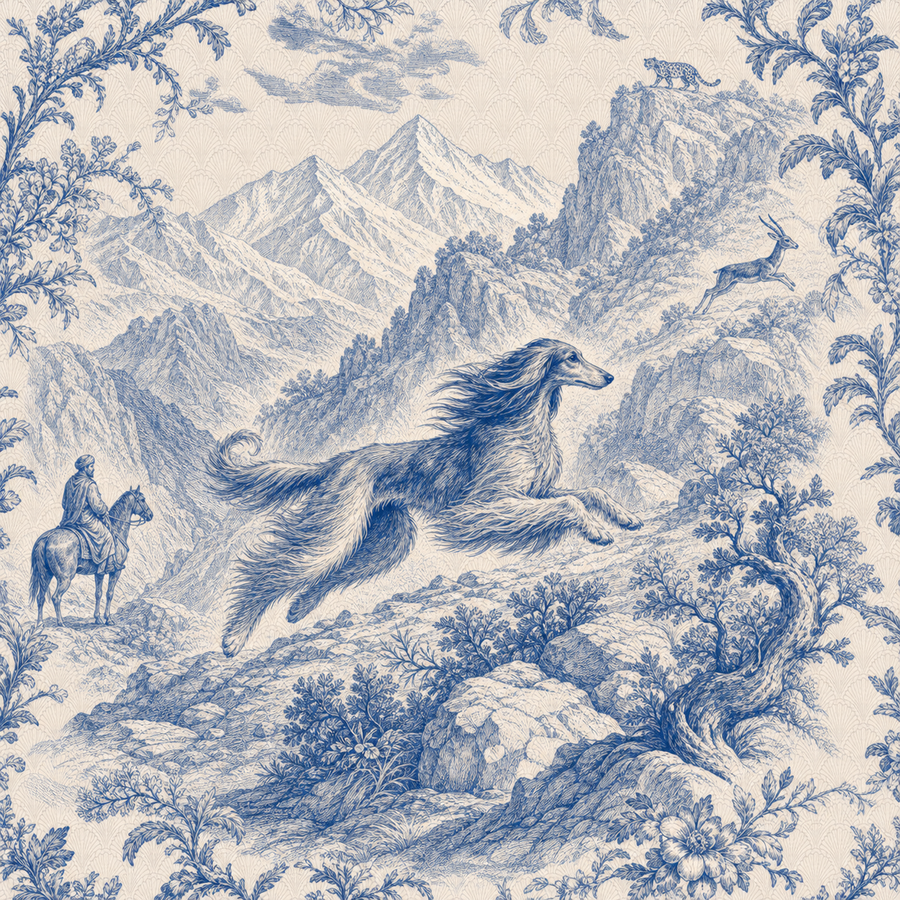
An ancient sighthound of Afghanistan and the surrounding mountains, bred to course gazelle — and, by long tradition, snow leopard — over ground no horse could manage. British officers carried the dogs home as living souvenirs; one named Zardin caused a sensation in Edwardian London, and the first breed standard followed in 1912. The AKC recognized the breed in 1926.
Questions, answered
Do Afghan Hounds shed a lot?
Less than the coat suggests — the work is mats and tangles, not hair on the floor. Life with an Afghan is measured in brushing hours, not vacuuming.
Are they hypoallergenic?
Despite the silky coat’s reputation, no — no dog is reliably hypoallergenic, and the Afghan is not an exception.
Are they good with kids and cats?
Gentle but reserved, and better with calm older kids. The prey drive makes cats and small pets a genuine risk.
Can an Afghan go off leash?
No. Recall loses to prey drive every time — fenced runs and lure courses are the safe outlets.