Akita
Loyalty, as a matter of national record.
Every afternoon, an Akita named Hachikō walked to Tokyo’s Shibuya Station to meet his owner’s train. When Professor Ueno died suddenly at work in 1925, Hachikō kept coming — through nine years of winters — until his own death. Japan raised a statue to him while he was still alive; commuters had watched him wait. Today that statue is the most famous meeting spot in Tokyo, and the breed he stood for has become shorthand, at home and everywhere else, for a very specific promise: an Akita does not change their mind about you.
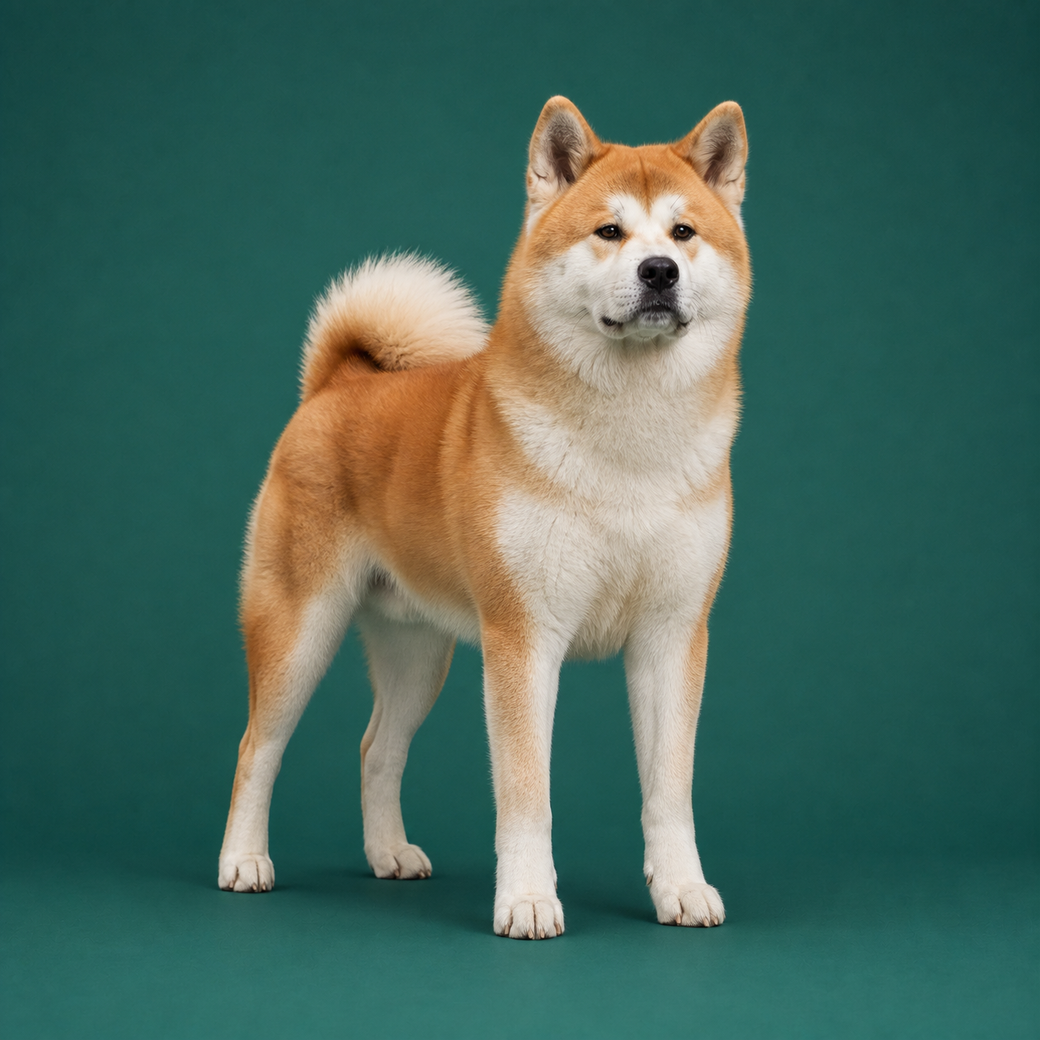
Devotion, strictly rationed
Helen Keller heard Hachikō’s story on a 1937 visit to Japan and asked, more or less on the spot, for a dog like that. She sailed home with Kamikaze-go, the first Akita in America, and when he died young, the Japanese government sent his older brother as an official gift — a dog as diplomacy. The breed carries itself accordingly. Bred by Matagi hunters in the snow country of northern Japan to track and hold bear, the Akita is large, silent, and burdened with dignity.
The reserve is the thing to understand before you fall for the fluff. An Akita loves their family completely and sees no reason to extend the offer; guests are tolerated, and other dogs — especially of the same sex — often are not. They are clean, quiet, almost catlike in the house, and they require an owner willing to be politely, endlessly consistent. This is not a first dog. For the right person, the exchange rate is extraordinary: the entire allegiance of an animal who does not give it lightly.
Keeping one happy
Grooming
A dense double coat that needs a weekly brush most of the year and daily attention during the two great seasonal blows, when the undercoat leaves in drifts. No trimming needed — just commitment to the brush and a good vacuum. They handle the rest themselves; Akitas groom like cats.
Training
Start socializing early and never quite stop — their instinct is to issue their own rulings on strangers and dogs. Train with calm consistency and genuine rewards; harshness breeds resistance in a dog this proud. They learn fast and comply thoughtfully, which is not the same as immediately.
Exercise
Moderate and dignified: a brisk daily walk or two, some play, a securely fenced yard to patrol. They are not summer running partners — that coat was built for snow country — and they see little point in fetch for its own sake. Mental engagement matters as much as mileage.
Diet
Measured meals, twice a day, and a hard eye on weight — a heavy Akita pays for it in the joints. As a large, deep-chested breed they carry real bloat risk: calm mealtimes, no vigorous exercise on a full stomach, and learn the emergency signs before you need them.
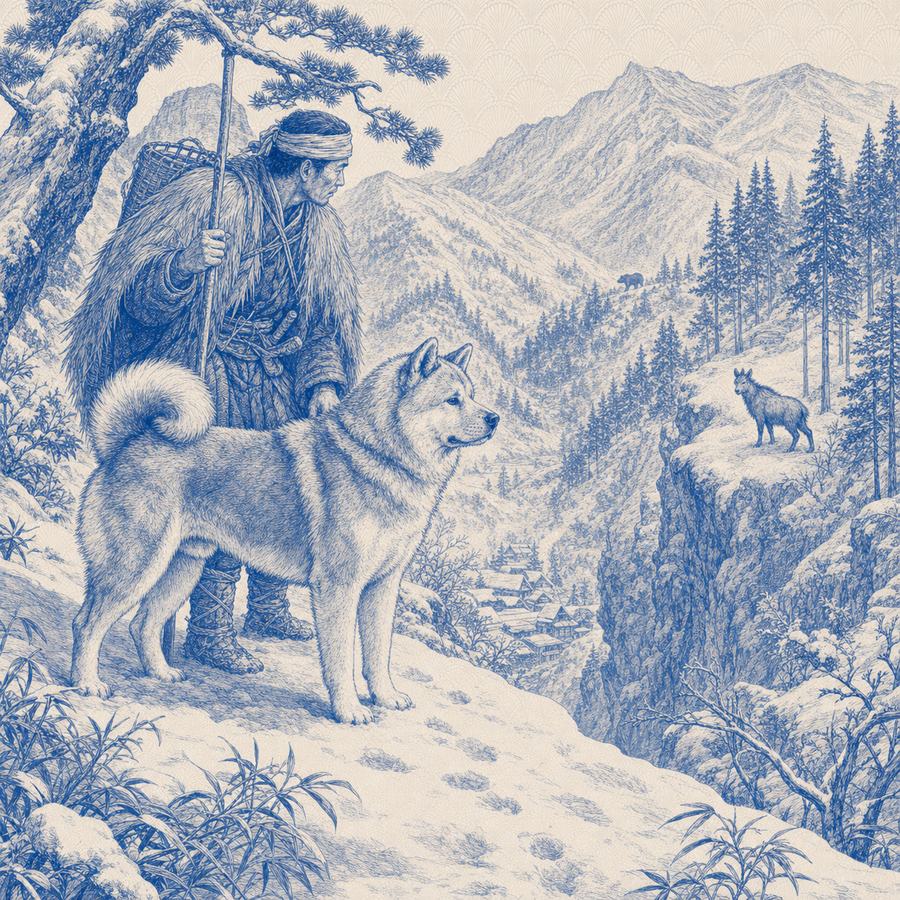
From the snow country of Ōdate
The Akita comes from the mountains of Akita Prefecture in northern Japan, where Matagi hunters used powerful dogs to track and hold bear, boar, and serow. The breed nearly vanished during the Second World War, then came to America with returning servicemen, whose enthusiasm built the American line. The AKC granted full recognition in 1972, in the Working Group.
Questions, answered
Do Akitas shed a lot?
Heavily — steady shedding plus two dramatic seasonal blows a year. The undercoat is a household event.
Are Akitas good with other dogs?
Same-sex dog aggression is a known breed trait. Manage introductions carefully and never leave them unsupervised with unfamiliar dogs.
Are they quiet?
Famously — Akitas bark little and are almost catlike indoors. The commitment is coat and character, not noise.
Are Akitas good first dogs?
No. They reward experienced, consistent owners; a permissive household will be reorganized to the dog’s specifications.