Alaskan Malamute
Built for freight, opinionated about everything.
In 2007, an Anchorage kindergartner named Paige asked why Alaska had no state dog, and her whole school took the question to the legislature. It took three years, a bill number, and testimony from schoolchildren — Paige’s argument: the Malamute is big like Alaska, and a hard worker like the people of Alaska — but in 2010 the governor signed it. The kids were, of course, right on the merits. The Malamute has been doing the North’s heaviest work for thousands of years, longer than Alaska has been Alaska; some credentials simply take a while to make official.
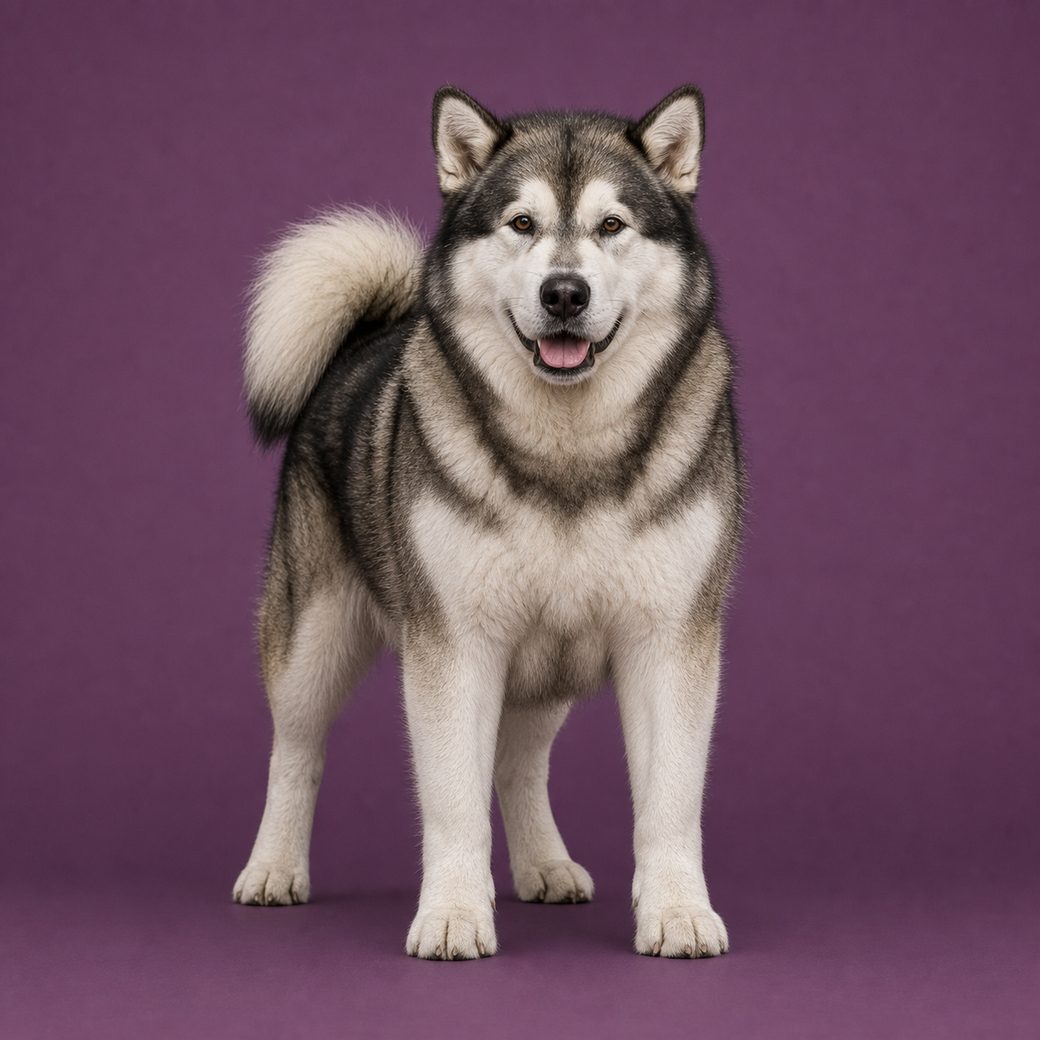
The friendly heavyweight
The name comes from the Mahlemiut, the Inupiaq people of northwest Alaska, who bred a dog for freight — power over speed, one heavy load at a time — and for the off-hours work of finding seal breathing holes and discouraging bears. When Admiral Byrd’s expeditions needed dogs to haul loads across Antarctic ice, Malamutes went south. This is the truck of the sled world, and the confidence of an animal bred to move a family’s entire world across the Arctic has never quite worn off.
Malamutes are affectionate heavyweights — family dogs who lean, talk, and assume they are invited. They rarely bark; they editorialize, in a rising “woo woo” that sounds uncannily like argument. The working heritage runs the household: they need real exercise, they dig like it is a paid position, and given an inch of boredom they will freelance. They are also strong enough that leash manners count as a safety feature. This is a dog for people who want a presence, not a pet that vanishes politely into the furniture.
Keeping one happy
Grooming
The dense double coat wants brushing several times a week — daily through the two great seasonal blows, when the undercoat comes out by the handful. Bathe every month or two and dry them thoroughly. No shaving, ever: the coat manages heat as well as cold.
Training
Smart, strong-willed, and blessed with selective hearing. Start young, keep it positive and consistent, and give them employment — hauling a pack, pulling a sled, carrying the groceries. Obedience for its own sake bores them; obedience as part of a job makes sense to a freight dog.
Exercise
An hour or two a day of honest work: hiking, backpacking, skijoring, weight-pull, anything with resistance in it. They are working partners, not jogging accessories, and cold weather roughly doubles their enthusiasm for all of it. Under-exercised, they dig — magnificently, structurally — and sing about it.
Diet
An efficient northern metabolism meets a bottomless appetite: Malamutes gain weight easily and steal food without shame. Two measured meals, no free-feeding, and a slow-feeder bowl if dinner vanishes in seconds. Keep them lean — those joints carry a lot of dog for a lot of years.
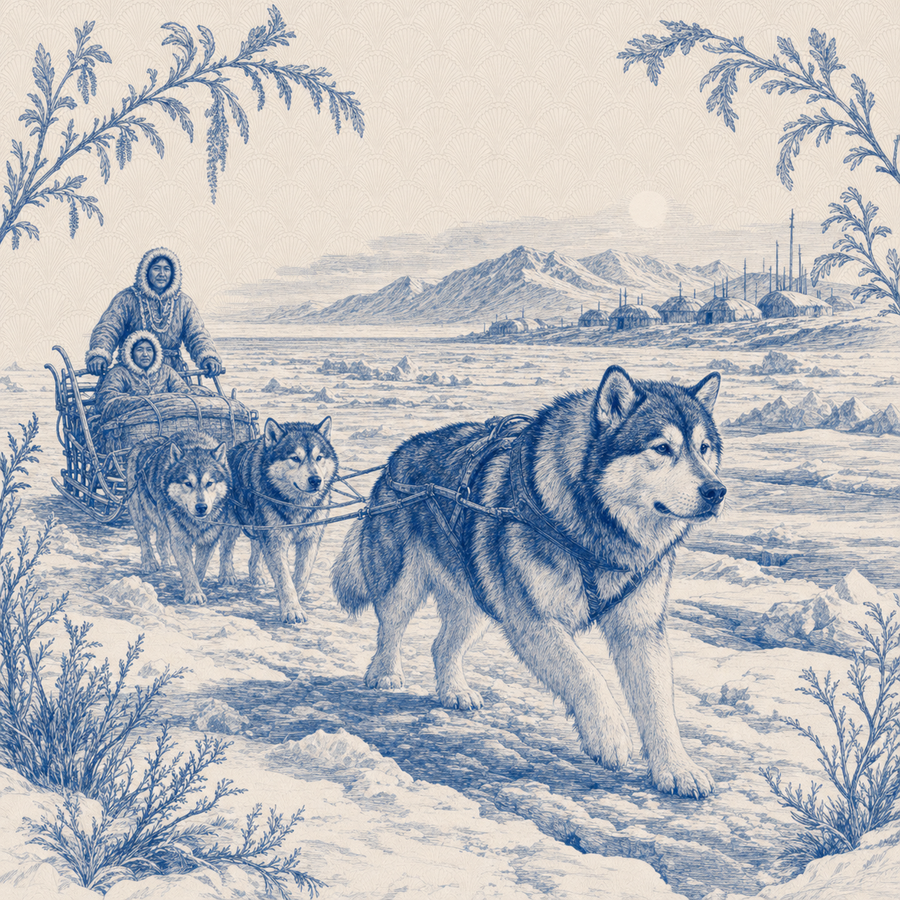
Freight dog of the Mahlemiut
One of the oldest Arctic breeds, developed by the Mahlemiut Inupiaq around Kotzebue Sound to haul heavy sledges across northwest Alaska. The Gold Rush nearly diluted the breed out of existence, and wartime service nearly finished the job — by the late 1940s, registered Malamutes numbered only in the dozens. Recognized by the AKC in 1935, the breed was rebuilt, carefully, from the survivors.
Questions, answered
Do Malamutes bark a lot?
Rarely — but they are not quiet. Expect howls and conversational “woo woos,” especially when they have opinions about dinner.
Malamute or Siberian Husky — what’s the difference?
Size and job. The Malamute is bigger, heavier-boned, and built for freight; the Husky is the lighter, faster sprinter. Truck versus race car.
Do they shed?
Enormously, with two seasonal blowouts a year. Not hypoallergenic, not close.
Are Malamutes good with kids?
Devoted and patient — but they are a lot of dog moving at kid height. Supervise the little ones.