American Bulldog
All heart, most of it muscle.
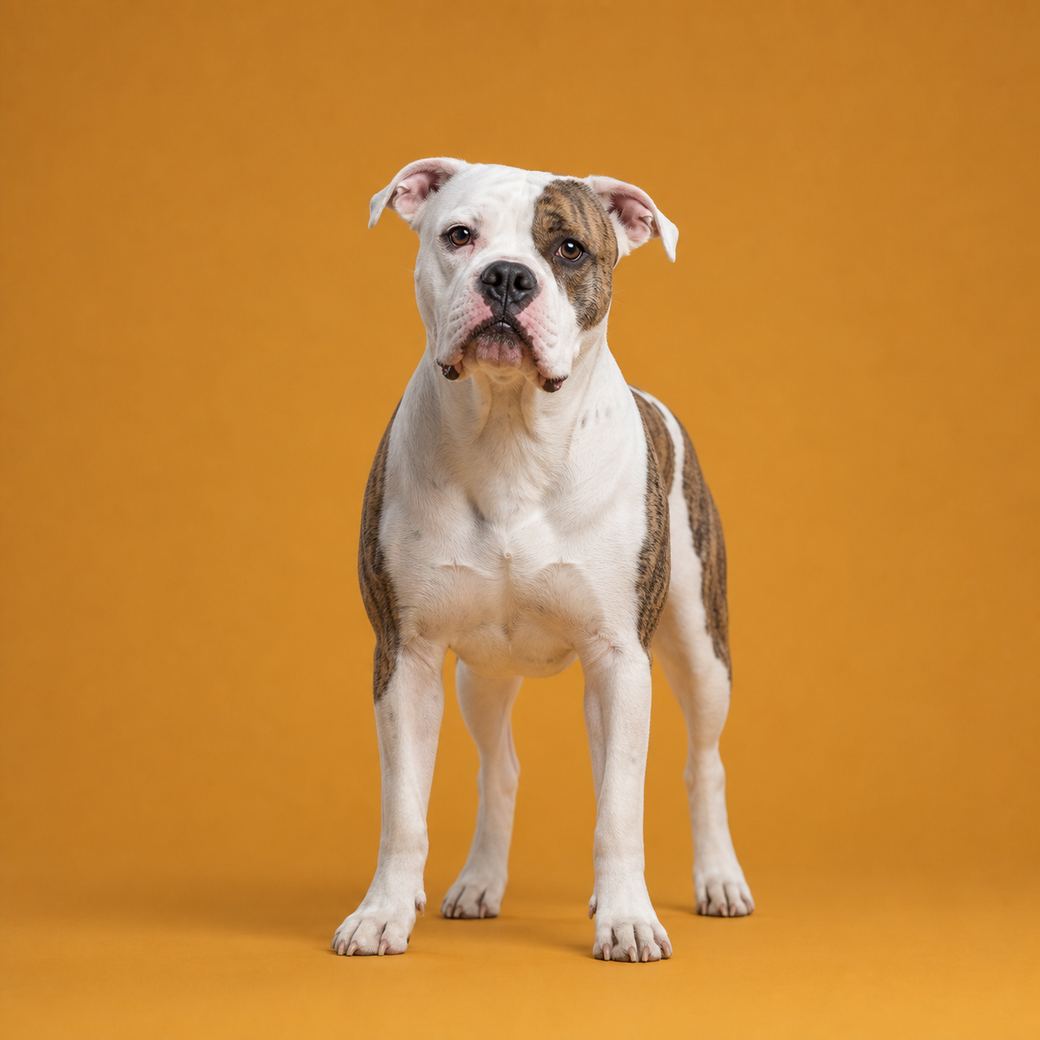
The most famous American Bulldog in the world spends most of his movie being wrong. Chance, the galumphing hero of Disney’s “Homeward Bound” (1993), voiced by Michael J. Fox, opens the film as a shelter dog who trusts no one and closes it having crossed a mountain range to get back to his boy. Casting the breed as the youngster beside a wise Golden and a prim cat was exactly right: the American Bulldog is the eternal adolescent of the working-dog world — huge-hearted, physical, half a beat ahead of their own feet, and helplessly devoted.
Strong, silly, and serious about you
The breed nearly did not survive to get the part. Old English working bulldogs came to the American South with colonial settlers and spent two centuries as all-purpose farmhands — catching half-wild cattle and feral hogs, minding the porch. By the Second World War they had all but vanished. A returning veteran named John D. Johnson spent years driving Southern backroads collecting the best surviving farm dogs, and with Alan Scott rebuilt the breed from them — two men’s stubbornness, essentially, standing between this dog and extinction.
What they saved is a serious athlete in a comedian’s body. American Bulldogs are affectionate to the point of lap invasion, patient with their own children, and reserved with strangers until properly introduced — the guardian heritage does not switch off. They need an hour or two of real exercise and a household that enjoys structure; bored and under-led, seventy-plus pounds of enthusiasm becomes a renovation problem. Well raised, they are among the most loyal dogs going: a farm dog’s work ethic, aimed entirely at your family.
Keeping one happy
Grooming
The easy part: a short coat that needs a weekly once-over and a bath when they have earned one. Shedding is modest. Pay attention to skin — the breed runs prone to allergies and irritation — and keep any facial folds clean and dry. Nails monthly; they will not volunteer.
Training
Eager to please and genuinely trainable, but socialization is the non-negotiable project: guardian breeds stay suspicious of strangers well into young adulthood, so introduce the world early and often. Keep it positive, consistent, and structured — and teach loose-leash walking while they are still small enough to lose an argument.
Exercise
An hour or two daily, and vary it: hikes, fetch, tug with rules, weight-pull if they take to it. They are power athletes, not endurance ones — watch the heat and build in rest. A worked American Bulldog is a calm housemate; the reverse is equally true.
Diet
Muscle costs calories, but obesity costs joints: feed measured, protein-forward meals twice a day and keep a visible waist on them. Hips and elbows in this breed reward every lean year. Grow puppies slowly — big fast is not the goal, big sound is.
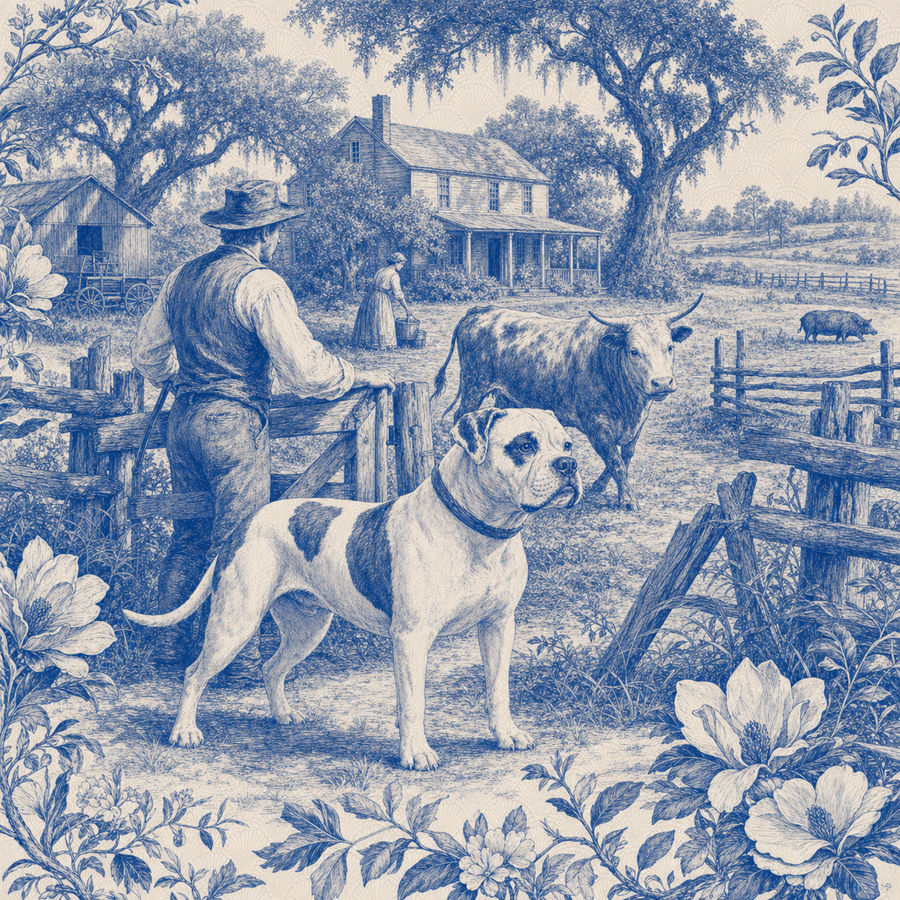
Two centuries of Southern farm work
English settlers brought their working bulldogs to the American South in the seventeenth and eighteenth centuries, where the breed became the farm’s utility player: catching unruly cattle and feral hogs, minding the property, riding in the truck bed. For two hundred years it stayed a working secret of the rural South — never shown, never registered, just used.
Questions, answered
Is the American Bulldog AKC recognized?
Not fully. The United Kennel Club has held the breed standard since 1999; the AKC records the breed in its Foundation Stock Service, the on-ramp to full recognition.
Are they good with kids?
Affectionate and patient with their own family’s children; the size and enthusiasm are what need supervising.
Do American Bulldogs shed?
Modestly and year-round — the short coat is the least of your work. Not hypoallergenic.
Can one live in an apartment?
Possible with serious daily exercise, but a yard suits them. Note that some landlords and insurers restrict bulldog-type breeds — check locally first.