American Cocker Spaniel
The spaniel that perfected the pleading look.
Watergate was not Richard Nixon’s first scandal. Twenty years earlier, in September 1952, the young senator’s place on Eisenhower’s ticket was collapsing under reports of a secret slush fund — and he saved himself, live before sixty million Americans, with a cocker spaniel. There was one gift he would not be giving back, he told the country: a black-and-white pup his six-year-old had named Checkers. The telegrams ran seventy-five to one in his favor. Whatever else historians say about the Checkers speech, it correctly identified the most disarming animal in American life — the dog you cannot stay mad at, produced at the exact moment the country was maddest.
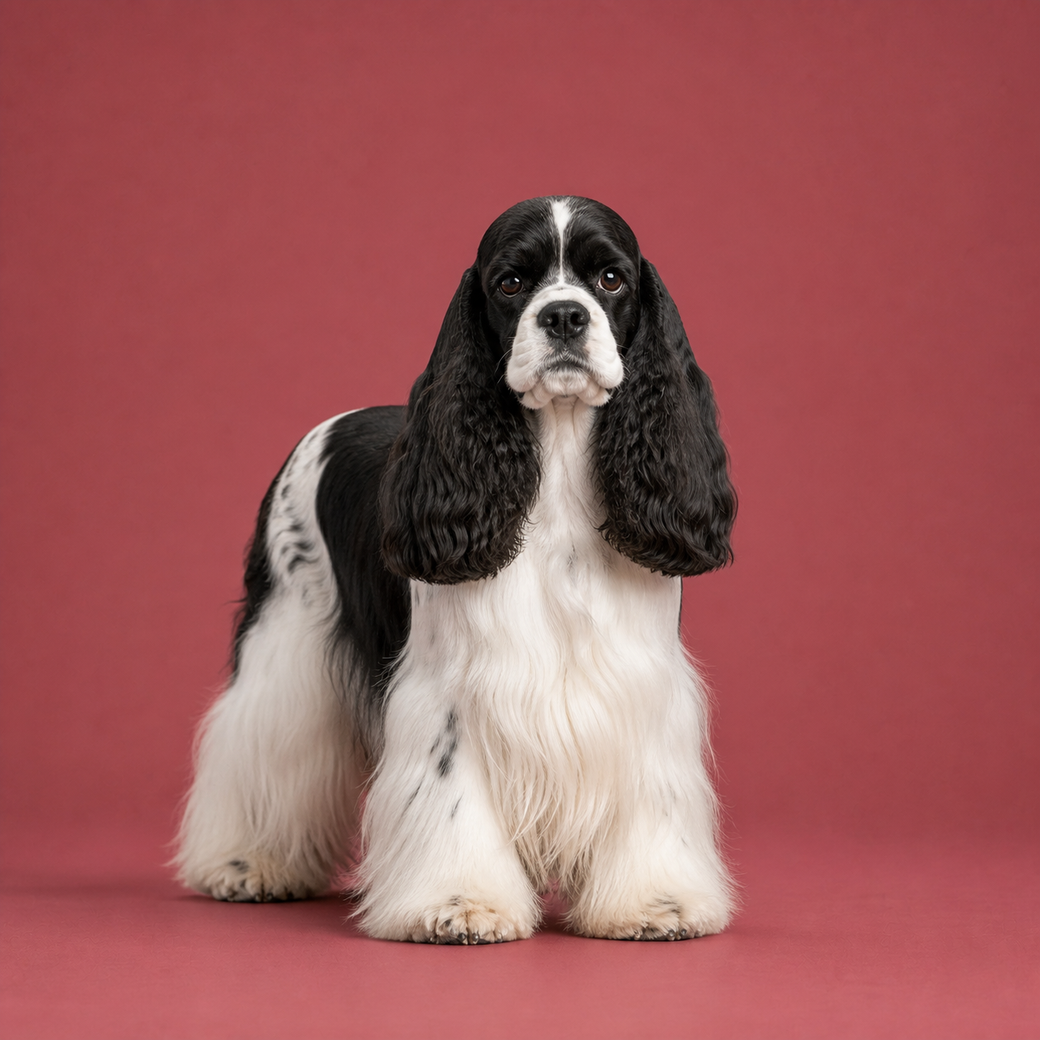
Soft heart, working nose
By 1952 the Cocker had already been America’s most popular dog for a decade, and Disney was about to compound it: Lady, of “Lady and the Tramp,” is a Cocker Spaniel — all eyes and ears and injured dignity. The breed holds a distinction no other can claim, two separate reigns at number one: the 1940s into the fifties, and again through the late 1980s. The face explains the numbers, but the dog earns them. This is the smallest of the sporting breeds — a genuine bird dog, rescaled to fit under a kitchen table.
The old field engine still idles inside: a Cocker will flush songbirds off the lawn with professional seriousness, then report back for adoration. Breed people call the ideal temperament “merry,” and it fits — a soft, willing, endlessly companionable dog that wilts under harsh handling and blooms under praise. The costs are honest ones: the coat is a standing appointment, the ears need weekly attention, and the appetite is bigger than the dog. They ask for little else beyond your company. All of it, ideally.
Keeping one happy
Grooming
The signature coat is a real commitment: brushing several times a week to stay ahead of mats, plus professional grooming on a standing schedule. The long ears need weekly cleaning and a thorough dry after every swim or bath — ear trouble is the breed’s classic complaint. Budget time, or budget a groomer.
Training
A soft-tempered, eager student — food-motivated, praise-powered, and quick to fold under harsh corrections, which they neither need nor forgive. Keep it gentle and upbeat, socialize early, and give the flushing instinct legal outlets: fetch, find-it games, a little fieldwork if you have access to it.
Exercise
Moderate and cheerful: a half hour to an hour a day of walks and games covers it, which makes them the most apartment-compatible of the sporting dogs. They will happily do more — swimming, hiking, backyard bird patrol — but they do not fall apart without it.
Diet
Watch the bowl: Cockers gain weight with remarkable efficiency, and they lobby hard. Two measured meals a day, treats counted against the total, and extra vigilance in middle age. A lean Cocker keeps their back, their joints, and their good cheer considerably longer.
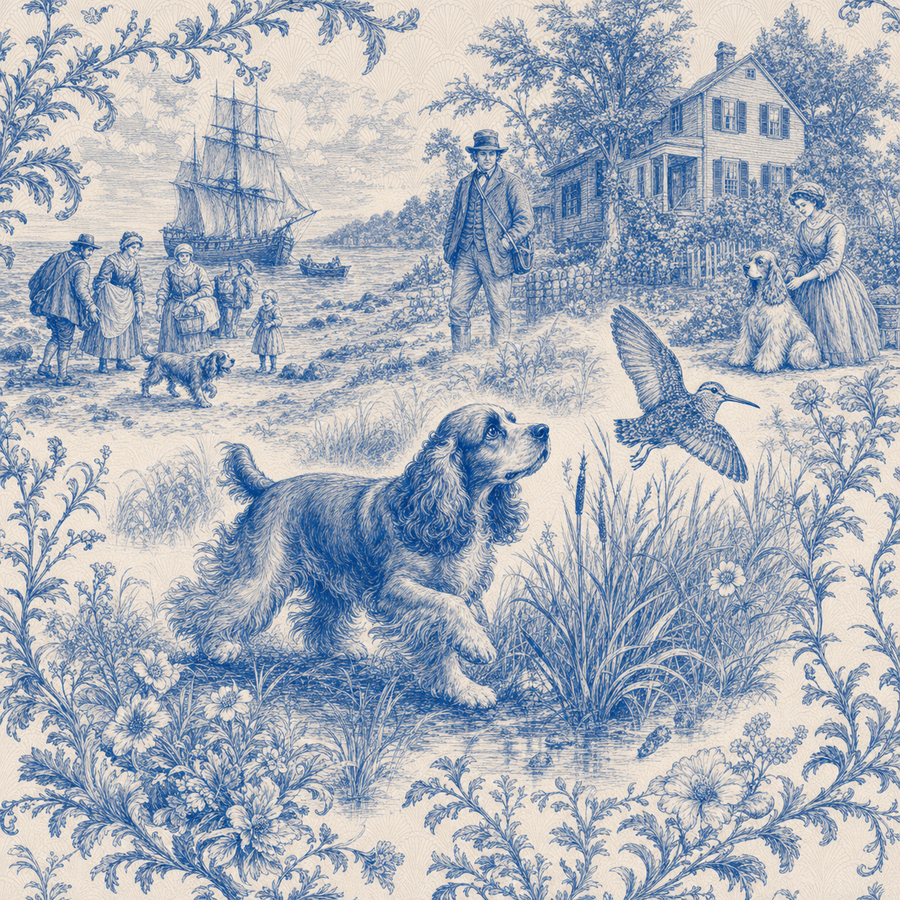
America’s spaniel
Spaniels came to America early — one reportedly landed with the Mayflower — and cockers, named for the woodcock they flushed, became the household bird dog. American fanciers bred theirs smaller and plusher than the English type, with a rounder head and more coat, until the two diverged for good: the AKC split them into separate breeds in 1946. In the States, “Cocker Spaniel” means this one.
Questions, answered
American vs. English Cocker — what’s the difference?
Two distinct breeds. The American is smaller and more heavily coated, with a rounder skull; the English is leggier, with a longer muzzle. This guide is the American.
Do Cocker Spaniels shed?
Moderately — and the real work is preventing mats, not managing loose hair. Not hypoallergenic.
Are they good with kids?
One of the classic family matches: gentle, playful, and sized right. Soft temperament means kids should be gentle back.
What’s the deal with their ears?
Weekly cleaning, and always dry after water. Long, low-hanging ears plus coat make ear care the breed’s best-known chore.