American Eskimo Dog
The showman in the white coat.
Circus lore holds that the first dog ever to walk a tightrope was an American Eskimo Dog named Stout’s Pal Pierre, working the Barnum & Bailey show in the 1930s. Whatever the archives finally say, the breed’s circus career is real: little white spitzes wove through the legs of moving horses, balanced on wires, and posed motionless in all-white living statues — and after the show, the circus sold the puppies. Families across America took home a performer’s dog, bred for the spotlight and pleased about it. The Eskie has never really left the stage.
Smart enough to be trouble
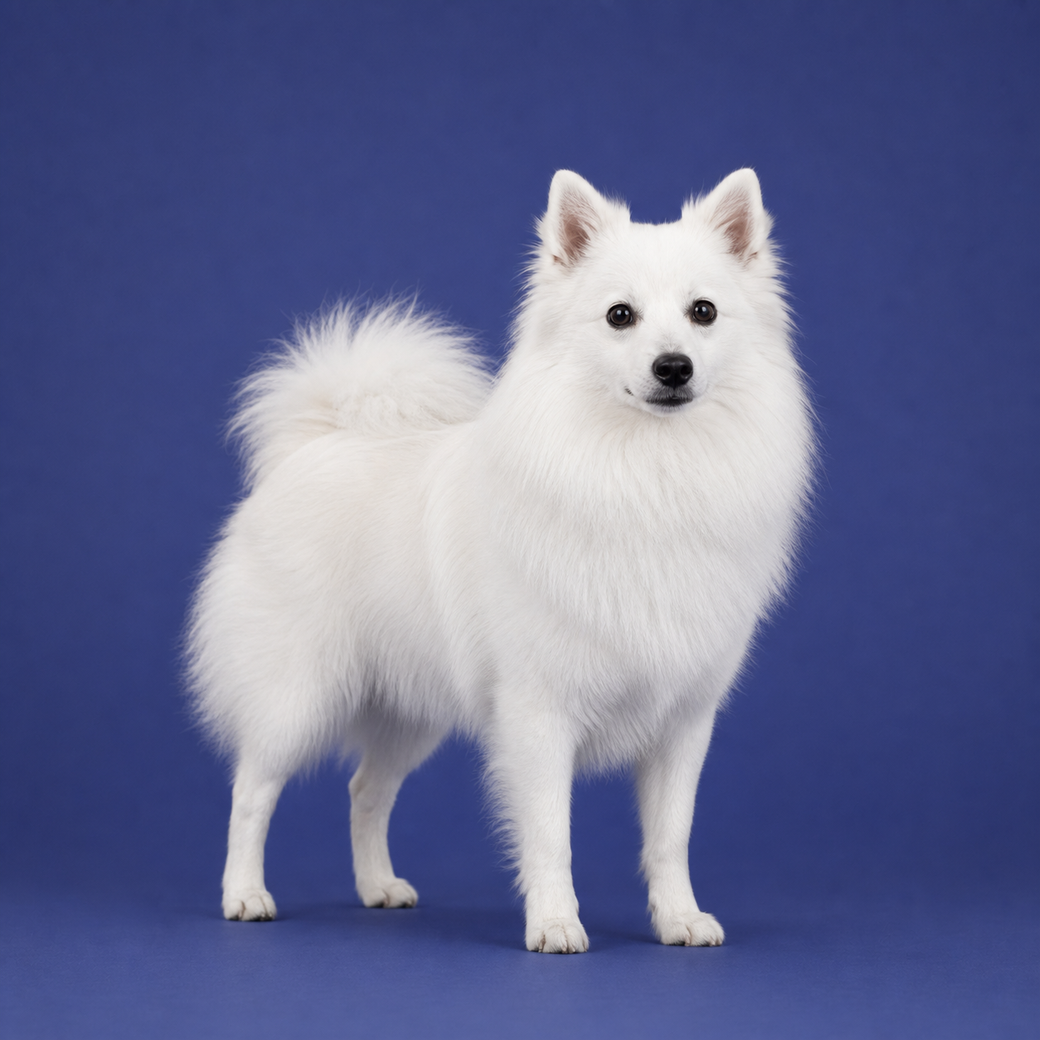
Here is the strange part: the name is fiction. The American Eskimo Dog is German — a German Spitz, carried over by immigrant farm families — and has no connection to Eskimo or Inuit people, or to the Arctic at all. When the First World War made German names a liability, the breed was quietly rebranded, eventually borrowing “American Eskimo” from a breeder’s kennel name. It may be the only dog renamed by geopolitics. The dog underneath never changed: a sharp-eyed, quick-witted farm watchdog in an extravagant white coat.
The intelligence is the daily reality. An Eskie learns tricks nearly as fast as you can invent them, reads your habits like a script, and expects — expects — to be included. Watchdogs by trade, they narrate: visitors, squirrels, suspicious weather. Under-occupied, the narration becomes a filibuster. Give them training games, puzzle work, and a bit of an audience, and they are among the brightest, most engaging companions a family can have — working entertainers who never lost the taste for it.
Keeping one happy
Grooming
White fluff in this quantity means brushing two or three times a week, daily when the coat blows in spring and fall. The good news: the coat releases dirt almost on its own, so baths stay occasional. No trimming beyond tidy feet — the coat is the outfit.
Training
This is the part Eskies are famous for: they learn fast, love an audience, and treat training as the best game in the house. Keep sessions short and inventive, teach tricks alongside manners, and start socialization early — clever watchdogs invent worries when they are bored.
Exercise
A daily walk plus real play and mental work. The body needs moderate exercise; the brain needs a full schedule. Trick training, puzzle feeders, and agility-for-fun all count double toward the total. They were bred to notice everything — the kindest thing you can do is give them better things to notice.
Diet
Two measured meals a day, scaled honestly — Eskies run from toy to standard, and every size gains weight when the treats flow with the tricks. Count training rewards against dinner, and keep them trim under all that coat, where extra weight likes to hide.
The Midwest years
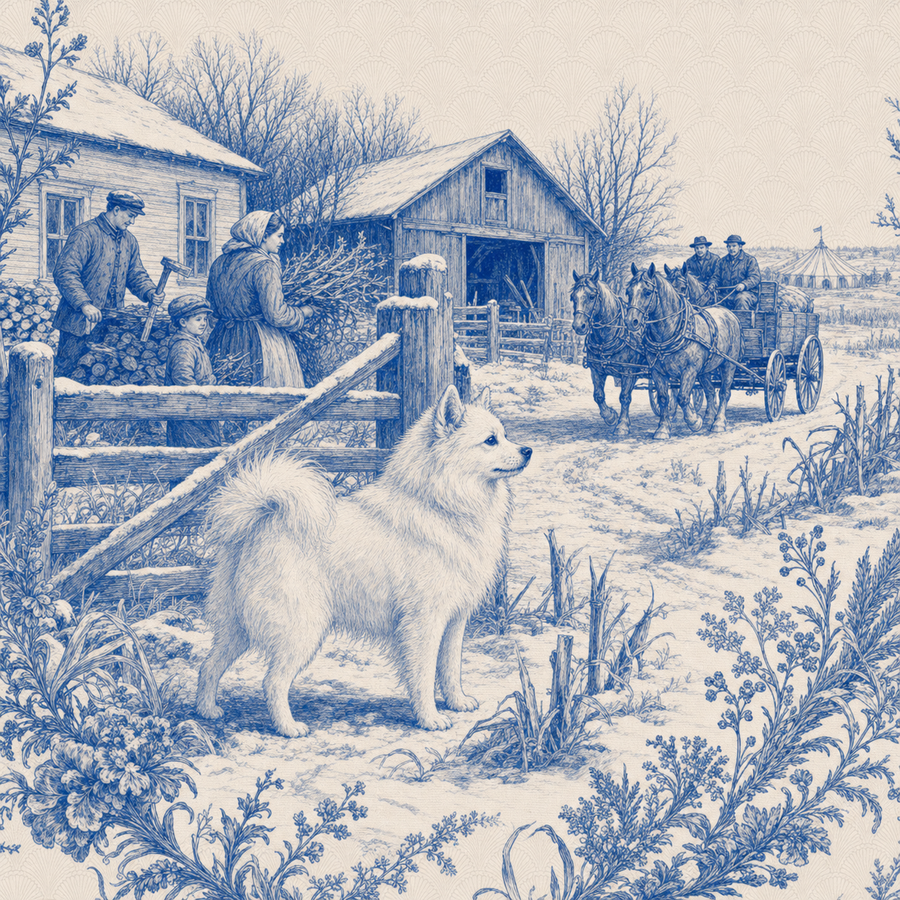
German immigrant families brought their white spitz dogs to the American Midwest around the turn of the last century, where they worked as farm watchdogs — alert, weatherproof, and devoted to the household. The United Kennel Club registered the breed from 1913; the AKC recognized it in 1995, filing the little German farm dog, at long last, under Non-Sporting.
Questions, answered
Do American Eskimo Dogs shed?
Heavily — steady shedding with two big seasonal blows. Not hypoallergenic, whatever the white fluff suggests.
Do Eskies bark a lot?
Yes — they are watchdogs and say so. Training and employment tame it; boredom amplifies it.
What sizes do they come in?
Three — toy, miniature, and standard, running roughly from six to thirty-five pounds. Same dog, dialable.
Are they good family dogs?
Playful and patient with their own family when socialized, reserved with strangers at first. They thrive on inclusion — this is not a backyard-only breed.