American Staffordshire Terrier
A heavyweight heart in a middleweight frame.
The dog with the ring around his eye — Petey, of the “Little Rascals” comedies — was two dogs, actually: Pal the Wonder Dog and, later, his son Pete, who inherited the role the way theatrical families inherit the stage. Pal’s eye ring was mostly natural, finished with dye; Pete’s was drawn around the other eye entirely, and audiences never noticed. What they noticed was the temperament — a burly, grinning dog piled high with children, perfectly at ease. Pete’s papers read American Staffordshire Terrier, and for a generation that was the breed’s public image: the matinée babysitter.
Power, aimed at devotion
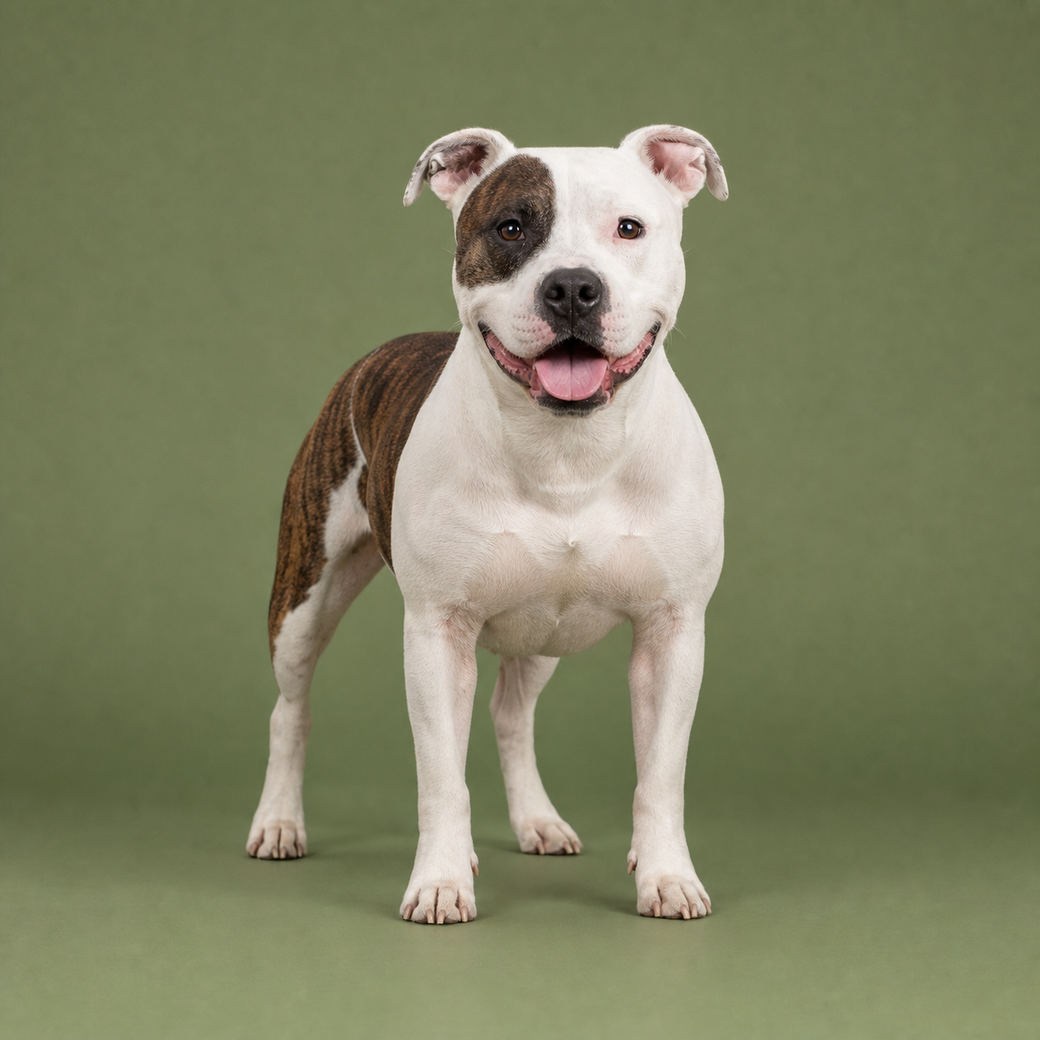
No breed carries a wider gap between reputation and lived-with reality. The AmStaff descends from fighting stock — that part is true, and the breed has spent a century outliving it — but the same old selection that demanded gameness also demanded absolute reliability with human hands, and it shows. This is one of the most people-devoted dogs in the studbook, an animal whose deepest ambition is proximity. The muscle is real. So is the mush, and the mush is winning.
An AmStaff at home is a physical comedian and a professional leaner — sixty-odd pounds of muscle convinced it is a lap breed. They are people-oriented to the core, patient with their own children, and hungry for structure and exercise in equal measure. Owed honesty: dog-to-dog friction is a real breed tendency, managed with early socialization and adult supervision rather than wished away. And in some cities and buildings, their face alone triggers restrictions. The work of owning one is mostly advocacy. The dog is the easy part.
Keeping one happy
Grooming
As low-maintenance as coats get: short and stiff, needing a weekly once-over with a rubber brush and an occasional bath. Shedding is modest and year-round. Spend the saved grooming time on nails — a strong dog with long nails is hard on floors and joints alike.
Training
They want to work for you — AmStaffs are eager, food-driven, and physically capable of everything from agility to scent work. Start leash manners and socialization in puppyhood, while they are light enough to redirect, and keep training a daily habit rather than a strength contest you are built to lose.
Exercise
An hour a day of genuine effort: fetch, tug with rules, running games, sport training. They are athletes who settle beautifully indoors once the account is paid. Skip the dog park in favor of chosen playmates — they do better with known friends than with crowds.
Diet
Muscle burns fuel, but the food motivation that makes them easy to train also makes them easy to overfeed. Two measured, meat-forward meals a day, treats budgeted into the total, and a visible waist as the standing goal. Lean protects the hips and elbows this breed can inherit.
From Staffordshire, via the American farm
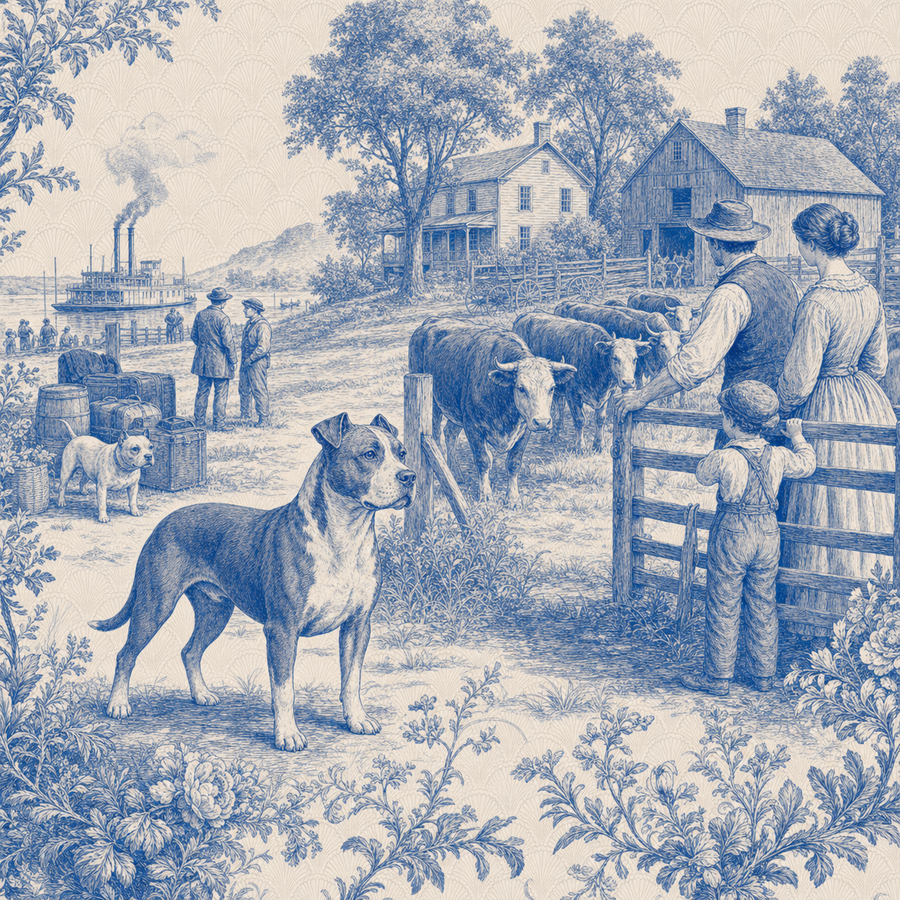
England’s bull-and-terrier dogs crossed the Atlantic around the 1850s, took names like Yankee Terrier, and were bred taller and heavier for American farm work — catching stock, guarding the homestead, riding along. The AKC recognized the Staffordshire Terrier in 1936; “American” was added in 1972, to settle the paperwork with its smaller English cousin.
Questions, answered
Is an AmStaff the same as a pit bull?
“Pit bull” is a category, not a breed. The AmStaff is a specific AKC breed within that family — closely related to the American Pit Bull Terrier, but bred separately for decades.
Are there legal restrictions on the breed?
In some cities, countries, buildings, and insurance policies, yes. Check the local rules before committing — it is paperwork worth doing early.
Are AmStaffs good with kids?
Historically one of the breed’s proudest claims — devoted and tolerant with family children, with the normal supervision any strong dog warrants.
How are they with other dogs?
Selective. Early socialization helps, and many adults prefer human company and a few chosen dog friends to a crowd of strangers.