Anatolian Shepherd Dog
Employee of the millennium, several times over.
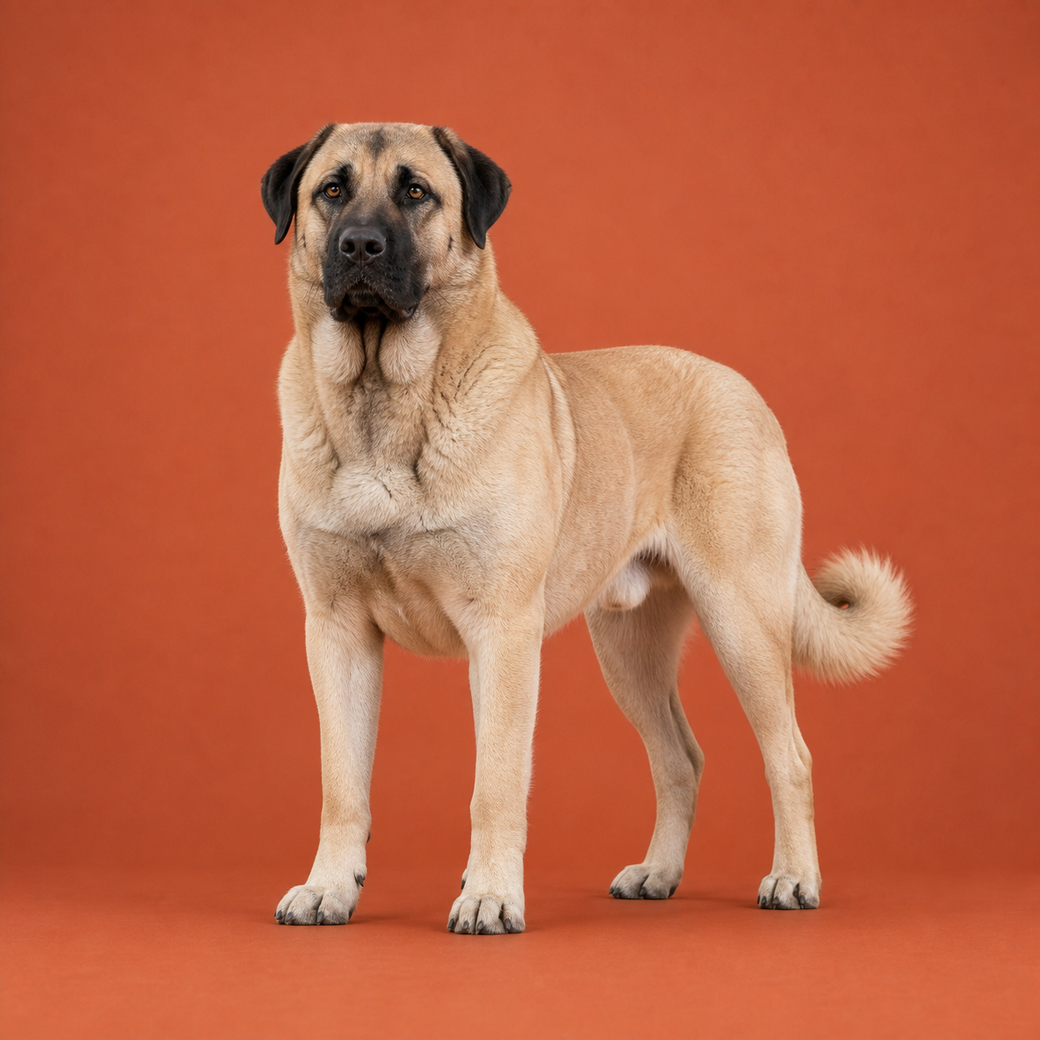
The world’s fastest land animal is being saved by a dog that mostly lies still. In Namibia, farmers who once shot cheetahs to protect their goats now raise Anatolian Shepherds with the herds instead — a program the Cheetah Conservation Fund began in 1994. The dog is bonded to the goats as a puppy, grows into a hundred-plus pounds of standing warning, and the cheetahs, sensibly, go elsewhere. Farmers in the program report livestock losses falling by ninety percent and better. Nobody had to retrain the breed for the work. A Turkish shepherd would recognize it instantly.
On duty, always
America met the breed almost by accident. In the late 1930s a quietly funded USDA “sheepdog project” imported a pair of Turkish flock guardians to Washington; the female landed pregnant, delivered twelve puppies at a Maryland research station, and wartime rationing killed the program before it began — the dogs were auctioned off to sheepmen. The idea outlived the paperwork. Four decades later, when new law limited lethal predator control and ranchers needed a nonlethal expert, the Anatolian was rediscovered exactly where the USDA had left it: with the sheep.
Understand what independence means here: this dog was designed to make life-and-death decisions at three in the morning with no human awake, and they have not stopped. They are calm, watchful, and devoted to their own people and animals, suspicious of everything else until it proves out. They will not fetch. They may sit, if the request seems reasonable. They bark at night because that is the job, and they need a serious fence because the job, in their view, extends to the horizon. For working homes and patient owners, there is nothing steadier.
Keeping one happy
Grooming
A short, dense working coat: weekly brushing most of the year, then twice-annual blows when the undercoat comes off in sheets — brush daily and stand upwind. No trims, few baths. They were built to live outdoors in Anatolian weather, and the coat still behaves that way.
Training
Recalibrate first: this is not an obedience breed, and treating them like one frustrates everybody. They learn manners, boundaries, and household law readily from an owner they respect, and early, wide socialization is essential. What they will not do is perform commands for the sake of it. Off-leash reliability never comes.
Exercise
Moderate but territorial: long daily walks plus a securely fenced yard to patrol satisfy them far better than fetch ever will. They seem lazy right up until the moment they are not — guardians conserve energy on purpose. Five-to-six-foot fencing, real gates, no shortcuts.
Diet
The pleasant surprise: Anatolians eat modestly for their size — shepherds bred an efficient keeper, not a giant appetite. Feed measured meals, grow puppies slowly to protect the big joints, and resist pushing a large breed toward fast gains. Lean is the working standard.
Shepherd’s dog of the old plateau
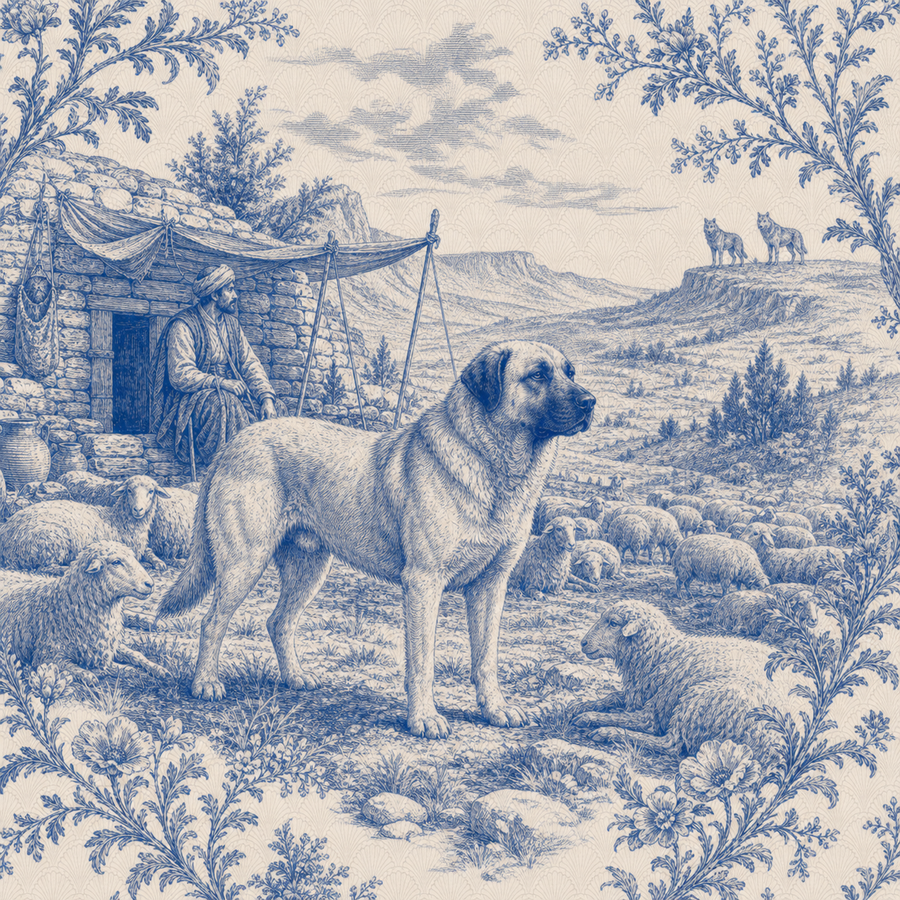
For thousands of years on the Anatolian plateau, Turkish shepherds trusted their flocks to the çoban köpeği — the shepherd’s dog — guardians bred to be born among the sheep, live as one of them, and answer wolves without waiting for instructions. The AKC recognized the breed in 1996 — in the Working Group, naturally.
Questions, answered
Do Anatolian Shepherds bark at night?
Yes — that is the shift. Guardian breeds patrol and announce after dark; rural neighbors understand, suburban ones may not.
Are they good with children?
Devoted to their own family’s children; visiting kids’ roughhousing can read as trouble. Introductions and supervision matter.
Can one live in an apartment?
No. They need territory, a serious fence, and ideally a job. This is a working animal first.
Do they shed?
Steadily, with two dramatic seasonal blows when the undercoat leaves in sheets. Not hypoallergenic.