Aussiedoodle
Two clever breeds walk into a gene pool.
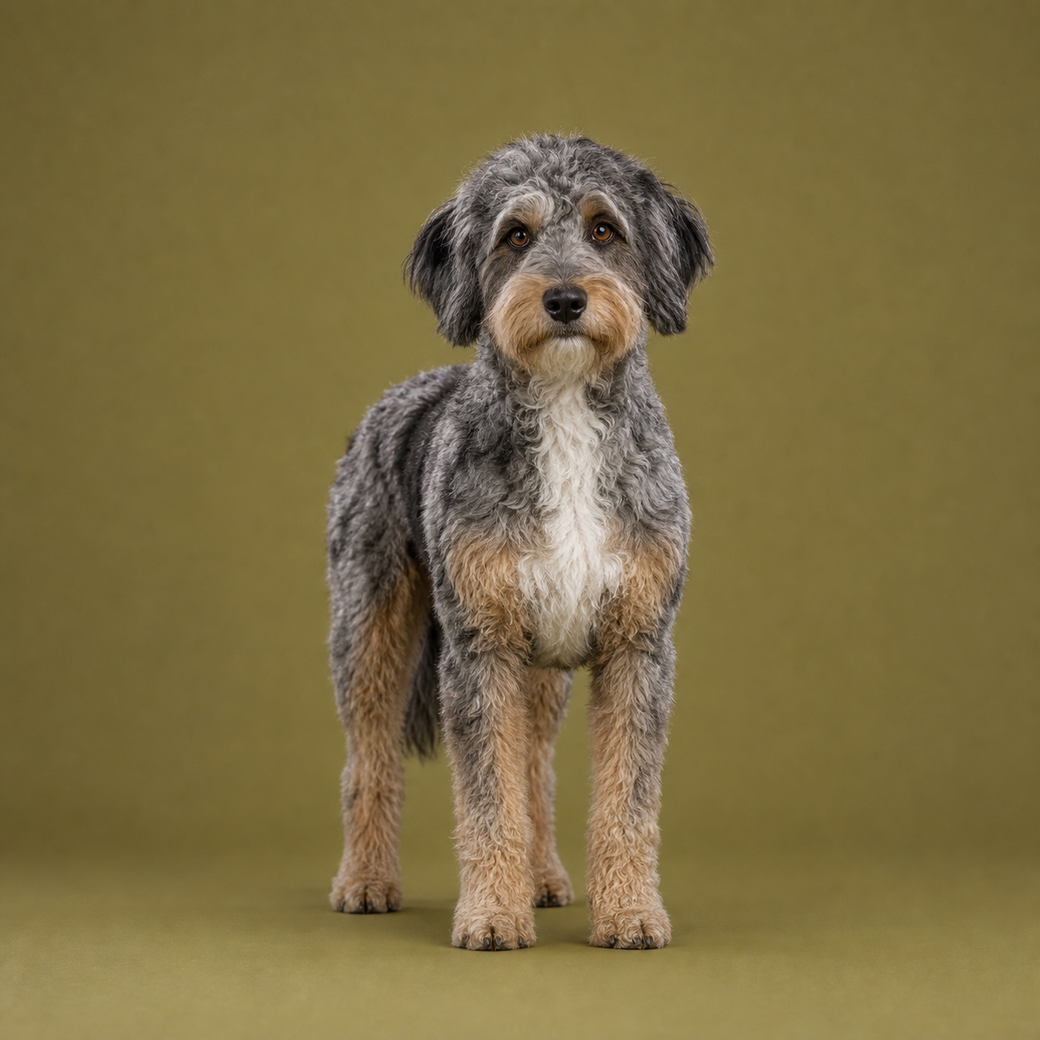
Begin with a small audit of the name. The Aussiedoodle is a cross between the Australian Shepherd — which, despite its own name, is an American ranch breed — and the Poodle, a German water dog that France later claimed. Total verified Australian content: zero. But what the name lacks in geography it makes up in truth of another kind, because this is what happens when you cross two of the smartest working breeds in dogdom and hope for the best of both. Sometimes you get exactly that. Sometimes you get something curlier, louder, and cleverer than anyone planned for.
Two honor students, one dog
The cross arrived in the 1990s, part of the wave of Poodle mixes that followed the Labradoodle into the world’s living rooms. The logic was straightforward: take one of dogdom’s top students, cross it with another, and aim the result at families. What that logic skips is the fine print. There is no kennel-club standard and no registry — a designer cross is a recipe, not a guarantee — which is why honest breeders talk less about the “breed” and more about the two actual parents in front of you. Meet them. The puppy lands somewhere in between.
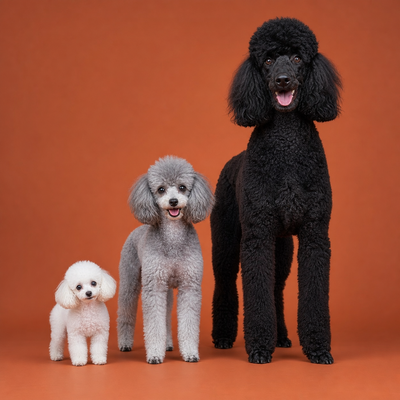
What runs fairly consistent: the brains and the batteries. An Aussiedoodle needs a genuine hour of exercise even on slow days — fetch, swimming, running — plus something for the mind, or the mind freelances on your furniture. Size is a roll of the parental dice: a miniature Poodle parent can keep the cross under thirty pounds, while a standard can push seventy. The coat runs wavy to tightly curled, and shedding runs from barely to moderate — “low-shedding” is a likelihood, never a promise. What is promised is company. This cross does not do background.
Keeping one happy
Grooming
Whatever coat the dice deal — loose waves or Poodle curls — plan on brushing several times a week and a professional trim every couple of months. Mats start behind the ears and under the collar; find them early. The reward for all this upkeep is a coat that mostly stays on the dog.
Training
A pleasure, honestly: both parent breeds live to work with people, and the cross usually inherits the enthusiasm. Keep sessions short, upbeat, and escalating — they master the basics quickly and get bored politely. Socialize early, and teach a settle command; brilliant dogs need an off switch installed by hand.
Exercise
An hour a day is the floor, and the good news is they are not picky about currency: fetch, swimming, running, hiking, agility. Add mental work — puzzle feeders, new tricks — because tiring the body without the brain only gets you a fit insomniac. A well-exercised Aussiedoodle is a couch philosopher.
Diet
Feed measured meals matched to the actual dog — a thirty-pound mini and a seventy-pound standard are different grocery bills — and count training treats against the total, because this eager student earns constantly. Keep them lean to protect the hips and elbows both parent breeds can pass down.
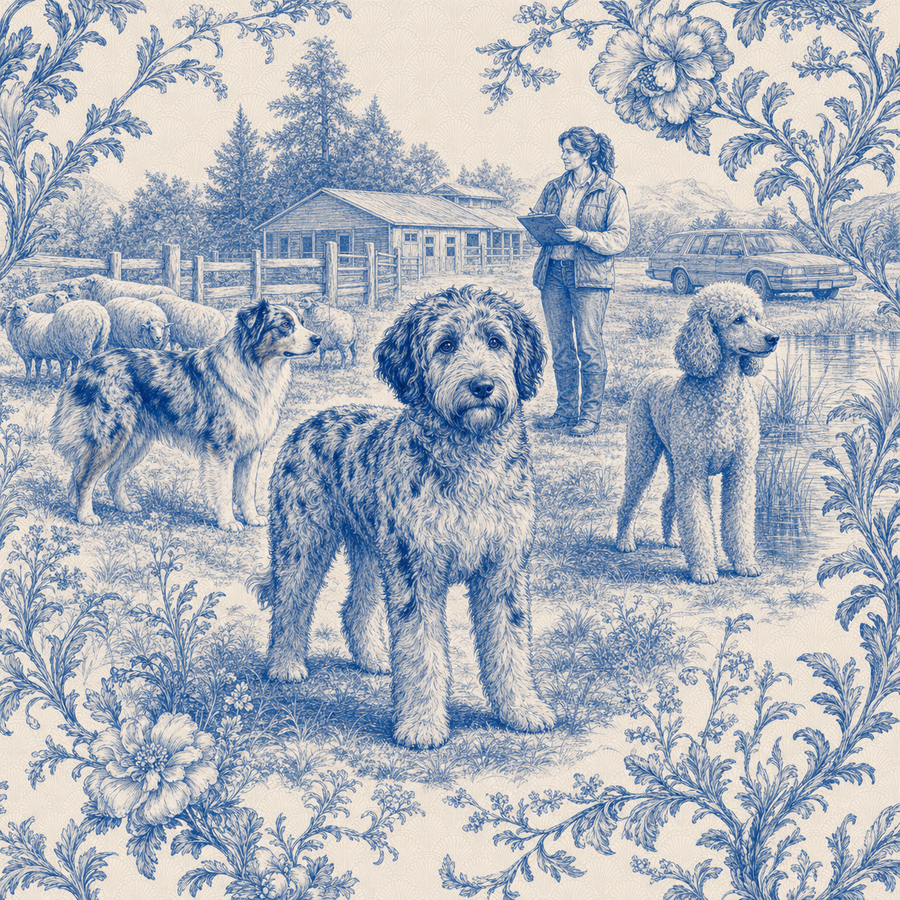
Born of the doodle wave
A child of the 1990s designer-dog era, bred in North America from two working overachievers: the Australian Shepherd, a herding dog of the American West, and the Poodle, a water retriever of German origin refined in France. No kennel club recognizes the cross — there is no standard, only parents — which makes choosing a careful, transparent breeder the entire game.
Questions, answered
Are Aussiedoodles hypoallergenic?
They’re often a good bet for allergy-sensitive homes thanks to the Poodle side — but no dog, doodle or not, is guaranteed hypoallergenic. Spend time with the actual puppy before deciding.
How big do Aussiedoodles get?
It depends on the Poodle parent: miniature crosses often stay under 30 pounds, while standard Aussiedoodles can reach 70. Ask to meet both parents.
Do Aussiedoodles shed?
Usually less than most breeds, but it varies litter to litter — some coats barely shed, others take after the Aussie parent. Every version needs regular brushing.
Are Aussiedoodles good family dogs?
Generally yes — affectionate, playful, and quick to learn — provided the family can fund the exercise and grooming. A bored Aussiedoodle invents hobbies.