Australian Cattle Dog
Tough enough to argue with cattle, and win.
The oldest dog in recorded history was not a pampered lapdog. Bluey came to the Hall family of Rochester, Victoria, as a pup in 1910 and spent roughly twenty years working cattle and sheep across hard Australian country before anyone thought of him as remarkable. He died in November 1939 at twenty-nine years and five months — a Guinness World Records mark no dog has verifiably beaten since. Cattle Dog people find the record entirely unsurprising. Endurance is what this breed was engineered for, and the engineering began with an ingredient straight out of the bush.
Built to outwork you
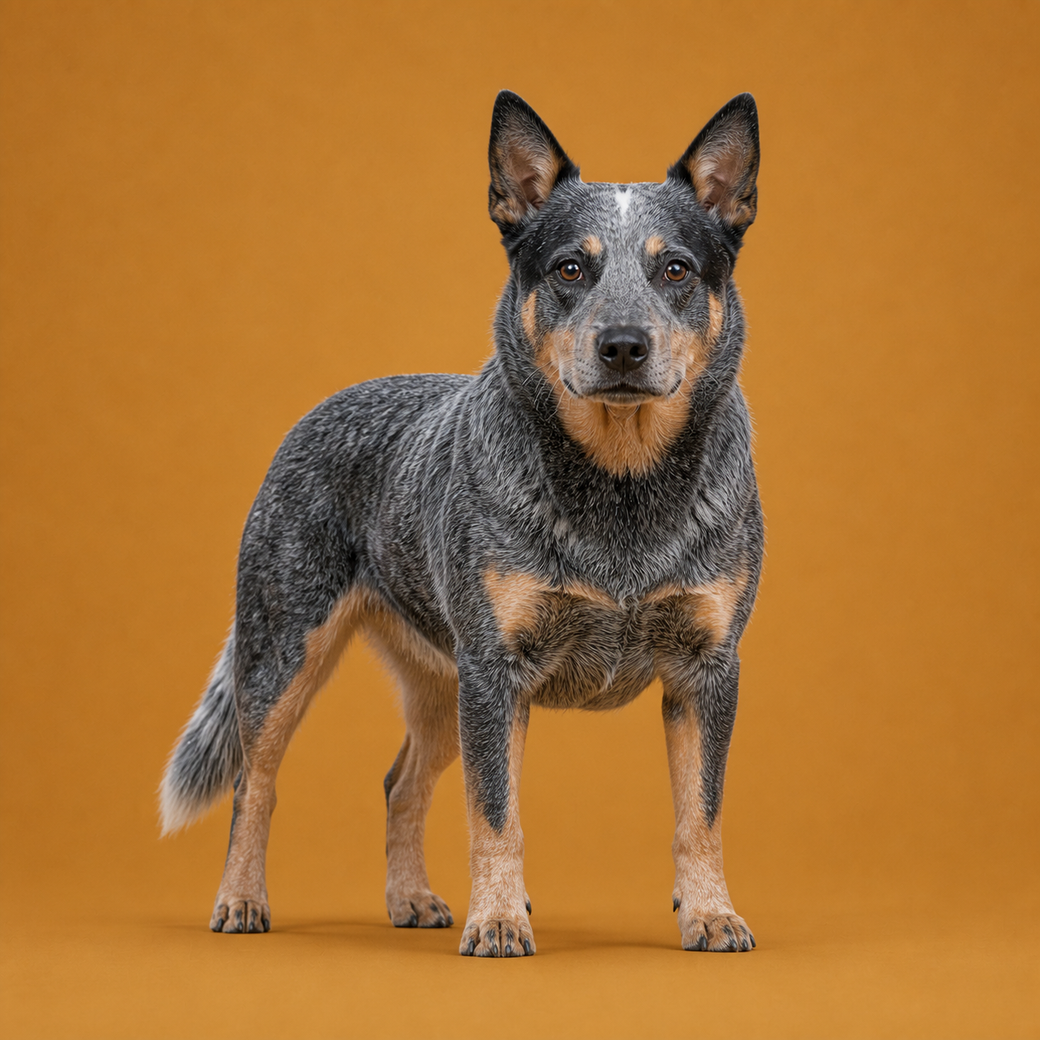
Watch one work and the design explains itself: a low, muscled dog slicing in behind a bullock, nipping a heel, flattening to let the kick sail overhead, already moving to the next. Robert Kaleski, the bushman who wrote the breed’s first standard in the early 1900s, documented a dog that could move half-wild cattle across country no fence had ever seen. Hollywood eventually noticed the toughness — an Australian Cattle Dog rode shotgun through “Mad Max 2” as the Road Warrior’s only companion — but the breed’s real theater has always been the back paddock.
At home they are a one-person dog with a strong work ethic and opinions about idleness, yours included. They attach hard, shadow their person from room to room, and regard strangers as unverified until further notice. The famous energy is not a rumor: without a genuine daily workload they will invent one, and their inventions run to landscaping and ankle audits. Meet the workload, though, and you get one of dogdom’s great partnerships — a clever, tireless, faintly sardonic colleague who takes your side in everything and never calls in sick.
Keeping one happy
Grooming
The short double coat mostly manages itself: a weekly brush, stepped up to daily during the twice-yearly shed when the undercoat lets go, and a bath when there is actual mud involved. No trimming. Nails, ears, and teeth on the usual schedule — this dog would rather be working than fussed over.
Training
Brilliant and businesslike: they learn in a handful of repetitions and get bored in a handful more. Keep sessions short, keep raising the difficulty, and give the heeling instinct legal outlets from puppyhood — herding balls, agility, real chores. Socialize early; that wariness of strangers is a feature that needs steering.
Exercise
Plan on well over an hour a day of genuine effort — running, hiking, fetch with rules, herding if you can get it. A stroll around the block is a warm-up, not a workout. The mind needs mileage too: an unemployed Cattle Dog will appoint themselves to a job you did not post.
Diet
A quality food in measured meals, twice a day, scaled to the actual workload — a weekend athlete does not need muster-season rations. Keep them lean; the joints are funding all that mileage, and the breed’s long life is easiest on a light frame. Treats count, and they will negotiate.
A collie, sharpened by the dingo
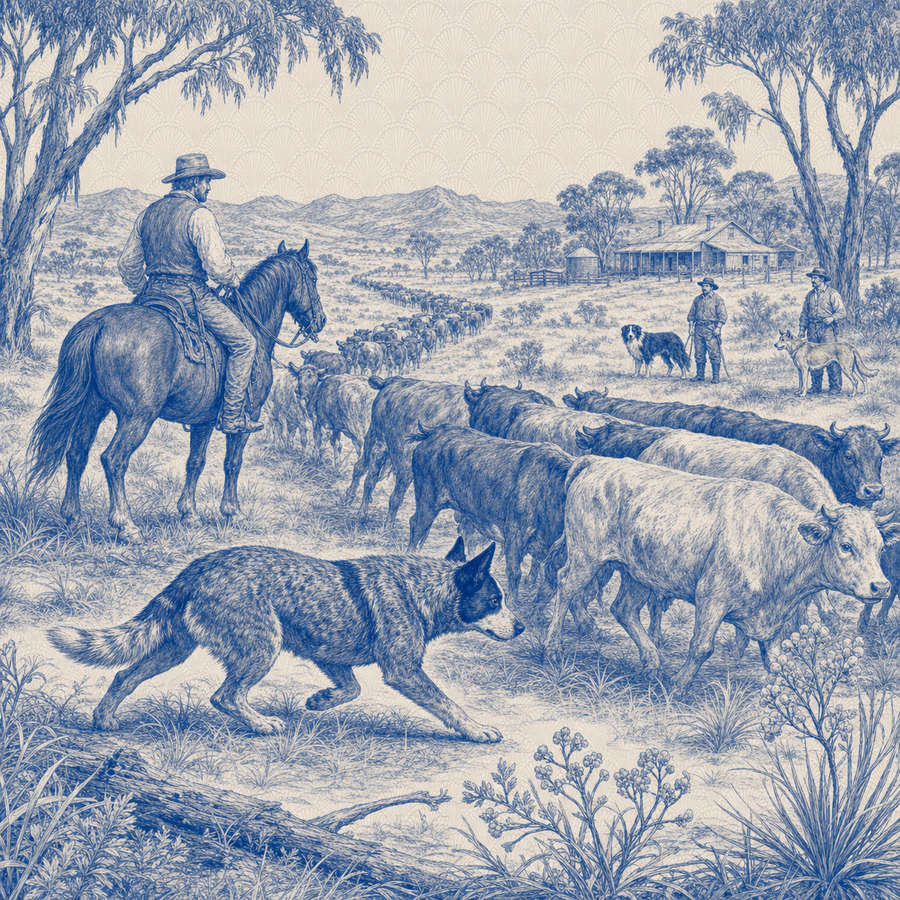
Thomas Hall, a cattleman on the vast runs of New South Wales, needed a dog that could drive half-wild stock enormous distances, so from the 1840s he crossed imported drovers’ collies with tamed dingoes. The result — Halls Heelers — remained his private advantage until his death in 1870, then spread with the cattle industry itself. The AKC recognized the Australian Cattle Dog in 1980.
Questions, answered
Is Bluey from the TV show an Australian Cattle Dog?
Yes — the animated Heeler family are Australian Cattle Dogs. Real ones are wonderful, and considerably more work than the cartoon lets on.
Are Blue Heelers and Australian Cattle Dogs the same breed?
Same dog. Blue Heeler, Red Heeler, and Queensland Heeler are all nicknames for the Australian Cattle Dog, sorted mostly by coat color and geography.
Are Australian Cattle Dogs good with kids?
Devoted to their own — but the herding instinct is real, and an under-exercised heeler will round up running children by the ankles. Training and outlets manage it.
How much exercise does an Australian Cattle Dog need?
A lot: well over an hour a day of real work, plus mental employment. This is one of the most demanding breeds going, and the least apologetic about it.