Australian Shepherd
Somewhere between a shadow and a coworker.
In 1949, a rodeo cowboy named Jay Sisler was laid up in Emmett, Idaho, recovering from an injury, and passed the time teaching tricks to two pups named Stub and Shorty. Ten or fifteen minutes at a stretch, a few times a day, paid in kind words and homemade pancakes. The act that grew out of that convalescence toured for two decades — the Calgary Stampede, the Seattle World’s Fair, Madison Square Garden, three-quarters of a million road miles — and put an obscure ranch breed in front of America. Sisler never registered his dogs. His dogs run through the breed’s pedigrees anyway.
The full-time shadow
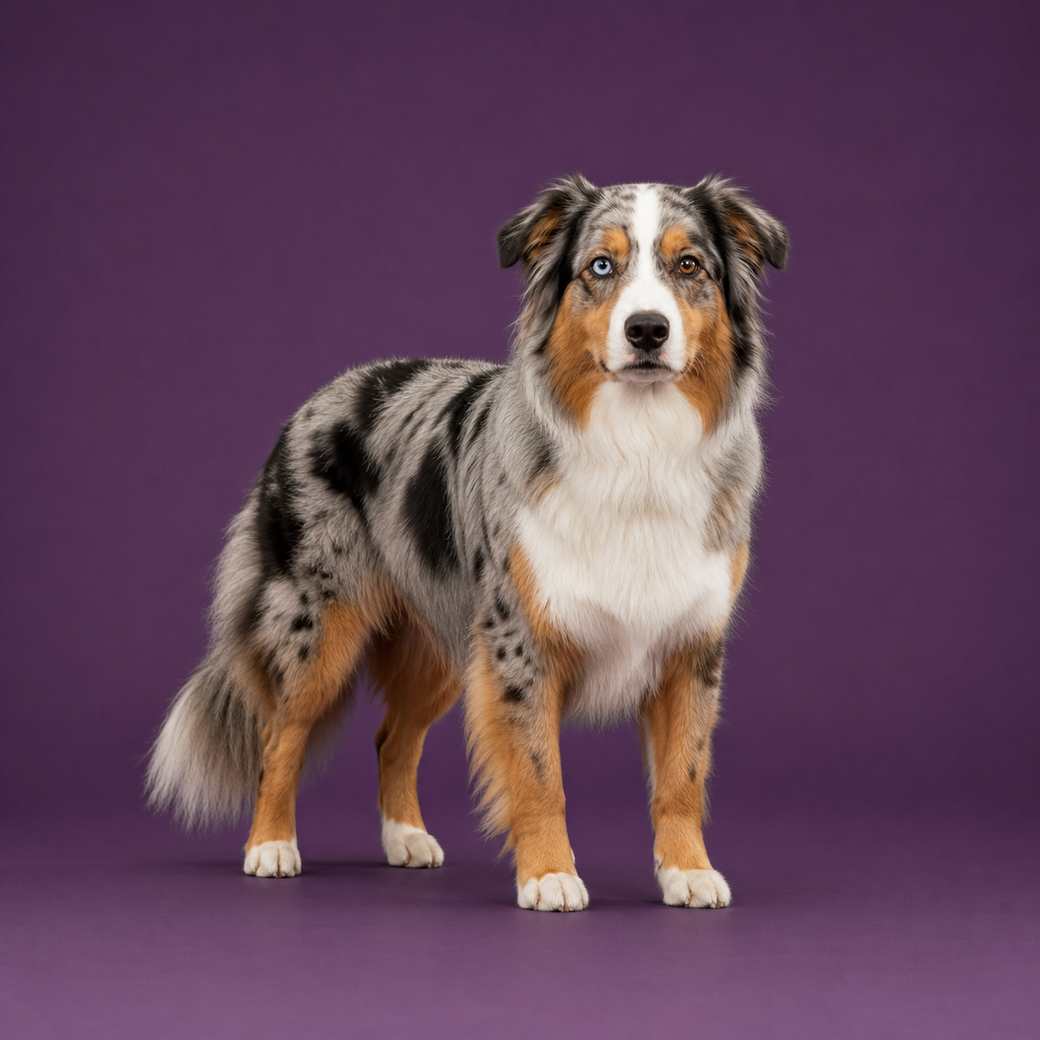
About that name: the Australian Shepherd is American, a breed shaped on the sheep ranches of California and the mountain West in the nineteenth century. Lore credits Basque shepherds, and the name apparently followed the flocks, many of which reached the coast by way of Australia. Nobody minds the confusion, least of all the dog, which is too striking for paperwork to matter — merle coats marbled in blue or red, and eyes that arrive in brown, amber, or ice blue, sometimes one of each: a face you check twice to be sure you saw it.
Living with an Aussie is a staffing decision. They are affectionate to the point of supervision — following you room to room, leaning on your shins, monitoring the perimeter — and they need employment the way other dogs need dinner. An hour or two of hard exercise is the floor; the ceiling is whatever you can schedule. Under-worked, they will herd the children, the cat, and the vacuum. Worked, they are radiant: quick, attuned, absurdly willing. The double coat sheds in earnest. Consider it a subscription fee for a very good employee.
Keeping one happy
Grooming
The dense double coat wants a thorough brushing once or twice a week, escalating to daily during the spring and fall blows — an undercoat rake earns its keep. No shaving, ever; the coat insulates in both directions. Trim the feet, mind the pants, and accept the hair as a lifestyle.
Training
Among the most trainable dogs alive: eager, fast, and hungry for the next assignment. The risk is under-asking — an Aussie with nothing to learn starts improvising curriculum. Obedience, agility, herding, trick work, all of it lands. Socialize early and give the herding instinct legal outlets before it finds the toddlers.
Exercise
Very high, and non-negotiable: an hour or two daily of real running, fetch, hiking, or sport, plus mental work that makes them think. This is a breed for people who already exercise, or who mean it about starting. Weekends alone cannot carry the account.
Diet
An athlete’s appetite in measured portions: quality food twice a day, scaled to the week’s actual workload, with treats counted against the total — training-heavy homes overfeed by accident. Keep them lean; agile dogs pay for extra pounds in hips and knees. Fresh water through every working session.
A century in the sheep camps
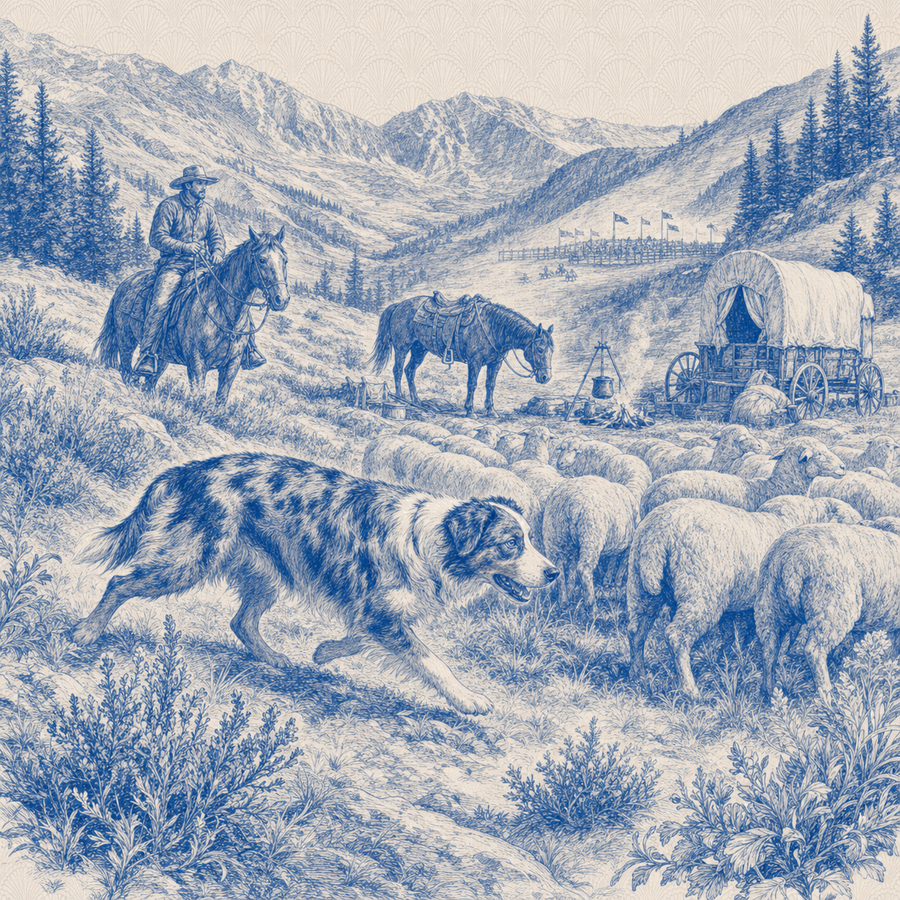
A ranch dog of the American West: nineteenth-century stockmen needed an agile, weatherproof herder for high sheep country, and this breed became the region’s default answer. For a hundred years it stayed a working secret of the West, then rode the postwar boom in Western horse culture into national view. The AKC recognized the Australian Shepherd in 1991 — long after everyone west of Denver already had.
Questions, answered
Do Australian Shepherds shed a lot?
Yes — a dense double coat that sheds year-round and blows heavily in spring and fall. Weekly brushing is the minimum; in season, daily.
Are Australian Shepherds good family dogs?
One of the best matches for active families — affectionate, patient, and playful. The herding instinct may need redirecting away from running toddlers.
What is a mini Aussie?
A version bred down in size, now recognized separately as the Miniature American Shepherd. Same brains, smaller chassis, identical opinions about exercise.
Can an Australian Shepherd live in an apartment?
Only alongside a serious daily exercise habit. It isn’t the square footage they mind — it’s unemployment.