Basenji
Doesn’t bark. Has other announcements.
In 1956, Hollywood asked audiences to believe a boy could find, deep in the Mississippi swamps, a dog that laughed instead of barking. The strange part is that the dog was real. “Good-bye, My Lady,” directed by William Wellman with Walter Brennan and a young Sidney Poitier, starred a Basenji champion named My Lady of the Congo, on loan from the English breeder Veronica Tudor-Williams. Audiences heard a chuckling yodel where a bark should have been and assumed a sound effect. It was simply a Basenji, doing what Basenjis have done for thousands of years: exactly as they please.
Catlike, and not sorry
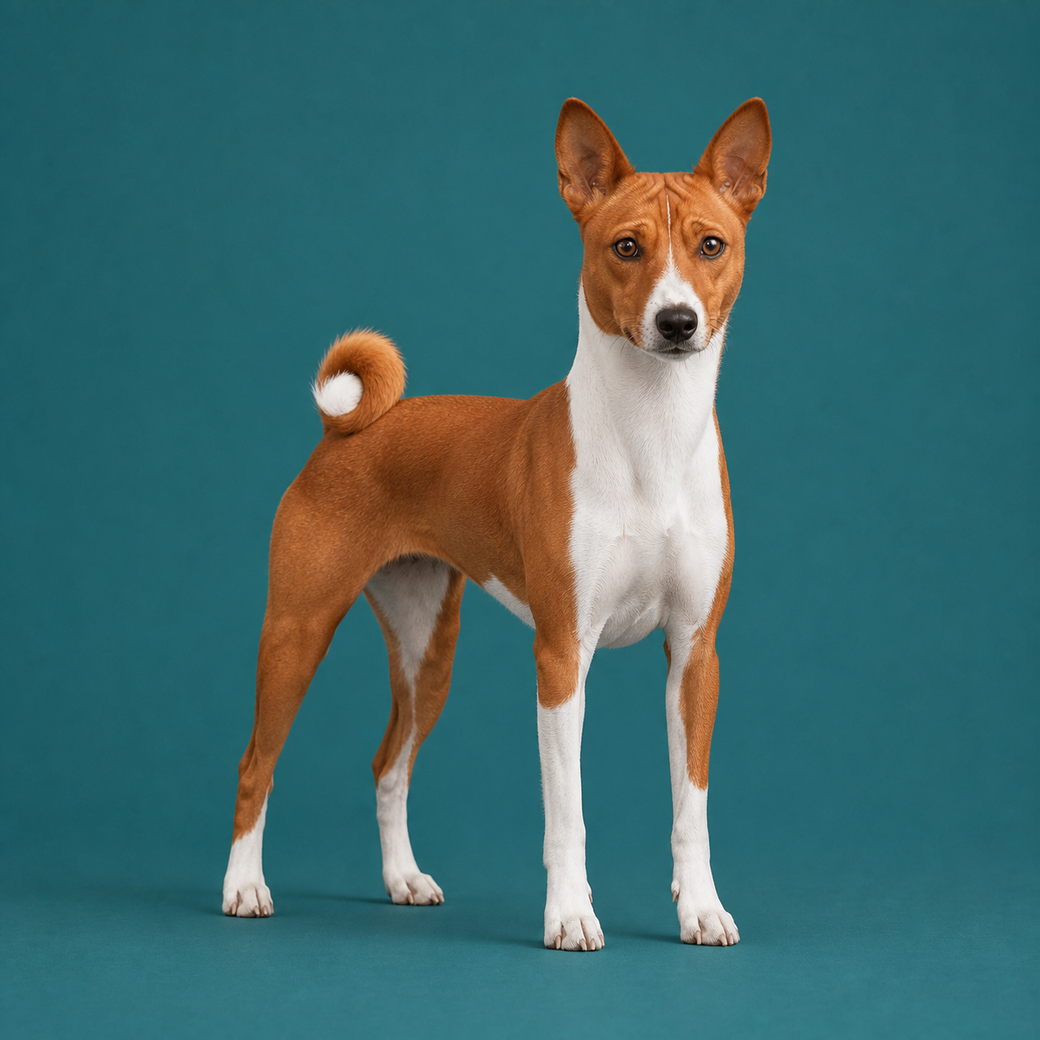
The bark is not missing — it was never installed. The Basenji’s larynx is shaped unlike any other dog’s, so instead of barking they yodel: a rising, chortling sound fanciers call the “baroo,” deployed for joy and grievance alike. The silence is ancient equipment. Dogs of this type have hunted alongside people in central Africa for millennia — village hunters prized their speed, courage, and quiet — and breed historians trace their likeness back to the prick-eared, curl-tailed dogs of ancient Egyptian art. Some résumés simply predate the résumé.
Day to day, the Basenji is the most catlike dog going: they groom themselves fastidiously, carry almost no doggy odor, and dispense affection on a schedule you will not be consulted about. Independent is the official word — commands are reviewed on their merits, and recall loses to any moving squirrel — so the leash and a tall fence are permanent infrastructure. They are inventive escape artists and diligent counter auditors. Meet their exercise needs and respect their terms, and you get an elegant, comic, deeply original companion.
Keeping one happy
Grooming
Close to self-cleaning: the short, fine coat needs a weekly once-over with a soft brush or hound glove, and little else. Basenjis groom themselves like cats and rarely need bathing — many actively resent water. Shedding is light. Nails and teeth on schedule; the dog will handle the rest, meticulously.
Training
Recalibrate before you start: this is a hunter bred to make its own decisions, and it never stopped. They learn fast and comply selectively, so keep sessions short, rewarding, and varied — repetition reads as an insult. Housetraining goes well; obedience-ring precision mostly does not. Bring humor. You will need it.
Exercise
High — a tired Basenji is the only reliably well-behaved kind. Daily brisk walks plus real sprints in a securely fenced space, and note that “securely fenced” means it: they climb, jump, and problem-solve. Never off leash in open country; the prey drive outranks every command ever issued.
Diet
Lean, small, and efficient: measured meals twice a day keep the sleek build honest, and treats — useful currency with this independent student — count against the total. Some owners note a picky streak; consistency beats catering. Fresh water always, particularly after the sprinting the breed genuinely requires.
From the Congo basin, slowly
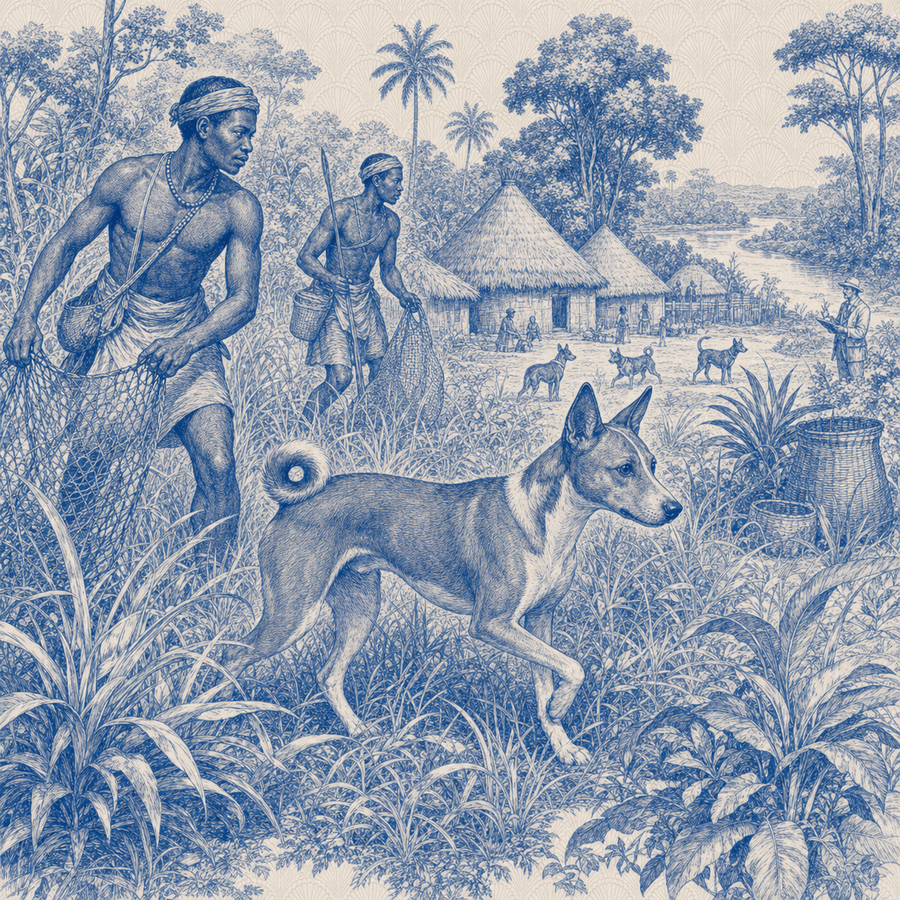
For millennia a hunting dog of central Africa, coursing game for villagers who valued a swift, silent partner. Europeans met the breed in the Congo basin in 1895, but early exports kept dying of disease, and it took until the 1930s for English breeders to establish them abroad. The AKC recognized the Basenji in 1944 — voice, standards, and self-possession fully intact.
Questions, answered
Do Basenjis really not bark?
Really — the larynx is shaped differently, so a true bark isn’t in the toolkit. They are not silent, though: expect yodels, howls, and pointed muttering.
Are Basenjis hypoallergenic?
As close as dogs come — a short, clean, low-shedding coat with little odor — but no dog is truly 100% hypoallergenic.
Are Basenjis good for first-time owners?
Honestly, rarely. They are independent, clever, and unmoved by authority. Experienced, patient owners with secure fencing have the best time.
Are Basenjis good with kids and other pets?
Fine with respectful older kids. The strong prey drive makes cats and small pets a genuine risk, and early socialization matters for everything else.