Basset Hound
Gravity’s favorite hound.
On July 1, 1956, television tried to tame Elvis Presley by handing him a Basset Hound. Chastened by weeks of scandal over his hips, Elvis appeared on The Steve Allen Show in a full tuxedo and sang “Hound Dog” to a mournful-looking Basset named Sherlock. Elvis would later call it the most embarrassing moment of his career. Sherlock, by every account, took the evening entirely in stride. Of course he did. Nothing about a Basset Hound can be hurried or embarrassed — the face was built for absorbing life’s absurdities, and so, it turns out, was the dog.
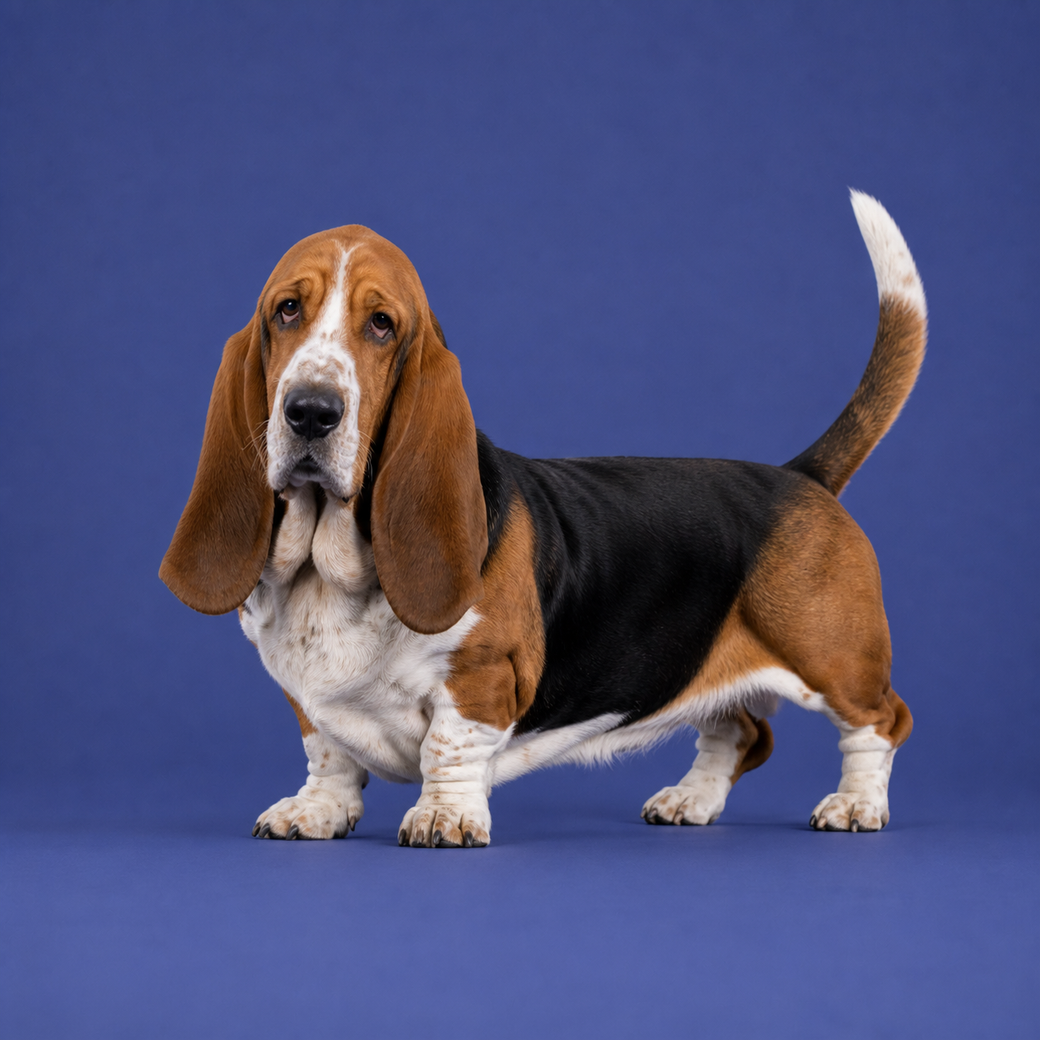
The unhurried professional
Mid-century America could not get enough of this face. In 1958 a Michigan shoe company put a Basset on its new brushed-suede casuals — Jason, the Hush Puppies hound, the brand’s mascot to this day — and by 1963 one in ten American adults owned a pair. The face sells because it appears to understand you. But under the melancholy branding sits serious machinery: a scenting nose ranked second only to the Bloodhound’s, long ears said to sweep smells toward it, and, pound for pound, heavier bone than any other breed in dogdom.
Living with a Basset is a lesson in pace. They are mellow, devoted, excellent with children, and firmly convinced that nothing worth doing happens quickly — including coming when called, an event the nose must first approve. Count on a real walk daily, because the breed gains weight with genuine talent; a leash wherever scent roams free; and management of the accessories — ears that dip into the water bowl, a rolling bay that carries, some drool applied to the furniture. In exchange: comedy, patience, and a low, warm shoulder against yours on the couch.
Keeping one happy
Grooming
The short coat sheds more than its length suggests — a weekly session with a rubber brush keeps it circulating into the bin instead of the rug. The real work is upkeep of the extravagant parts: clean and dry those long ears weekly, tend the facial folds, and keep a drool towel in commission.
Training
Patient, food-driven, and immune to nagging: the Basset was bred to follow a scent line for hours without consulting anyone, and that self-employment shows in obedience work. Short, cheerful, treat-funded sessions win; harshness just produces a slower Basset. Recall against a fresh scent is a bet you will lose.
Exercise
Low energy is not no energy. A daily walk of half an hour to an hour keeps the weight honest and the mind cheerful — follow-the-nose games are this breed’s favorite sport. Discourage stair sprints and furniture leaps; that long back and those heavy bones prefer life at ground level.
Diet
The pleading expression is a professional instrument — do not negotiate with it. Bassets gain weight easily, and extra pounds tax the long spine and short joints, so feed measured meals twice a day and audit the treats. As a deep-chested breed they carry bloat risk: calm mealtimes, no post-dinner romps.
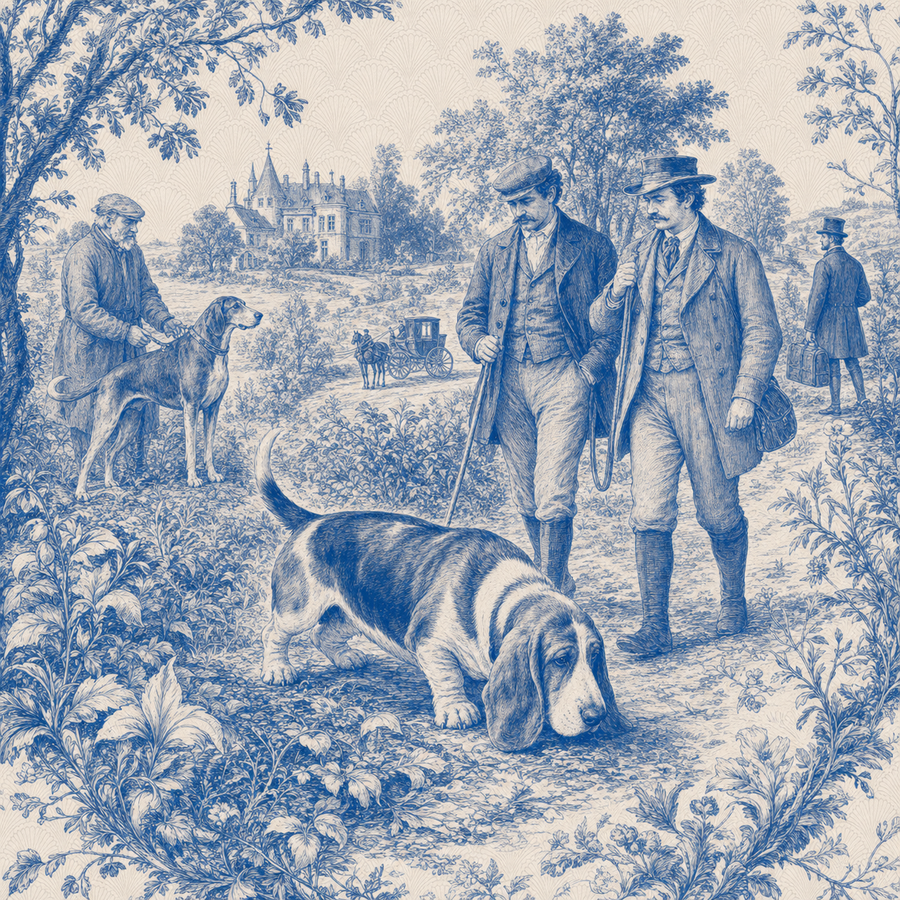
France, geared down for walking
The Basset is a French invention, and an old one — “bas” means low, and French hunters bred the great St. Hubert scenting hound down onto short legs so the hunt could proceed at walking pace. The type flourished in the era of Napoleon III, crossed to England in the 1870s, and was among the AKC’s earliest breeds, recognized in 1885.
Questions, answered
Are Basset Hounds lazy?
Low-energy, not no-energy. They nap with commitment but still need a real daily walk — obesity is the breed’s quiet enemy, and that long back carries a lot.
Do Basset Hounds bark or howl a lot?
They own a big voice — a rolling bay — used when lonely, bored, or on a scent. Company and daily exercise keep it occasional.
Are Basset Hounds good with kids?
Famously — patient, sturdy, and tolerant. Just keep climbing kids off that long back, and mind the food: a Basset never met a sandwich it considered yours.
Do Basset Hounds drool and shed?
Yes and yes — steady moderate shedding from the short coat, and honest drool, especially around meals and water. Keep a towel by the bowl.