Beaglier
Australia’s answer to a wandering nose.
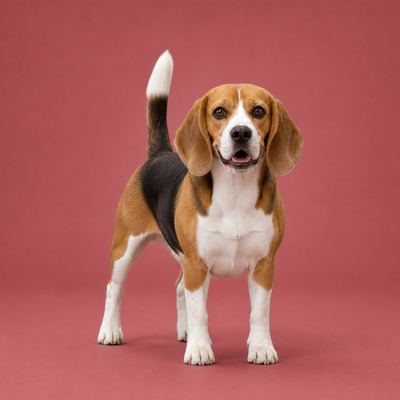
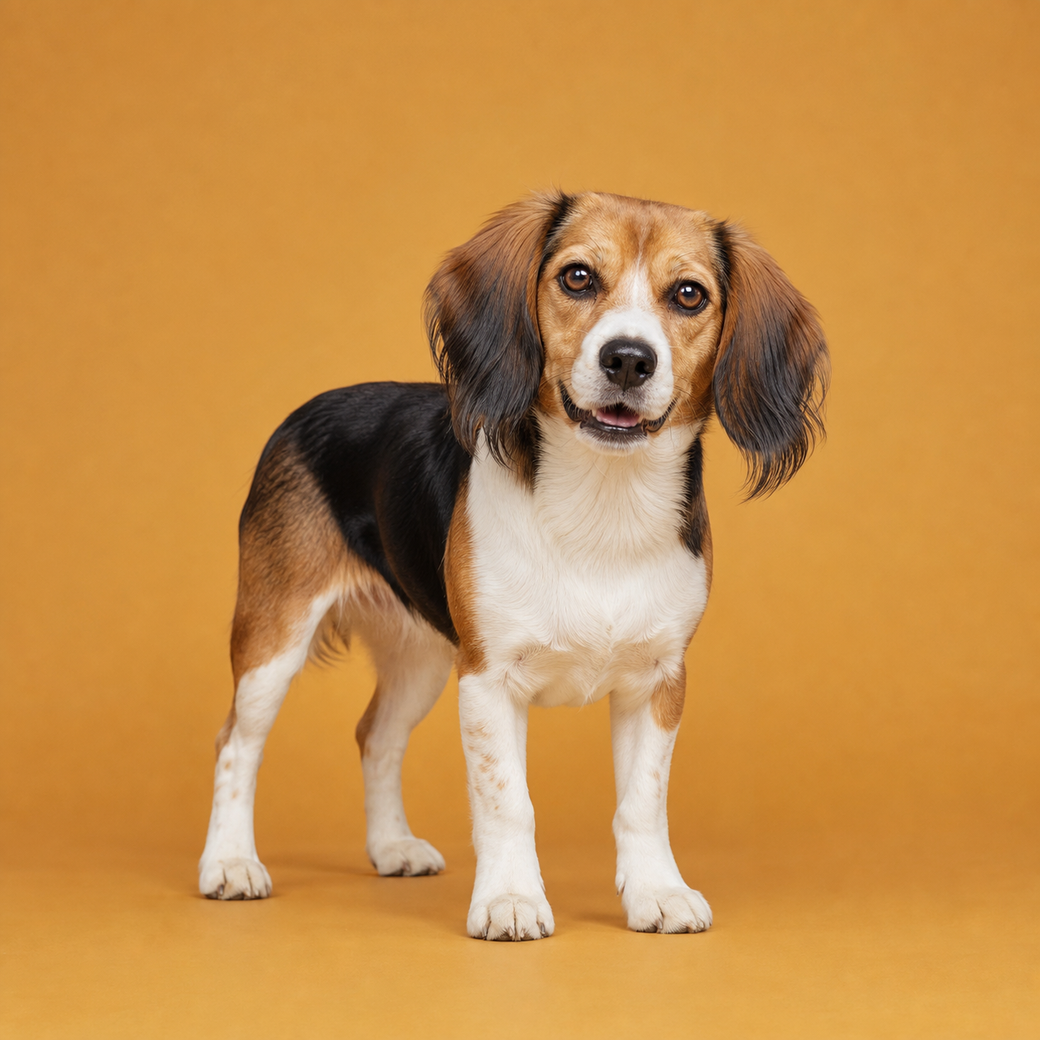
Somewhere in Australia in the 1990s, breeders looked hard at the Beagle — that merry, portable hound whose nose regularly escorts it out open gates and over the horizon — and asked a practical question: could you keep the merriment and turn down the wandering? Their answer was the Cavalier King Charles Spaniel, a toy spaniel whose deepest professional ambition is a warm lap. The cross became the Beaglier: small, glossy, brown-eyed, with most of the Beagle’s good cheer and noticeably less of its urge to leave. It was a good question. Decades on, it still looks like a very good answer.
Merry, minus the mileage
The Beaglier belongs to the first generation of deliberate Australian crosses, bred in the 1990s with a stated goal: an energetic family dog without quite so much hunting hound in it. Honesty requires the fine print. A cross is a genetic coin toss — one Beaglier gets the Cavalier’s velvet calm, the next gets a Beagle nose with its own itinerary, and most land somewhere charming in between. There is no kennel-club standard and no guarantee beyond this one: both parent breeds are champions of liking people, and that trait passes down reliably.
Day to day, that means a small dog who takes family life personally — underfoot in the kitchen, delighted by children, mildly offended by an empty house. Companionship is the whole design brief; a Beaglier left alone all day will register the complaint, sometimes audibly. The Beagle inheritance shows up as appetite and the occasional trance at an interesting smell, so the leash stays on and the treats get counted. Give them company, a daily walk, and something to sniff, and they are about as easy as small dogs come.
Keeping one happy
Grooming
The coat depends on the draw: a Beagle-short jacket needs a weekly once-over, while a silkier Cavalier-style coat wants brushing two or three times a week and attention behind the ears. Either way, the drop ears are the real chore — check and dry them weekly, since both parent breeds are prone to infections.
Training
Two eager-to-please parents make a willing student, but the Beagle half negotiates when a smell outranks you. Keep sessions short, cheerful, and paid in food — this is a dog that works for the kitchen. Practice recall early and often, and treat it as insurance rather than a promise.
Exercise
Moderate and manageable: a couple of daily walks plus real play covers it, which suits apartments fine. Build in sniffing time — a slow walk where the nose leads is genuine exercise for a hound brain. Without it, the energy resurfaces indoors as mischief with your laundry.
Diet
Feed measured meals twice a day and hold the line: the Beagle appetite is usually part of the package, and a small frame shows extra weight fast. Count training treats against dinner. Cavalier ancestry can carry heart concerns, which is one more argument for keeping them lean.
A deliberate Australian invention
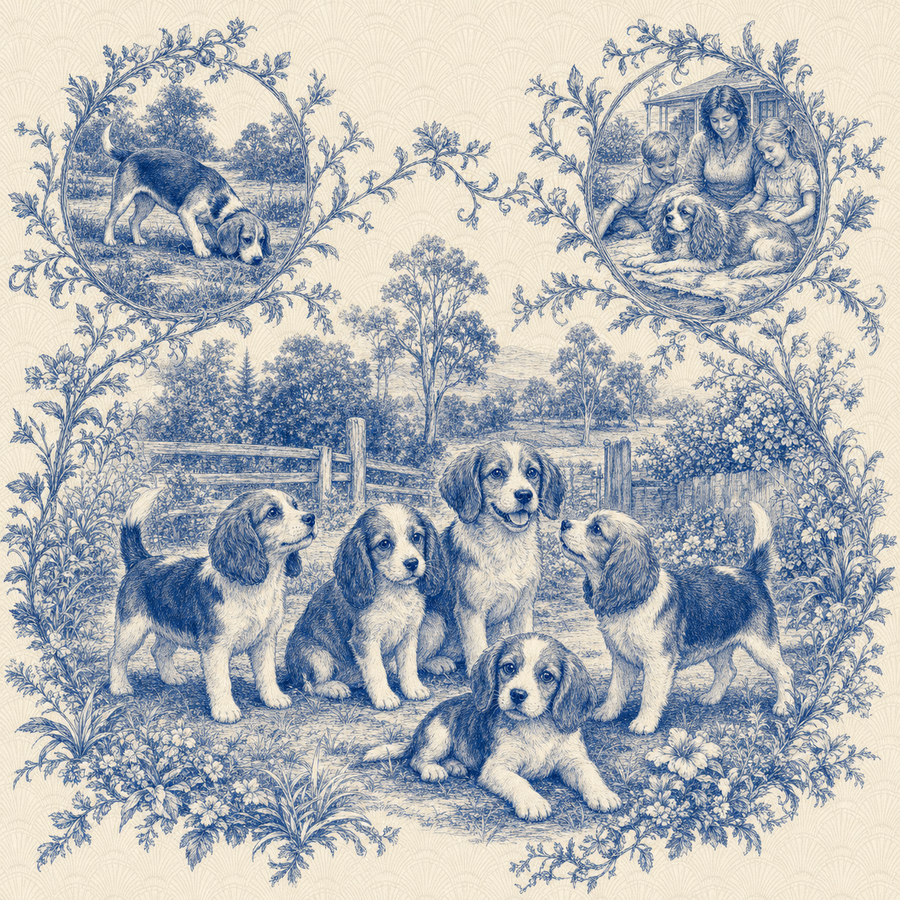
The Beaglier emerged in Australia in the 1990s, part of the same designer-cross wave that produced the Labradoodle — in this case pairing the Beagle with the Cavalier to soften the scent hound’s hunting drive for family life. No kennel club recognizes the cross, so there is no standard, only the parents. Well-bred examples have carried the experiment off with real charm.
Questions, answered
Are Beagliers hypoallergenic?
No — most shed moderately, whichever parent they favor. No dog is truly hypoallergenic, and this cross doesn’t carry the Poodle coat people associate with the claim.
Do Beagliers bark or howl?
Less than a Beagle, usually — but the hound voice can come with the nose. Early training and plenty of company keep it conversational.
Are Beagliers good with kids?
One of the better small-dog matches — sturdy enough for play and bred from two famously kid-tolerant parents. Supervise as you would any small dog.
How big does a Beaglier get?
Most land between the parents — roughly a foot tall and 15 to 25 pounds, with real variation from litter to litter.