Belgian Malinois
The most employable dog on earth.
One member of the SEAL team that flew into Abbottabad in May 2011 had four legs and a combat record. Cairo, a seventy-pound Belgian Malinois, was already a veteran of the war — shot in the chest and leg during a 2009 firefight in Afghanistan, rebuilt by military surgeons in Texas, and returned to duty. His handler, Will Chesney, called the memoir of their ten years together “No Ordinary Dog,” which qualifies as military understatement. How this lean Belgian herding breed came to hold the most serious job in the dog world is not a mystery. You just have to watch one work.
Drive, focus, and then more drive
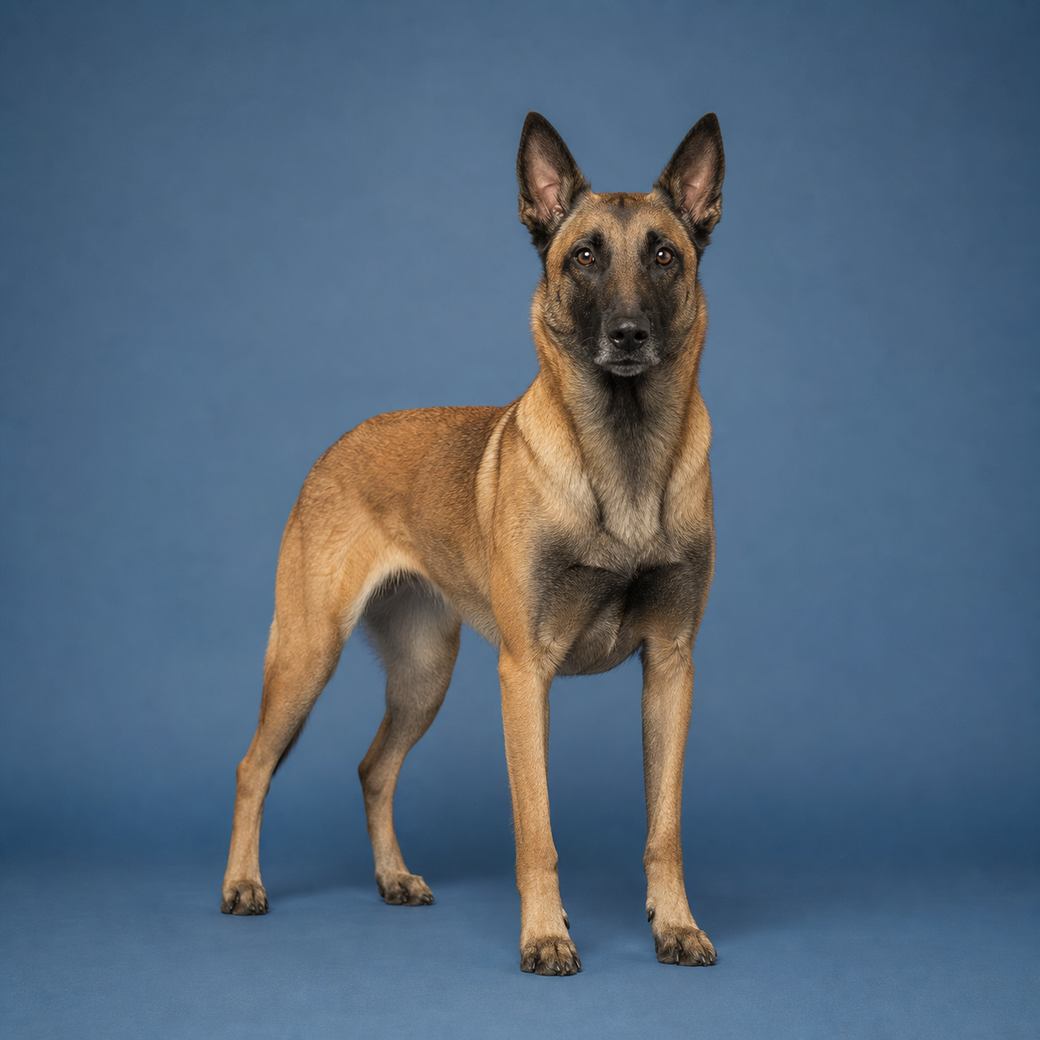
In October 2019, another Malinois chased the leader of ISIS down a tunnel in Syria, was injured, recovered fully, and stood in the White House Rose Garden while the president pronounced Conan “a tough cookie.” None of this is coincidence. Lighter, faster, and more heat-tolerant than the German Shepherd, the Malinois has become the working dog of choice for military units, police departments, and the Secret Service. The AKC describes “a world-class worker who forges an unbreakable bond with his human partner,” and for once the registry undersells it.
Now the honest part: almost nobody should live with one. The Malinois is a professional athlete on a permanent contract — brilliant, watchful, and wired to work every waking hour, with a herding heritage that will organize your children if nothing better is offered. Under-employed, they invent jobs, and their inventions involve your drywall. But for the handler, runner, or sport-dog person who can spend real hours on them daily, the return is a partner of almost unsettling devotion — and, at fourteen to sixteen years, an unusually long partnership.
Keeping one happy
Grooming
The easy part of Malinois ownership: a short, weatherproof double coat that needs a weekly once-over with a medium brush, stepped up to daily during the two seasonal sheds. Baths only occasionally — the coat runs naturally clean. Nails weekly; a dog this active earns wear but still needs the trim.
Training
Training is not an activity for a Malinois; it is the relationship. They learn at professional speed, read your body language like a script, and need daily structured work — obedience, scent games, bite-sport, anything with rules. Keep it positive and consistent. An untrained Malinois is not really a pet; it is a liability with excellent reflexes.
Exercise
Plan on two hours a day of genuine output — running, biking, swimming, sport training — plus mental work, which tires them faster than mileage. A walk is a warm-up, not a workout. The good news: a properly exercised Malinois is calm, quiet, and surprisingly cuddly indoors. The equation only fails when you skip your half.
Diet
An athlete’s metabolism wants a high-quality, protein-forward food in two measured meals, scaled to the day’s work — sport dogs and weekend hikers burn very different budgets. They rarely run to fat; the more common error is under-fueling a hard-working dog. Watch condition over the ribs and adjust with the season.
From sheep to state business
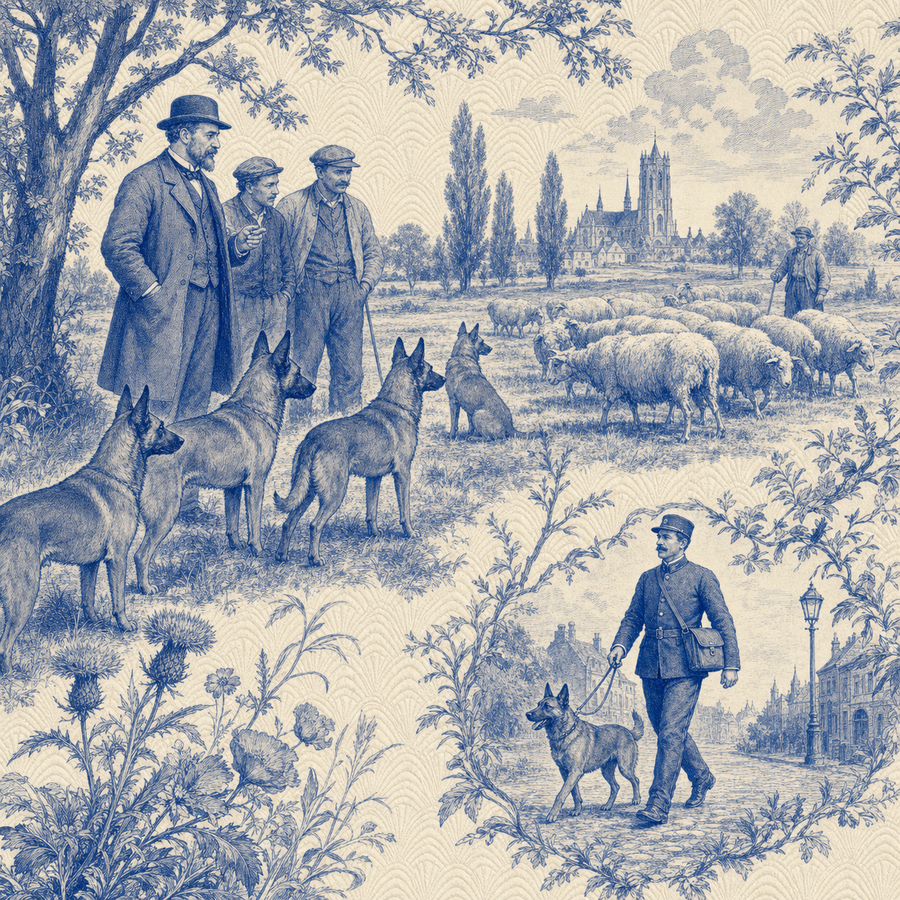
The Malinois is one of four Belgian Shepherd varieties sorted out in the 1890s, when Adolphe Reul of the Cureghem veterinary school standardized Belgium’s herding dogs. Named for the city of Mechelen — Malines, in French — it bred true so early that the other varieties were briefly known, collectively, as “other-than-Malinois.” The sheep work faded; the work ethic did not, and police and military service found it.
Questions, answered
Is a Belgian Malinois a good family dog?
For highly active, experienced homes, yes — devoted and gentle with their own people. For a typical household wanting a companion, honestly, no. The work requirement is not negotiable.
Belgian Malinois vs. German Shepherd — what’s the difference?
The Malinois is lighter, quicker, and typically higher-drive, with a shorter coat and a famously long working life. The Shepherd is generally the calmer family option.
How much exercise does a Malinois need?
Around two hours of real physical work daily, plus training and mental jobs. Under-exercise is the root of nearly every Malinois problem.
Do Belgian Malinois shed?
Yes — moderately year-round, heavily twice a year. The short coat keeps grooming easy; the vacuum schedule is another matter.