Bernese Mountain Dog
A farmhand first, a lapdog by conviction.
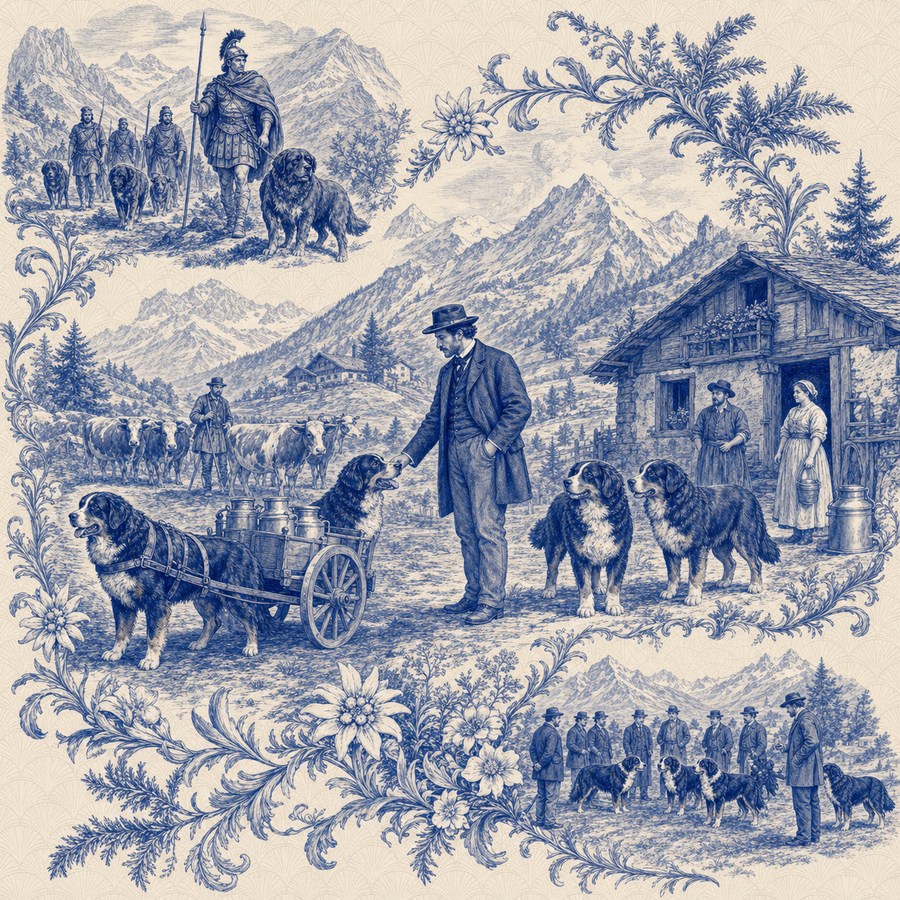
Before Switzerland had highways, it had dogs. On the small dairy farms around Bern, a farmer who could not spare a horse harnessed the big tricolor farm dog instead, and the morning’s milk — and, in season, wheels of cheese — rolled to market behind a steady black, rust, and white engine that asked nothing but dinner and inclusion. The same dog herded the cows, watched the yard, and lay across the doorstep at night, a one-dog agricultural workforce. The Bernese Mountain Dog has been off the clock for about a century now. Nobody has told the Bernese, and nobody should.
Strong back, soft heart
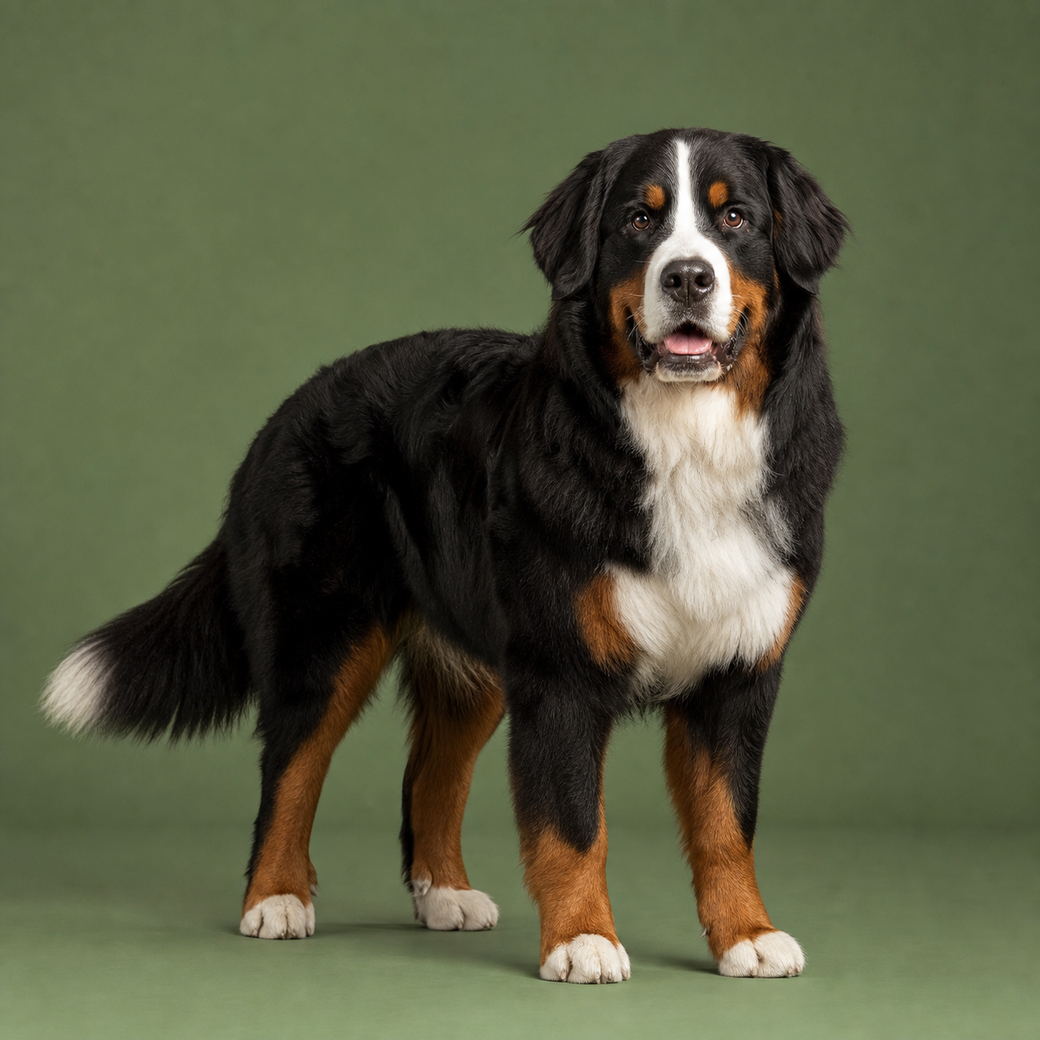
The work survives as sport. The American parent club runs drafting tests in which a Berner pulls a loaded cart for a half mile — precisely the job their ancestors did for Alpine dairy farms — and the dogs, by every account, are delighted. That tells you most of what matters: this is a working heavyweight with no edge. Swiss farmers needed power they could trust around cattle and children alike, and selected for it, generation after generation. What came down the line is strength wrapped in patience — and a conviction that every lap is load-rated.
At home they are shadows — large, quiet, mildly comic shadows that trail you through the house and rest a chin on whatever you are doing. They are famously gentle with children, reserved but polite with strangers, and happiest in cool weather; summer is for shade and early walks. Two honest costs: the coat drifts through the house year-round, and the lifespan, at seven to ten years, is heartbreakingly short. Berner people will tell you the exchange is still lopsided — in the dog’s favor.
Keeping one happy
Grooming
A thick double coat that sheds steadily and blows twice a year: brush two or three times weekly, daily during the spring and fall molts, with a rake for the undercoat. No trimming — the coat insulates in both directions. Accept the hair as a household condiment; every Berner home does.
Training
Eager, sensitive, and slow to grow up — a Berner is a puppy in a big dog’s body until age two or so. Train early, gently, and with patience for the goofiness; harsh corrections wound them. Leash manners are non-negotiable homework, because a hundred pounds of enthusiasm steers you otherwise.
Exercise
A half hour to an hour of moderate daily work: walks, hikes, snow anything — winter restores their youth on the spot. Carting and drafting are the breed’s own sports and genuinely joyful to train. Go easy on growing joints, and skip midday summer outings entirely; heat is their one enemy.
Diet
Two measured meals a day of a quality large-breed food, with puppies on a slow-growth formula to protect hips and elbows. Keep them lean for the joints and the years — both are precious here. As a deep-chested breed they carry bloat risk: calm mealtimes, no hard exercise right after.
From Roman roads to the Bern farmyard
Mastiff-type dogs came over the Alps with Roman soldiers two thousand years ago and stayed to become Switzerland’s farm generalists. By the 1890s the old type was fading, and a breeder named Franz Schertenleib began scouring the countryside for good examples; a breed club followed in 1907. The first Berners reached America in 1926, imported by a Kansas farmer, and the AKC recognized the breed in 1937.
Questions, answered
How long do Bernese Mountain Dogs live?
Honestly, 7–10 years — one of the shortest spans among popular breeds, with cancer common in the line. Good breeders screen carefully; it is the question to ask first.
Do Bernese Mountain Dogs shed?
Heavily and year-round, with two big seasonal blows. Not remotely hypoallergenic.
Are Berners good with kids?
Among the best of the big breeds — patient, gentle, and devoted. Supervise toddlers anyway; a happy tail operates at head height.
Can a Bernese live in a hot climate or apartment?
Apartments can work with daily outings — they are calm indoors. Heat is the harder problem: air conditioning, shade, and dawn walks are the summer program.