Bichon Frise
Small, white, and permanently on tour.
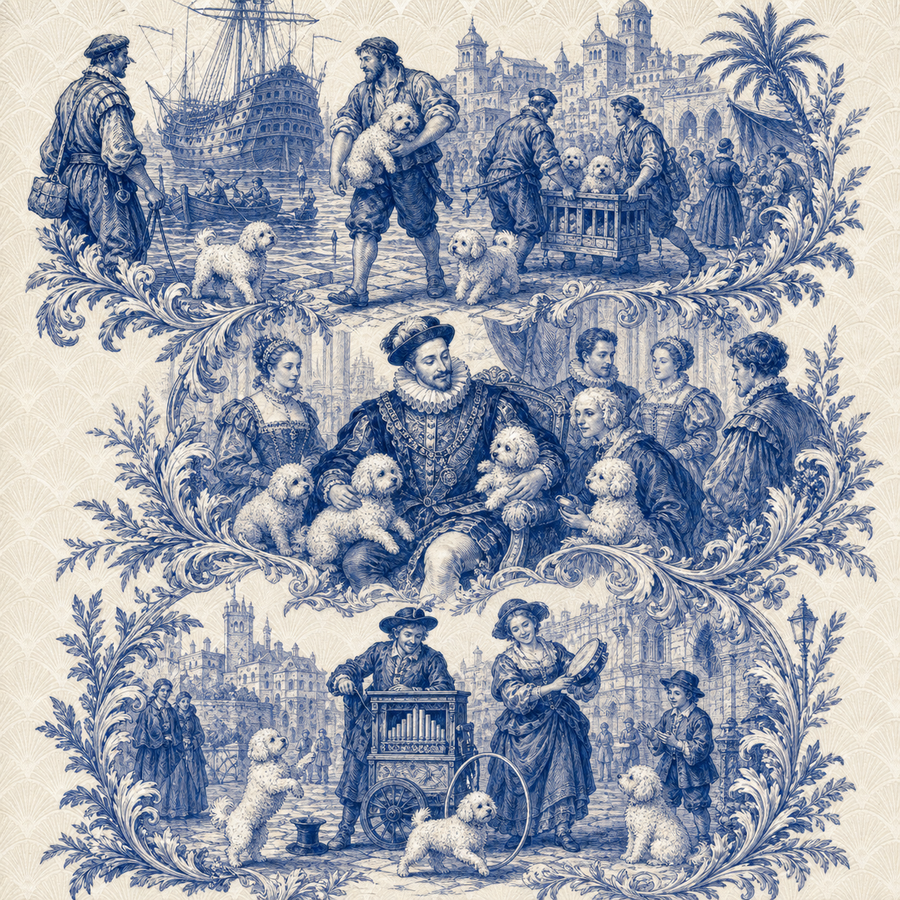
King Henry III of France so adored his bichons that he carried a few wherever he went, in a tray-like basket ribboned around his neck. Statecraft could wait. Then came 1789, and the Revolution was hard on everyone attached to an aristocrat — including the little white lapdogs of the ancien régime, suddenly unemployed. Here is what the Bichon Frise did about it: went to work. On the streets, with organ grinders and circus troupes, the ex-courtiers earned their bread doing tricks, and discovered they were naturals. Charm, it turns out, is a transferable skill.
Cheer, professionally maintained
The showmanship never left. In February 2001, a Bichon named J.R. — registered, wonderfully, as Special Times Just Right — took Best in Show at Westminster, the first of his breed to do it, and celebrated the way a Bichon would: he spun in a circle and leapt into the air, on national television. The judge called him “as close to perfection as you can get.” J.R. retired with 101 Bests in Show and a signature move of waving a paw at his fans, of whom there were, by then, roughly all of us.
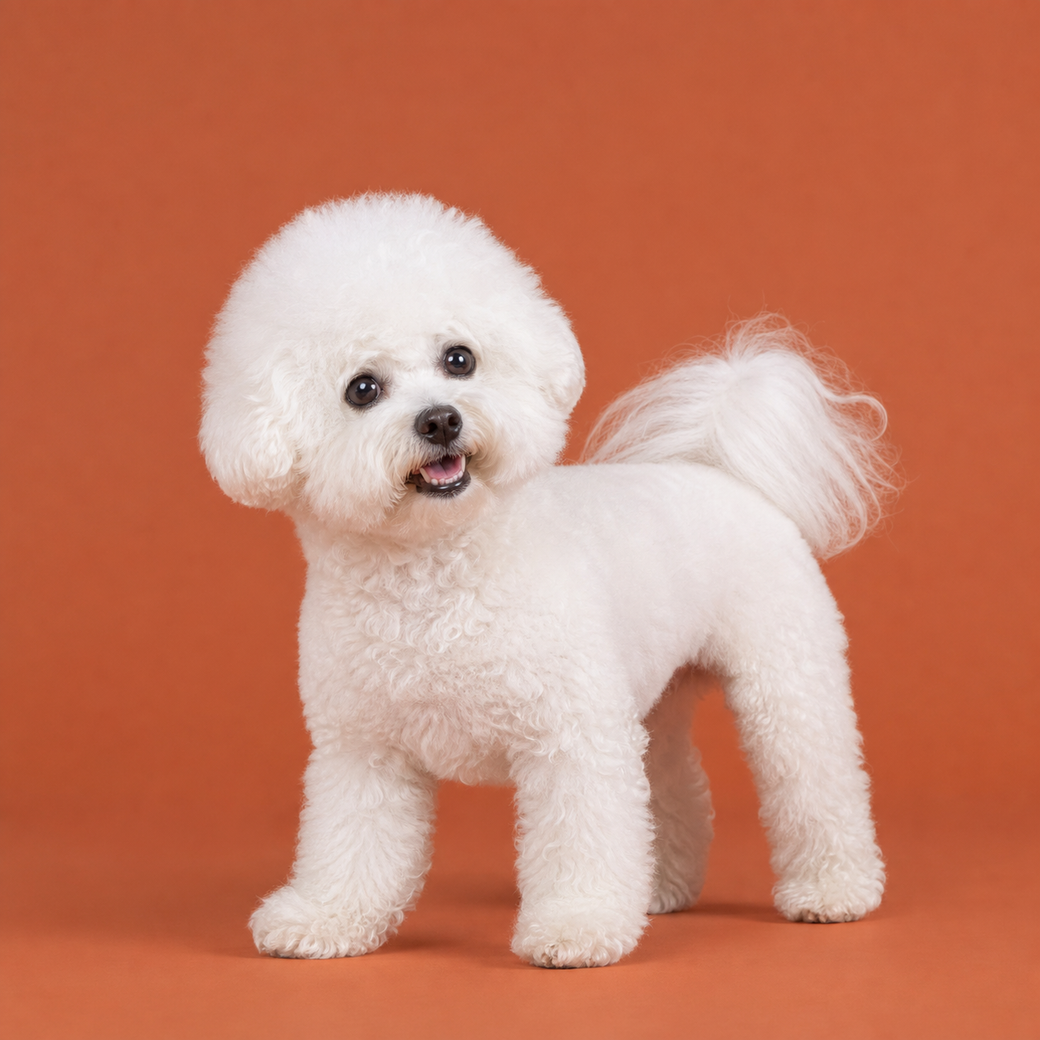
The home version is the same act, unticketed. A Bichon is a small, sturdy optimist that assumes company is coming and will be delighted, and would genuinely rather not be alone — this is a companion breed with no plan B. The white coat does not shed so much as file itself away, which means real grooming. They are sturdy enough for children and social enough for any guest list. What you get back is a dog whose whole job, always, has been making rooms happier.
Keeping one happy
Grooming
The plush white coat is the breed’s one real bill: brushing every day or two to prevent mats, plus a professional bath and trim every four to six weeks. Tear stains respond to gentle daily face-washing. The upside of all that upkeep — very little hair ever reaches the furniture.
Training
Bichons learn happily — performing is in the pedigree — and trick training is the fastest route to their hearts. Keep it upbeat; they wilt under scolding. The known hard part is housetraining, which takes months of consistency and a fixed schedule. Crate training helps. So does a sense of humor.
Exercise
Moderate and merry: a couple of short walks plus indoor play carries the day, which is why Bichons thrive in apartments. Expect the occasional burst of top-speed laps around the sofa — let it run its course, then resume. Fetch down a hallway counts as cardio at this size.
Diet
Small dog, small margins: two measured meals a day, with treats — the currency of Bichon training — counted honestly against the total. Watch weight in middle age, when the play slows before the appetite does. Some Bichons have sensitive skin; if theirs flares, diet is a conversation to have with the vet.
Sailed from Tenerife, landed everywhere
The ancestor was the Bichon Tenerife, a little white dog of the Canary Islands that sailors carried from port to port, into the courts of Renaissance Spain, Italy, and France. France made the breed official in 1933; the first six reached America with a French couple in 1956, and the AKC admitted the Bichon Frise to the Non-Sporting Group in 1973. The cheerfulness survived every port.
Questions, answered
Are Bichon Frises hypoallergenic?
One of the better breeds for allergy-sensitive homes — the coat sheds minimally — but no dog is truly hypoallergenic. Spend time with one first.
Do Bichons bark a lot?
They are alert and will announce visitors, but they are not chronic barkers by nature. Company and routine keep it that way — a lonely Bichon gets vocal.
Are Bichons hard to housetrain?
Harder than average, honestly. Plan on months of consistent scheduling and crate training, and celebrate progress — it does arrive.
How long do Bichon Frises live?
Typically 14–15 years — small, sturdy, and long-lived with good care.