Border Collie
A genius in a farm coat, seeking employment.
When John Pilley, a retired psychology professor in South Carolina, brought home a Border Collie puppy in 2004, he decided to find out how far a dog could actually go. Three years of play later, Chaser knew the proper names of 1,022 toys — Uncle Fuzz the monkey among them — and could fetch any of them on request, the largest tested vocabulary of any animal on record. Shown an unfamiliar word, she would reason it out: the new name must belong to the new toy. Researchers called it learning by exclusion. Border Collie owners called it a dog with spare capacity.
Brilliance, billed hourly
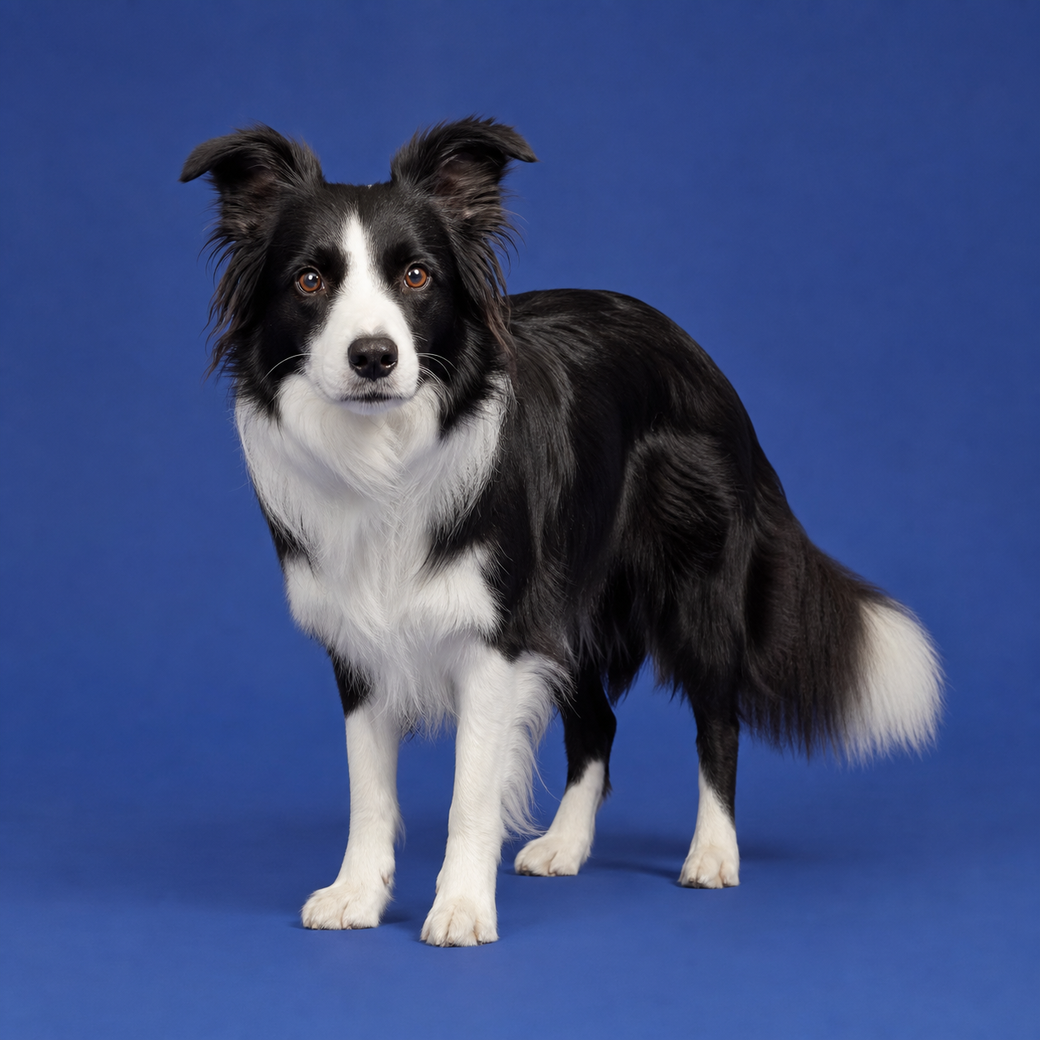
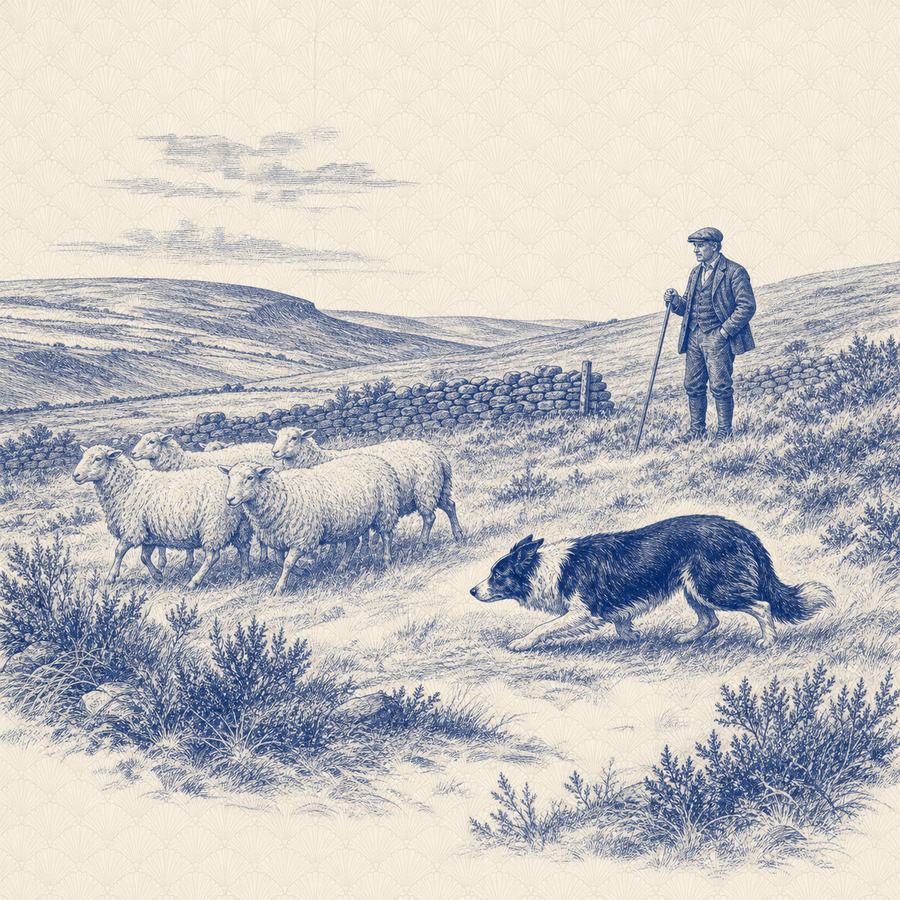
The intelligence was never bred for vocabulary. It was bred for the hill: reading a scattered flock, a shepherd’s whistle, and the weather all at once, half a mile from instruction. Watch one work and you see the breed’s signature move — the low crouch and fixed stare shepherds call “the eye” — a predator’s stalk edited down to pure persuasion. Sheepdog trials exist largely because farmers wanted to compare these dogs, and the working registries still record ability rather than appearance: if a dog cannot manage sheep, the paperwork barely counts.
Living with one means employing one. A Border Collie without a job will appoint themselves to something — herding the children, the cat, the vacuum — and their working day is your working day. The honest math is an hour or two of real exercise plus genuine mental work: training, agility, scent games, anything with rules. Pay it, and you get a partner who studies your habits, anticipates your next move, and learns household routines faster than the humans do. Skip it, and you will both be miserable. That is the whole bargain, stated plainly.
Keeping one happy
Grooming
The dense double coat wants a thorough brush once or twice a week — daily during the spring and fall sheds, when the undercoat leaves in earnest. Baths only when they have found something worth rolling in, which, being Border Collies, they will. Ears checked and nails trimmed monthly; no styling required.
Training
The easiest breed in the world to train and the hardest to out-think. They learn in a handful of repetitions, so mind what you teach by accident — they memorize your bad habits too. Keep sessions short and purposeful, add herding, agility, or trick work, and never confuse tired with satisfied.
Exercise
Plan on ninety minutes to two hours daily, and make some of it thinking work — fetch alone will not do it, and a bored Border Collie is an engineering problem. Long runs, hikes, herding lessons, disc, and agility all count. A tired one at your feet in the evening is the reward.
Diet
Feed a high-quality food portioned for a lean, hardworking medium dog — a farm dog burns serious calories, a weekend athlete far fewer, so match the bowl to the actual workload. Two measured meals a day, treats counted against training (there will be a lot of training), and fresh water always.
One quiet dog changed everything
The breed comes from the hill country along the Anglo-Scottish border, where shepherds bred for work and nothing else. Much of it descends from a single dog: Old Hemp, born in Northumberland in 1893, who herded with silent, mesmerizing calm where others barked and nipped, and sired over 200 puppies for the shepherds who noticed. The AKC recognized the breed in 1995.
Questions, answered
Do Border Collies shed a lot?
Yes — steadily year-round and heavily in spring and fall. Regular brushing manages it; nothing eliminates it.
Can a Border Collie live in an apartment?
Only alongside an athlete’s schedule. It is the daily exercise and mental work that matter, not the square footage — but most apartment routines supply neither.
Are Border Collies good with kids?
Affectionate and playful with their own family, though the herding instinct can mean circling and nipping at running children. Training and real outlets redirect it.
How much exercise does a Border Collie need?
Ninety minutes to two hours a day, with genuine mental work included. This is the least negotiable fact about the breed.