Border Terrier
A working dog’s soul in fourteen scruffy pounds.
The dog who stole “Anchorman” came from a shelter. Peanut, a Border Terrier pulled from a Los Angeles city shelter, had been warming up crowds at Universal Studios when he was cast as Baxter — Ron Burgundy’s roommate, confidant, and the only character in the film with any judgment. The casting was truer than the filmmakers may have known. Border Terriers have spent more than a century as the sensible ones: plain, brown, slightly rumpled little dogs who watch the household’s actual mayhem with level eyes and then, when something finally needs doing, quietly do it.
Sensible, until the fox
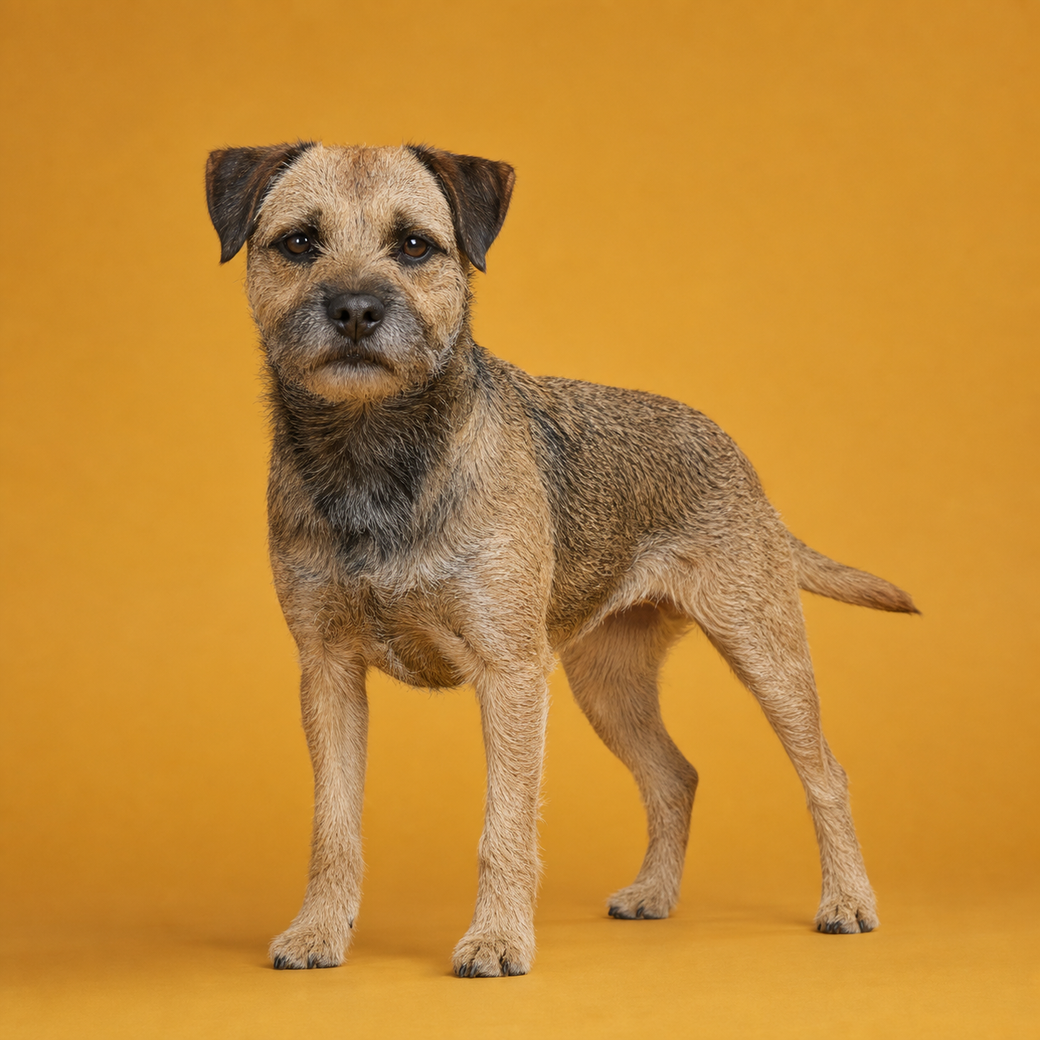
They were built where England runs into Scotland, by hill farmers who needed a terrier with legs long enough to run all day with the foxhounds and a body narrow enough to follow a fox underground at the end of it. The breed standard still asks for the head of an otter, and the wiry, weatherproof jacket still shrugs off rain that sends other dogs home. Nothing about them was ever designed for show — which has become, over a century of fashion cycles, exactly their charm.
At home they are the terrier for people who find terriers a bit much: affectionate, portable, good-humored, genuinely fond of children, and calmer than most of their cousins. The working software still runs underneath. They dig, they chase, and a bolting squirrel outranks your recall — the leash and the fence are permanent infrastructure. They want to be where you are, doing whatever you are doing, ideally with mud involved. Keep them busy and included, and they are about as easy as small dogs get, with twice the substance.
Keeping one happy
Grooming
The wiry double coat sheds lightly and needs a weekly brush, plus hand-stripping twice a year to pull the dead outer coat and keep it weatherproof — clipping softens both the texture and the color. Between strippings they are famously low-maintenance: dirt dries and falls out of that coat almost on its own.
Training
Biddable by terrier standards, which is a real compliment — they learn quickly, want to please, and hold no grudges. Keep sessions short, upbeat, and rewarded, and start recall early while accepting its limits around wildlife. Socialize them young with cats and small pets; the hunting wiring never fully uninstalls.
Exercise
An hour or so a day of walks and honest play, and they will gladly take more — these are dogs that once ran with horses. Earthdog trials, agility, and long rambles all suit them. Under-exercised, they excavate, and the flowerbeds are the first casualty. A tired Border is a tidy houseguest.
Diet
Bred to work hard on modest rations, they gain weight easily in softer employment. Two measured meals a day, treats counted honestly, and a hand run over the ribs now and then to check the trend. They are enthusiastic, unfussy eaters — charming right up until the vet says the word chunky.
Named for the border it worked
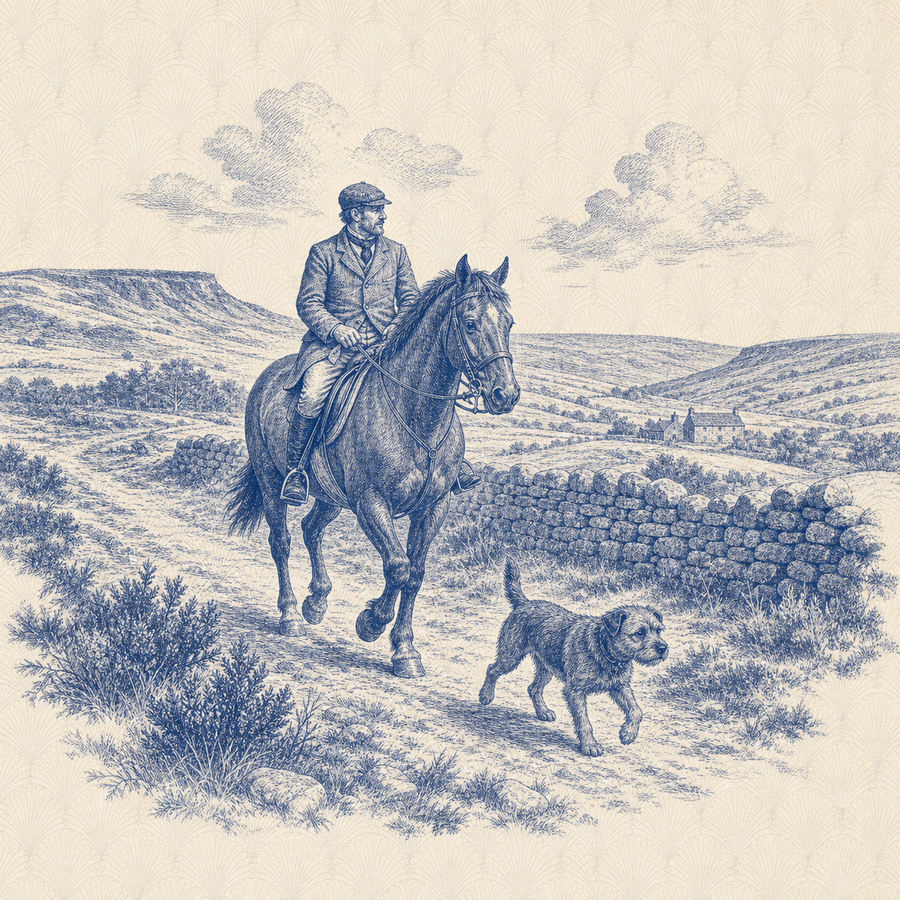
Before the name settled, they were the Coquetdale Terrier and the Redesdale Terrier, after the Northumberland valleys that bred them. Farmers and the local hunts — including the Border Hunt, which lent the final name — relied on them for generations before the fancy noticed. The Kennel Club recognized the breed in 1920, the AKC in 1930, and the dogs changed remarkably little on the way.
Questions, answered
Do Border Terriers bark a lot?
They announce visitors and interesting wildlife, but they are less shouty than most terriers. Boredom is what turns commentary into broadcasting.
Are Border Terriers hypoallergenic?
The low-shedding wiry coat bothers some allergy sufferers less, but no dog is truly hypoallergenic. Spend time with one before counting on it.
Are Border Terriers good family dogs?
One of the best terrier matches for families — sturdy, patient, and genuinely fond of kids. Small pets are a different question; the prey drive is real.
Can a Border Terrier go off leash?
Rarely safely in open country — a fleeing rabbit beats a lifetime of recall training. Fenced spaces are the honest answer.