Borzoi
Imperial Russia’s masterpiece, currently blocking your sofa.
The grandest dog scene in literature belongs to this breed. In “War and Peace,” Tolstoy sends the Rostov family out on a wolf hunt with a hundred and thirty dogs — forty of them borzois — and when the old wolf finally breaks cover, it is a shaggy veteran named Karay, “famous for having tackled a big wolf unaided,” who pins her by the throat. Tolstoy was not inventing; he was reporting. The borzoi wolf hunt was the great theater of the Russian country estate, staged on a scale no other breed has ever worked. The hunts are a century gone. The bearing survives.
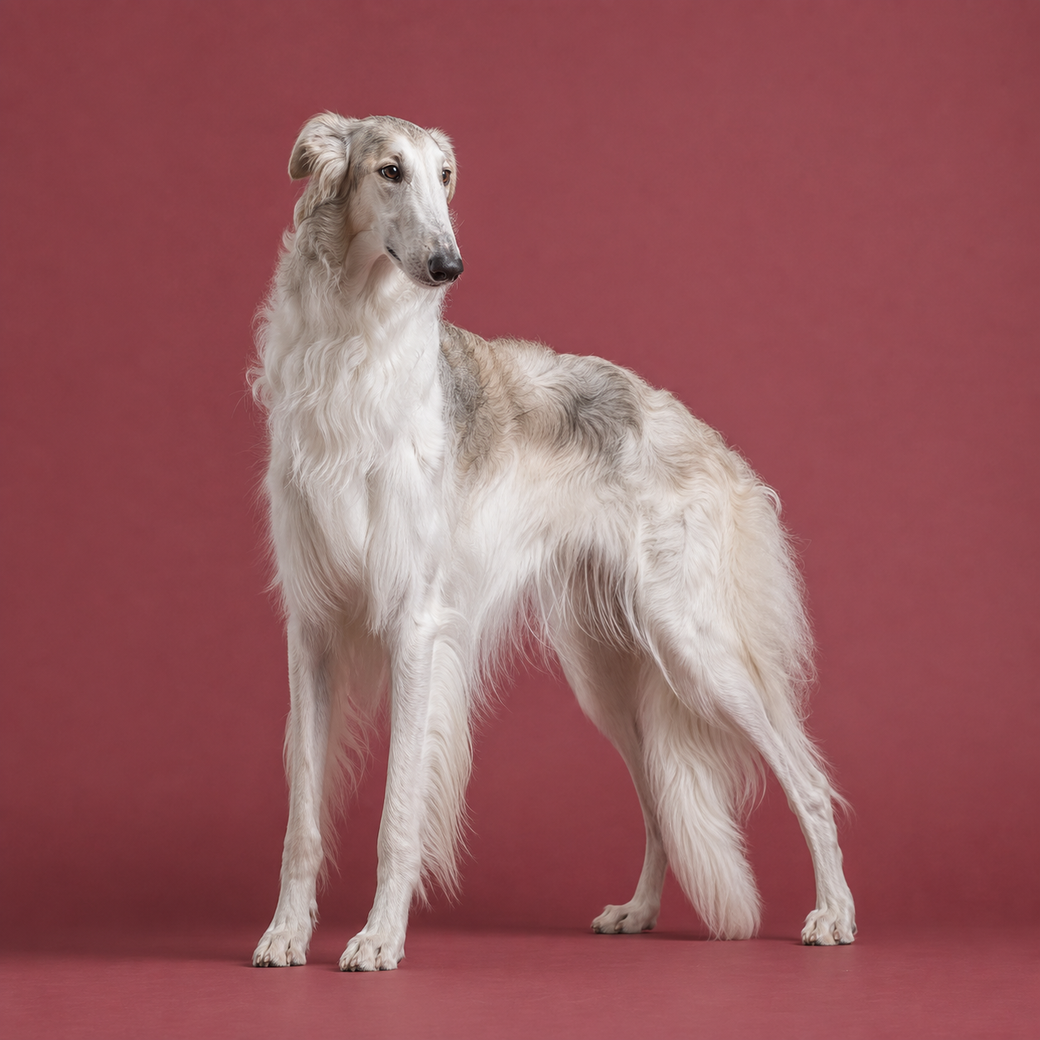
Aristocrat, off the clock
For centuries you could not buy one — borzois moved through the world as gifts of the tsar, which tells you how Russia priced them. When the Revolution scattered the breed, the West gave it a second career as a living emblem of glamour: Sarah Bernhardt, Greta Garbo, and Jean Harlow posed with borzois, European porcelain factories paired them with women in evening gowns, and that long, impossible profile became one of the signature silhouettes of Art Deco. Few animals have moved from killing wolves to modeling quite so smoothly.
The domestic borzoi is a quiet surprise: catlike, gentle, nearly bark-free, and content to spend the day arranged decoratively across furniture they technically do not fit. What they need is the sprint — regular flat-out running in a fenced space — and what they keep is the chase instinct, which makes small fleeing animals a genuine problem and off-leash open country a hard no. Training works when the request seems reasonable. They are not obedient dogs; they are agreeable ones, which is different, and somehow lovelier.
Keeping one happy
Grooming
The silky coat is easier than it looks: a thorough brush two or three times a week keeps mats out, with extra sessions during seasonal sheds when the undercoat lifts. Baths only occasionally — the coat resists dirt with feline efficiency. Mind the feathering behind the legs; that is where trouble starts.
Training
Recalibrate from obedience to diplomacy. Borzois learn quickly and comply when a request seems reasonable; drilling insults them, and harshness shuts them down entirely. Keep sessions short, gentle, and rewarded, and socialize early. Accept that recall against a fleeing squirrel is a bet you will eventually lose.
Exercise
A daily walk plus several genuine sprints a week — a securely fenced field or a lure course lets them do the one thing nothing else replaces. Between gallops they are champion loungers, calm to the point of decorative. Fencing must be tall and honest; a borzoi in pursuit clears obstacles.
Diet
Lean is correct — you should see the last ribs on a fit borzoi, however alarming visitors find it. Feed measured meals twice daily and take bloat seriously in this deep-chested breed: calm mealtimes, no hard running near dinner, and learn the emergency signs before you ever need them.
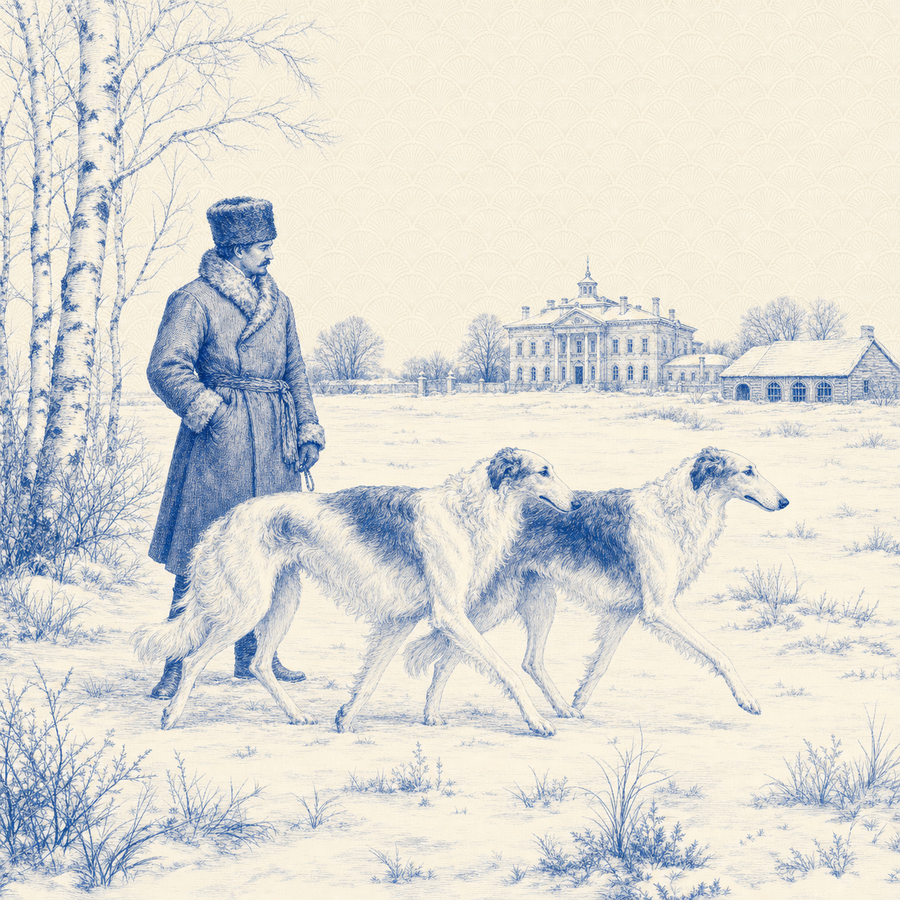
From the tsar’s kennels westward
Russian nobles spent centuries refining a coursing hound fast enough for wolves and glamorous enough for court; the great estate kennels ran to hundreds of hounds. The Revolution all but ended the breed at home, and its future passed to fanciers abroad. In America it was long registered as the Russian Wolfhound; the AKC adopted the name Borzoi in 1936.
Questions, answered
Are borzois affectionate?
Quietly, on their own terms — more cat than golden retriever. They are gentle and devoted without being needy, and a certain reserve is breed-correct.
Do borzois need a lot of exercise?
Less than the build suggests: daily walks plus regular chances to sprint inside a fence. Between runs they are professional-grade loungers.
Can a borzoi live with cats?
Sometimes, when raised together indoors — but the chase instinct outdoors is absolute. Running cats and small pets read as prey.
Do borzois bark?
Rarely — they are among the quietest of breeds. Do not expect a watchdog; a borzoi greets burglars with the same elegant indifference as guests.