Boston Terrier
The friendliest thing ever to come out of Boston.
Around 1870, a Bostonian named Robert C. Hooper bought a dog: a muscular, dark-brindle cross of bulldog and the now-extinct white English Terrier, remembered ever after as Hooper’s Judge. Judge was, by every account, nobody’s idea of a lapdog. But breed his line toward smaller, sweeter, and neater — as the city’s fanciers spent the next two decades doing — and something unprecedented appeared: a compact, even-tempered companion that Boston was proud enough to name after itself. Nearly every Boston Terrier alive traces back to that one purchase. Few impulse buys in history have compounded so well.
Dapper, and knows it
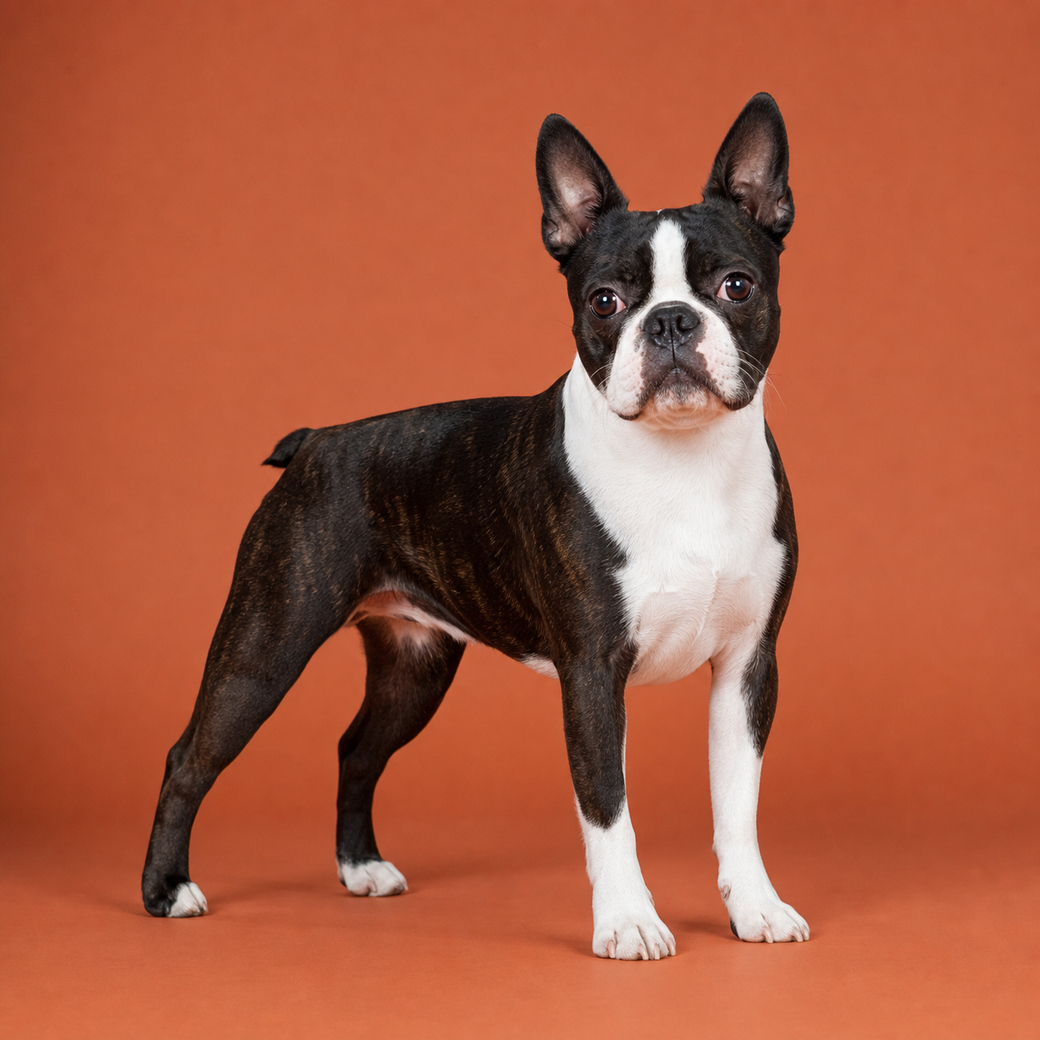
The nickname arrived early and stuck: the American Gentleman, for the crisp white shirtfront and dark jacket the breed appears to have been born wearing, and for manners to match. The formal wear is genuinely uniform — the standard calls for the white muzzle and chest — so every Boston shows up pre-dressed for occasions. Massachusetts made the breed its official state dog in 1979, but the truer measure is humbler: for decades of the early twentieth century this was one of America’s most popular dogs — the corner-store dog, the front-stoop dog, the dog in a thousand family photographs.
They remain city dogs of genius: small enough for any apartment, sociable enough for any sidewalk, and convinced that strangers are friends running late. The honest parts are physical. The short face means snorts, snores, and real trouble in heat — summer exercise happens early and briefly — and the big, expressive eyes are vulnerable to scrapes. Bostons are playful without being frantic, need only modest exercise, and take their people personally; left alone too long, they will register the complaint. Mostly they want in on whatever you are doing.
Keeping one happy
Grooming
About as easy as dog grooming gets: a weekly once-over with a soft brush or grooming mitt handles the fine, low-shedding coat. The real routine is the face — wipe around those prominent eyes regularly and watch for redness. Nails monthly, teeth often, baths strictly on an as-needed basis.
Training
Bright, eager, and mildly theatrical — Bostons train beautifully with praise, play, and small treats, and wilt under harsh corrections they never deserved. Housetraining takes patience with some individuals. The party-trick capacity is real; teach manners first and comedy second, because an audience-aware Boston will happily reverse the order.
Exercise
A couple of brisk walks and a play session most days keeps a Boston content — this is a companion, not a triathlete. The critical caveat is weather: the short muzzle handles heat and humidity poorly, so summer outings run short, early, and shaded, with water along. Indoor fetch counts.
Diet
Small dog, sturdy appetite: feed two measured meals suited to a small, moderately active breed, and count every treat — a Boston can charm double rations out of a household without anyone noticing. Many are gulpers; a slow-feed bowl aids digestion and, mercifully, reduces the breed’s famous flatulence.
First in the American studbook
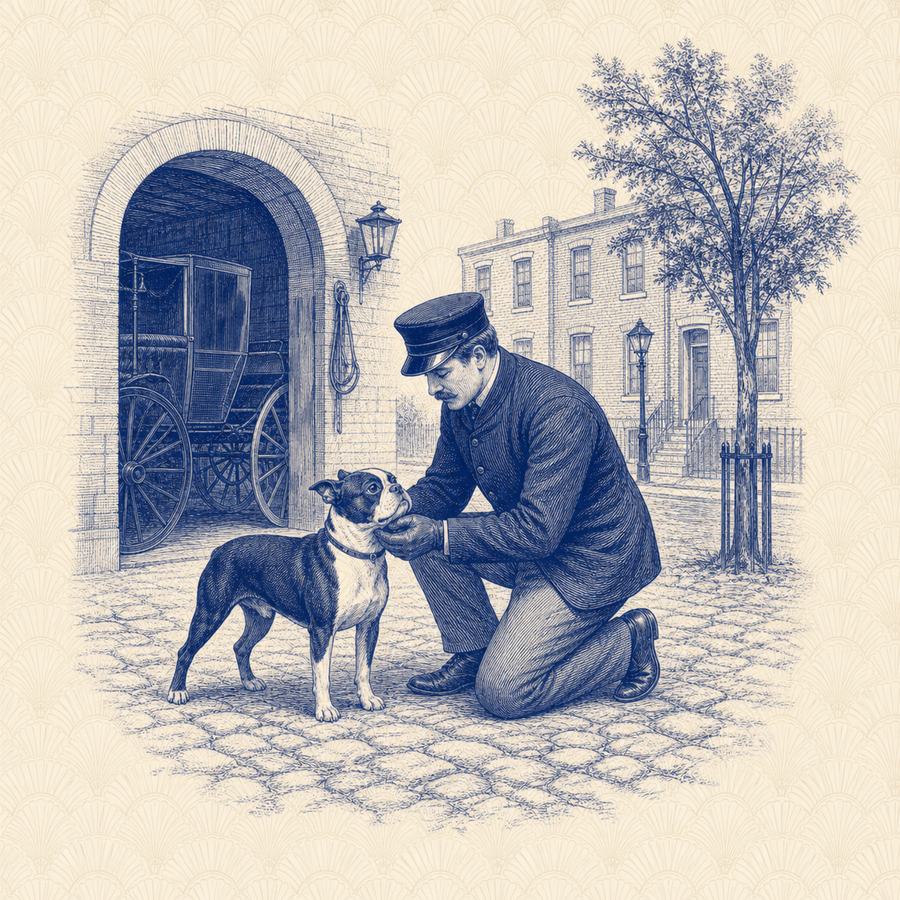
The rough crosses of Boston’s stablemen and coachmen became, within a generation, the city’s own drawing-room companion. Fanciers organized as the round-headed little dogs took over the neighborhoods, founding a breed club in 1891; in 1893 the American Kennel Club recognized the Boston Terrier — the first breed created in America to earn a place in the studbook. It has never needed improving since.
Questions, answered
Do Boston Terriers bark a lot?
Not especially — they alert to the doorbell and otherwise keep conversation moderate. Apartment neighbors often never know one lives next door.
Do Boston Terriers shed?
Lightly — the short, fine coat is among the lowest-maintenance around, though it is not hypoallergenic.
Are Boston Terriers good with kids?
Classically good — sturdy, playful, and patient without being fragile or overwhelming. Supervise around toddlers, mostly for the sake of the dog’s eyes.
Why do Boston Terriers snort and snore?
The short muzzle. Some noise is normal for the breed; loud, labored breathing or distress in heat is a veterinary conversation.