Boxer
Greets you like you’ve been gone a year.
When Humphrey Bogart and Lauren Bacall married in 1945, a Boxer named Harvey arrived as a wedding gift — named for the invisible rabbit — and promptly became the third face in Hollywood’s most photographed marriage. Bacall liked to tell the story that explains the whole breed: Harvey knew he was not allowed on the furniture, so he would put just two paws up at a time. That is the Boxer mind exactly — clever enough to find the loophole, charming enough to be congratulated for it. The couple ended up with three Boxers. People who get one rarely stop at one.
The loophole specialist
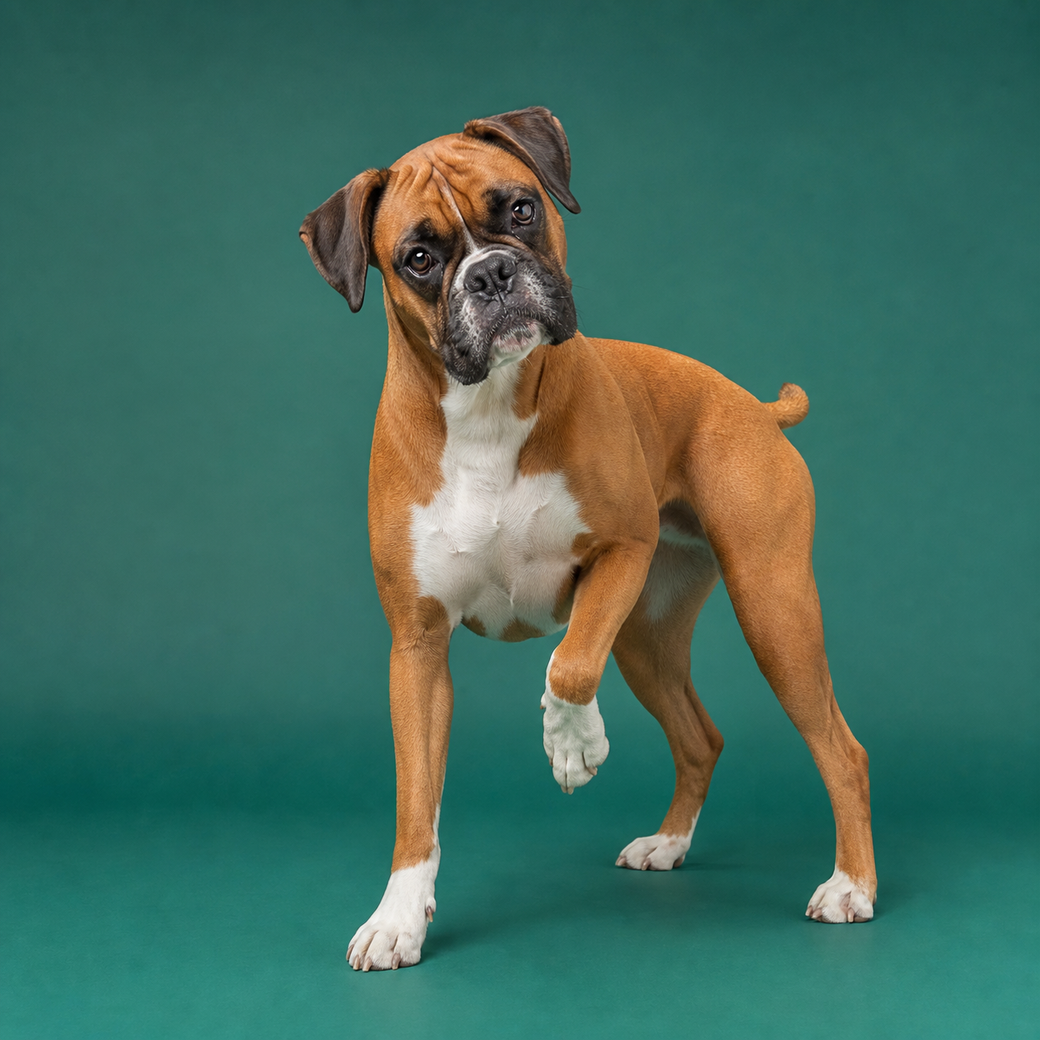
The name is a standing argument. The favorite story — never quite proven, endlessly repeated — is that the breed boxes: a playing Boxer rears up and spars with those long front legs like a prizefighter, and anyone who has been on the receiving end finds the etymology persuasive. The résumé is less debatable. Descended from German hunting dogs that seized and held boar and bear, Boxers were among the first breeds recruited for police work in Germany, and they served through both world wars as messengers and guard dogs.
What came home from all that work is a family dog with a comedian’s timing. Boxers stay puppyish for years — the full-body wiggle, the spinning, the sideways pounce — and they are famously patient with children, whom they seem to regard as fellow staff. They need real daily exercise, shade in summer (the short muzzle hates heat), and company; a lonely Boxer is a loud, destructive tragedy. The guarding instinct is quiet and real. Mostly, though, they are watching the door for your return.
Keeping one happy
Grooming
The short coat all but grooms itself: a weekly rub with a hound glove, an occasional bath, done. Shedding is moderate and year-round. Boxers are famously clean, tidying themselves like cats — so the grooming budget goes to nails, teeth, and, for the enthusiastic drinkers among them, a towel by the water bowl.
Training
Smart, willing, and allergic to boredom — Boxers learn fast when training feels like a game and stall when it feels like a drill. Start young; an untrained adult Boxer is seventy joyful pounds of poor decisions. Keep it positive, keep it moving, and socialize early and broadly.
Exercise
An hour or more a day: walks, fetch, wrestling with rules, a safely fenced sprint. They are athletes with a clown’s job description, and both halves need feeding. Watch heat closely — the short muzzle makes summer exertion genuinely dangerous. Morning and evening are Boxer hours in July.
Diet
Feed a quality food in two measured meals, portioned to keep an athlete’s waist — Boxers carry extra weight badly on those hips and hearts. As a deep-chested breed they carry bloat risk: calm mealtimes, no hard play right after eating. Expect lobbying at the table. Hold the line.
From boar hunts to backyards
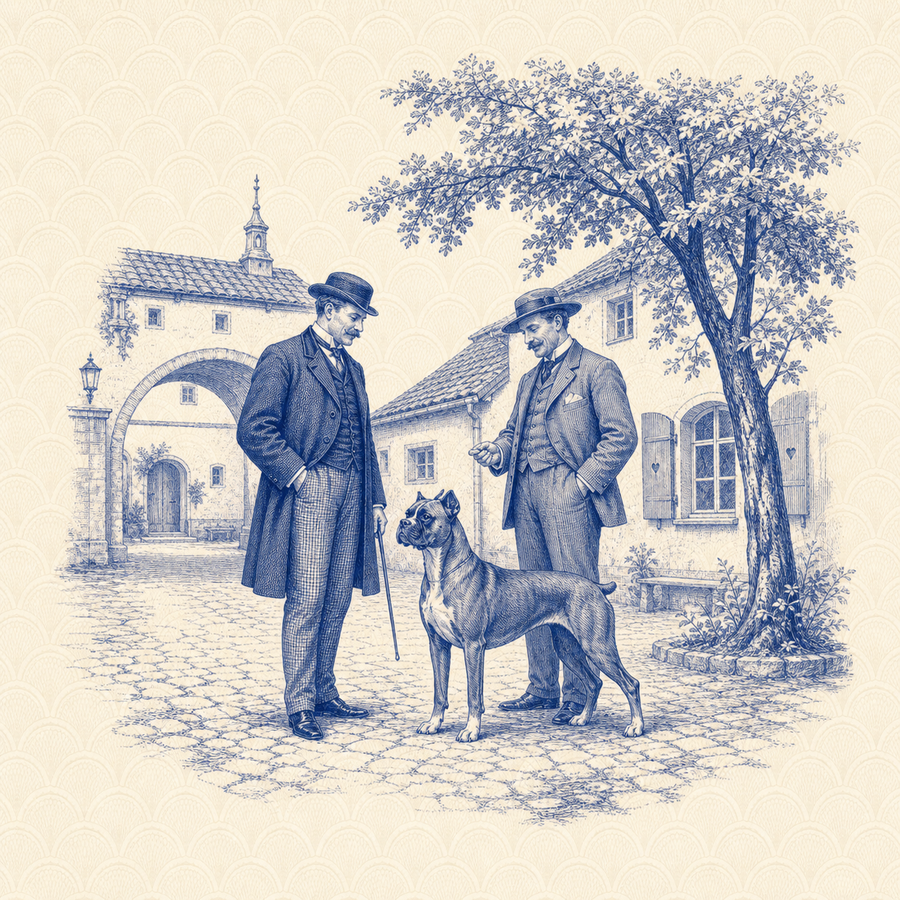
The Boxer’s ancestors were Bullenbeissers — “bull-biters” — German hunting dogs bred to seize big game and hold on. Munich fanciers refined that muscle into a cleaner, kinder dog, founding the first Boxer club in 1895; the AKC registered the breed in 1904. American popularity came a few decades later, when returning servicemen helped make the breed a postwar household name.
Questions, answered
Are Boxers good with kids?
One of the classic family breeds — patient, playful, and protective. The main supervision issue is enthusiasm: a happy Boxer can bowl over a toddler with love.
Do Boxers drool?
Some — especially after water and in anticipation of dinner. Less than a Mastiff, more than a Poodle; keep a towel in circulation.
How much exercise does a Boxer need?
At least an hour of real activity daily, scheduled around the heat in summer — the short muzzle makes hot-weather exertion risky.
Why is the breed called the Boxer?
Nobody is entirely sure. The popular story credits their habit of sparring with their front paws in play; other theories trace old German dialect names. The dogs decline to settle it.