Bull Terrier
Mischief, built to industrial specifications.
Every day for thirteen years, a Bull Terrier named Patsy Ann met the ships at Juneau, Alaska. She was deaf from birth, and somehow she always knew — before the whistle, before the harbormaster had word — trotting down to sit at the exact berth where the boat would tie up. In 1934 the mayor made it official at a dockside ceremony, naming her Juneau's Official Greeter, with a new collar to prove it. When she died in 1942, the town buried her at sea. In 1992 they set a bronze Patsy Ann on the wharf. She is still facing the water.
The joke is load-bearing
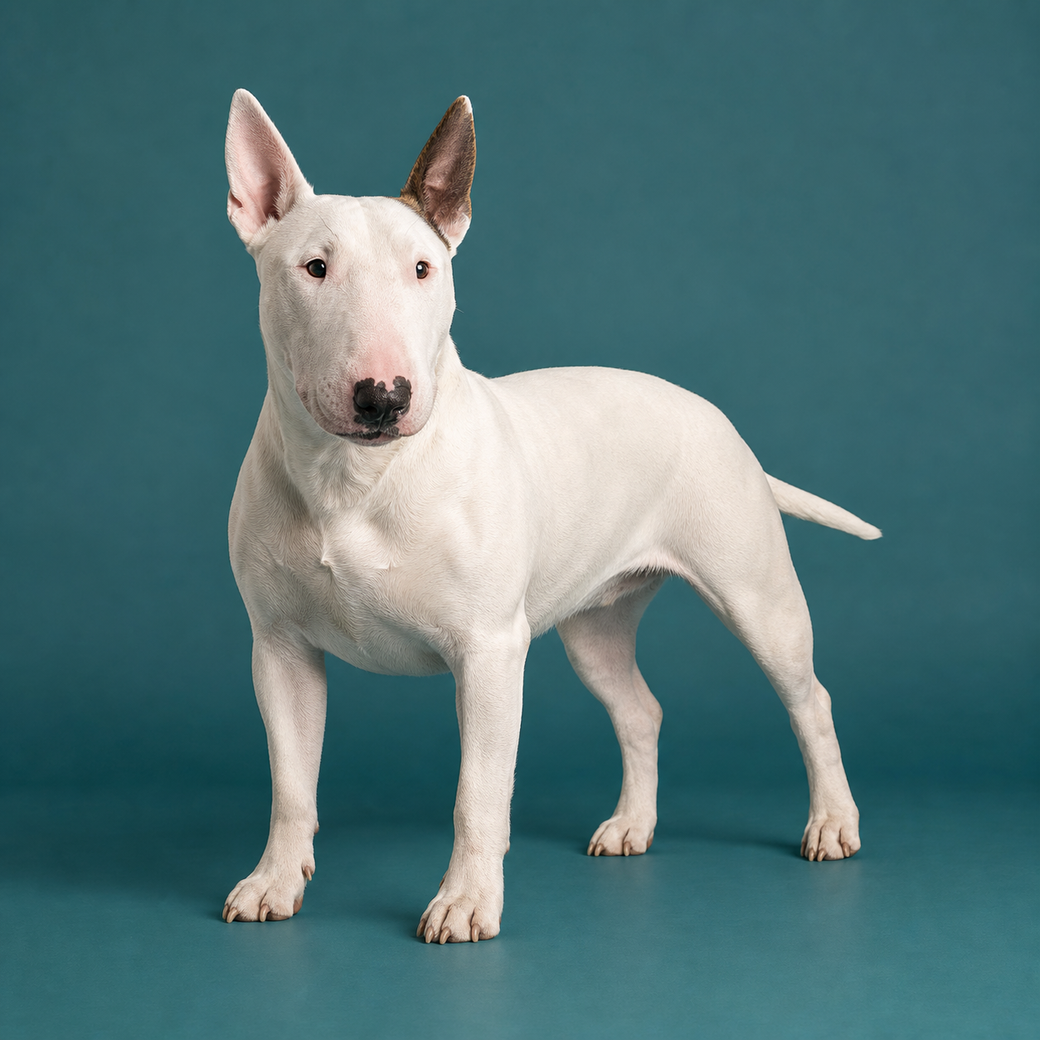
The Bull Terrier was a Victorian invention: in 1860s Birmingham, a fancier named James Hinks refined the rough old bull-and-terrier dogs into a clean white showman, and decades of breeding gave the head its famous egg curve — no other dog in the studbook has that profile. The face went on to a career in advertising. Bud Light's Spuds MacKenzie, the inescapable “party animal” of 1987, was played — as America was scandalized to learn — by a female Bull Terrier named Honey Tree Evil Eye. She handled the fame better than the network censors did.
The breed's people describe life with one as a three-year-old in a dog suit, and they mean it fondly and literally. Bull Terriers are muscular comedians — exuberant, affectionate, convinced every gathering needs them at its center. The hard parts are real: they are stubborn, physically powerful, and prone to obsessive habits like tail-chasing when bored or under-exercised, and white dogs carry a known risk of deafness. What they ask for is engagement — play, training, company, more play. What they give back is a household that is never, ever solemn.
Keeping one happy
Grooming
About as easy as grooming gets: a weekly rub with a grooming mitt, baths when the white coat announces the need. Watch the skin — Bull Terriers can run to allergies and irritation, and the short coat hides nothing. Nails monthly, and start young; they have opinions about pedicures.
Training
Cheerful stubbornness is the breed's default setting, so keep sessions short, funny, and paid in food. Harsh corrections just entrench the comedy. Socialize early and thoroughly — they can be selective about other dogs — and give the busy mind honest work: trick training, puzzle feeders, games with actual rules.
Exercise
An hour a day of walks and genuinely vigorous play — tug, fetch, flirt pole — split into sessions, because they are power athletes rather than marathoners. Mind hot weather. A well-exercised Bull Terrier naps like a professional; an under-exercised one starts renovating without permits.
Diet
Easy keepers who gain weight cheerfully: two measured meals a day, treats counted against the total, and a visible waist as the standard. Ask your vet about kidney and heart screening, which good breeders test for. Sturdy is the build; round is a health problem.
From Birmingham fancy to family clown
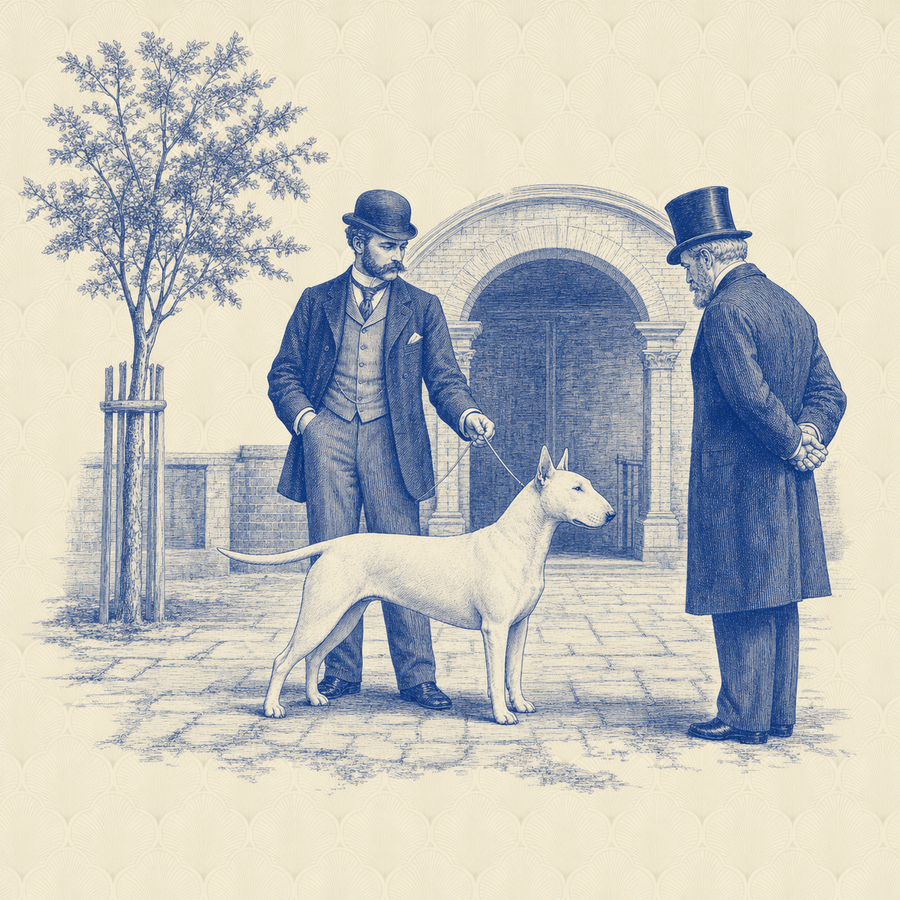
England's bull-and-terrier crosses were fighting and ratting dogs until James Hinks of Birmingham re-imagined them in the 1860s as an elegant white show breed — his dog Puss debuted in 1862. Selective breeding eventually produced the downward-curved profile, fixed around 1917 with a dog named Lord Gladiator, and colored Bull Terriers won separate AKC recognition in 1936.
Questions, answered
Are Bull Terriers aggressive?
Toward people, famously not — they are clownish and affectionate. Dog-to-dog selectiveness is real and managed with early socialization and sensible introductions.
Do Bull Terriers shed?
Yes, moderately and year-round — short white hairs with a talent for dark clothing. Not hypoallergenic.
Why are so many Bull Terriers deaf?
Deafness is linked to the white coat — it affects roughly one in five pure white dogs. Responsible breeders test hearing before placement.
Are they good with kids?
Playful, sturdy, and devoted — a classic kid companion, with supervision, since their enthusiasm arrives at full physical force.