Cairn Terrier
Ten inches of Highland certainty.
Her salary was $125 a week — more, the record says, than many of the human actors on the film. Terry, the Cairn Terrier who played Toto in “The Wizard of Oz” (1939), earned it: when one of the Winkie guards stepped on her paw during filming, she convalesced at Judy Garland’s house and came back to finish the picture. She made twenty-three films in all, but one was enough — in 1942 her owner gave in and officially changed her name to Toto. The breed has been famous ever since, and remains, underneath the fame, every inch a working dog.
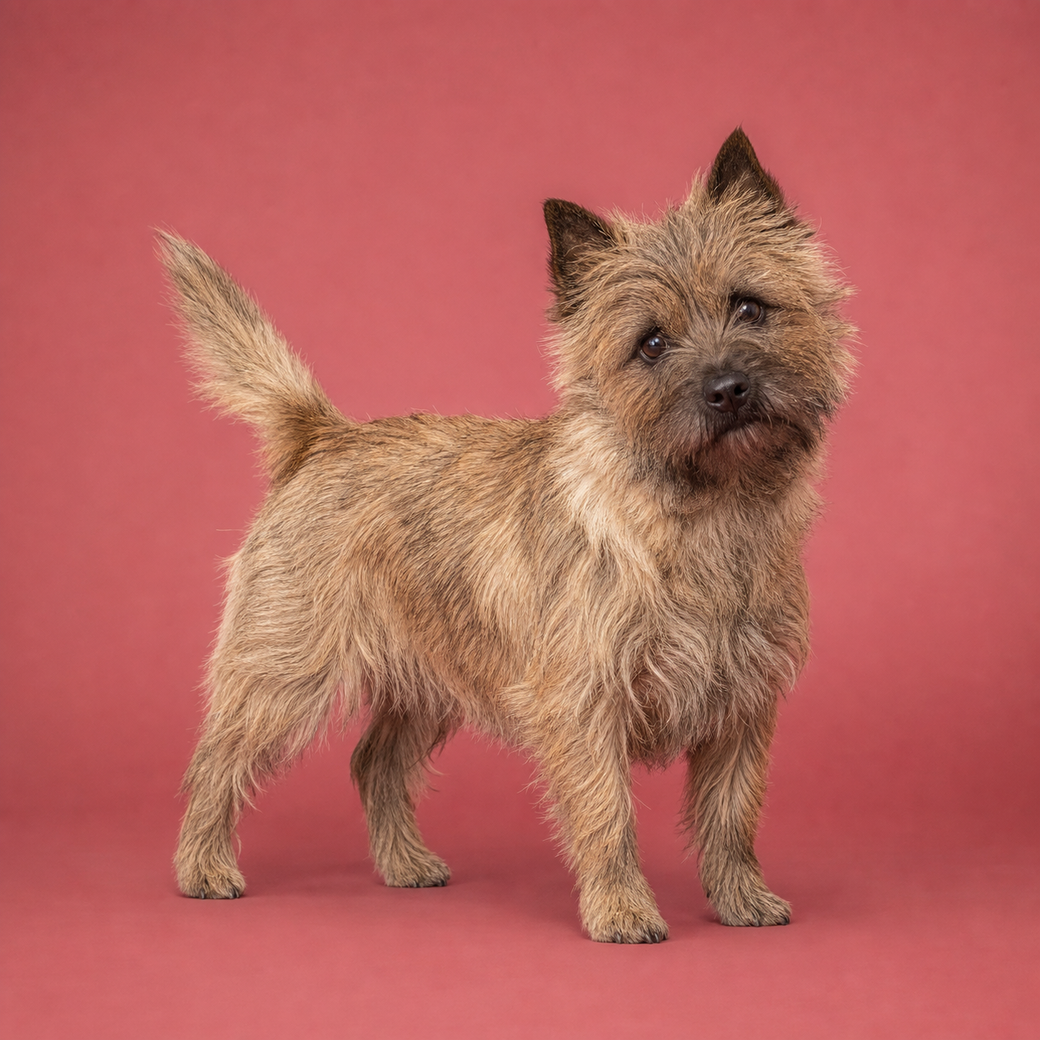
Small dog, complete confidence
The name is a job description. A cairn is a pile of stones — a Highland boundary marker, sometimes an ancient grave — and for centuries the crofters of Scotland’s west coast kept small, hard-bitten terriers to dive into them after the foxes and otters that raided the stock. The dogs needed more nerve than physics suggested, a coat indifferent to weather, and a certain executive independence; they got all three. When the breed finally reached the show ring as the “Short-haired Skye Terrier,” the Skye Terrier fanciers objected so effectively that the little dog was renamed for the rockpile instead.
That résumé is the owner’s manual. A Cairn is busy, self-assured, and interested — a dog that patrols the yard like a beat, excavates like it is being paid, and announces visitors with professional pride. They are affectionate without being clingy, sturdy enough for children who play fair, and convinced that squirrels are a solvable problem, which is why the leash stays on. Give them a daily outing and a job for the brain, and they are cheerful, portable, remarkably long-lived company — thirteen to fifteen years of strong opinions.
Keeping one happy
Grooming
The wiry double coat sheds very little and wants a weekly brush-and-comb, plus hand-stripping a few times a year to keep its harsh, weatherproof texture — clipping softens it. Baths stay rare; dirt falls out of this coat once it dries. The tousled look is correct, not neglected.
Training
Clever and quick, with an independent audit function — a Cairn learns fast and complies when the case is convincing. Keep sessions short and game-like, pay well, and never drill them into boredom. Recall around wildlife is a lifelong project; treat off-leash freedom as a fenced-yard privilege.
Exercise
An energetic small dog: a brisk walk or two plus real play, every day, weather regardless — this coat was built for Highland rain. Digging is coming either way; assign a legal pit and save the flowerbeds. Earthdog trials, if you can find them, are the breed’s idea of a holiday.
Diet
Two measured meals a day, portioned for a small, muscular frame — Cairns are easy keepers who gain quietly under all that shag. Count training treats against dinner, keep a hand on the waistline through middle age, and expect the appetite to outlast the calorie needs by years.
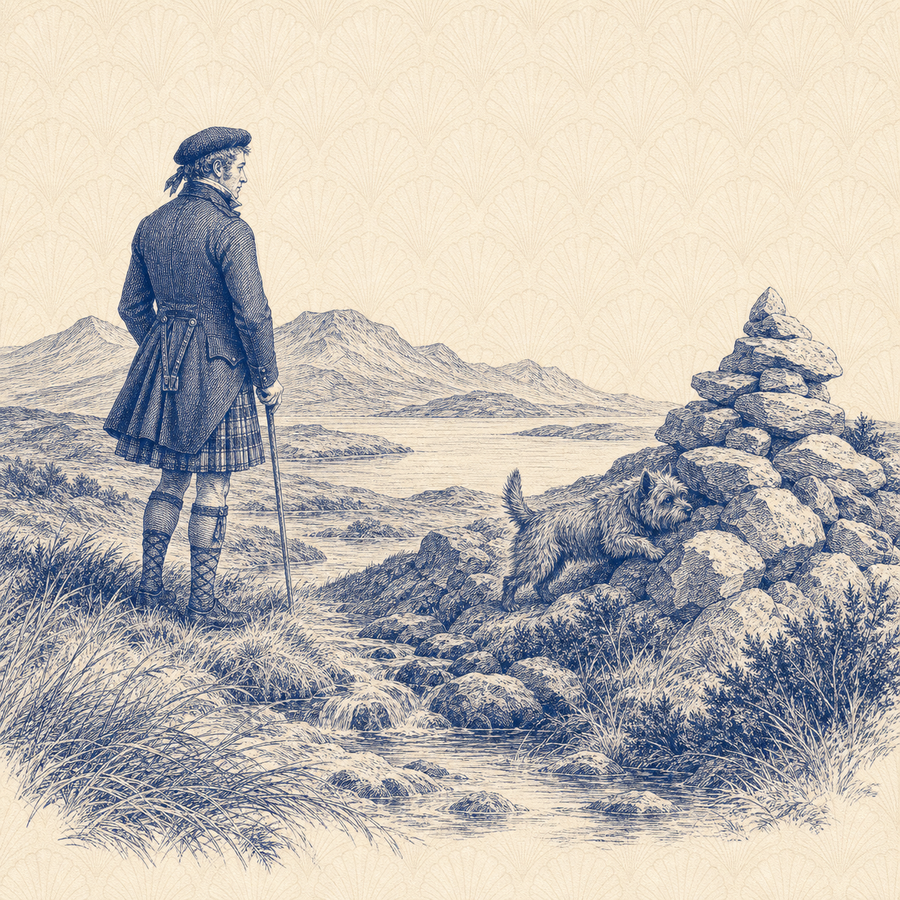
From the Highlands, largely unimproved
Among the oldest of Scotland’s terriers, worked for centuries in the Highlands and on the Isle of Skye — Captain Martin MacLeod, a noted otter-hunting man, kept his pack there for forty years before emigrating in 1845. Britain’s Kennel Club granted the breed separate status in 1912; the first imports reached America the next year, and the AKC registered its first Cairn in 1913.
Questions, answered
Do Cairn Terriers shed?
Very little — the wiry coat holds its hair. The trade is regular brushing and occasional hand-stripping to keep the texture right.
Are Cairn Terriers hypoallergenic?
One of the better choices for allergy-sensitive homes, but no dog is truly hypoallergenic — spend time with one before committing.
Are Cairns good with kids?
Yes — sturdy, playful, and patient with children who handle them fairly. Teach the respect in both directions.
Do Cairn Terriers bark and dig?
Both, with conviction — they are alert watchdogs and born excavators. Exercise, training, and a sanctioned digging spot keep it civilized.