Cardigan Welsh Corgi
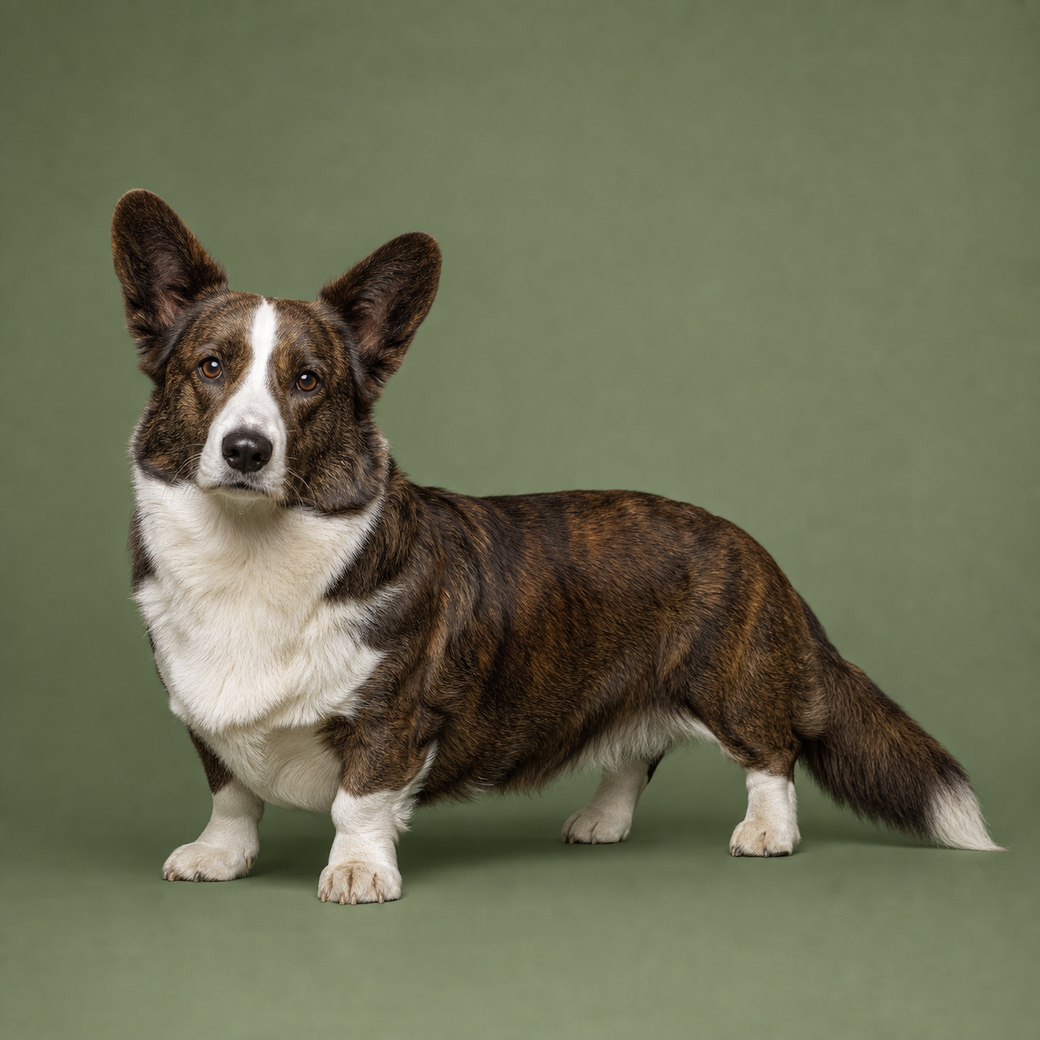
The original corgi — note the tail.
Welsh hill farmers had a unit of measurement for this dog. An old name for the breed was ci-llathed — the yard-long dog — because a proper Cardigan ran a full Welsh yard from nose to tail-tip. Note that the tail is part of the arithmetic. There are two corgis, and the one everybody pictures — the famous one, the tailless one — is the Pembroke, the younger cousin from the next county over. The Cardigan is the original: older, a little larger, heavier of bone, and carrying a long fox brush behind. Ask a Cardigan person which corgi is the corgi. Then get comfortable.
Big dog, short landing gear
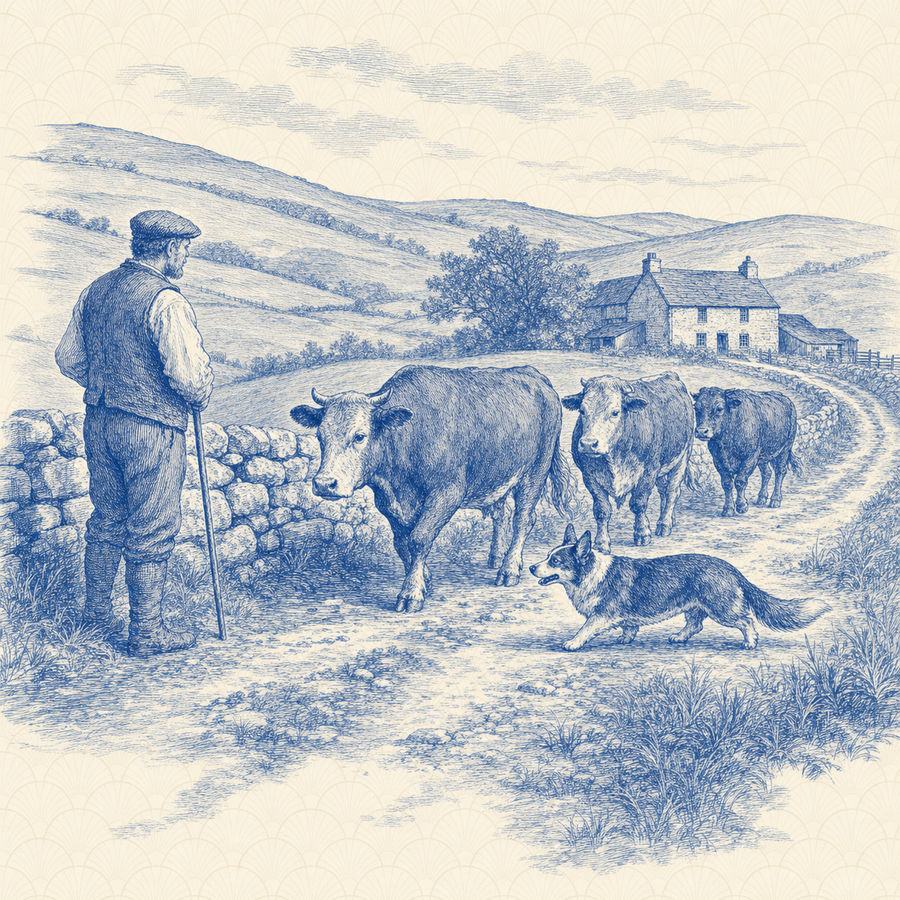
For centuries in Cardiganshire — the misty, stony southwest of Wales — this was the entire farm staff at ankle height: driving cattle to market by nipping heels and ducking the kicks, clearing vermin, announcing visitors with a bark two sizes bigger than the dog. The engineering is the charm. A Cardigan is a genuine working dog compressed onto ten-inch legs, front feet turned slightly out, chest slung low, all of it purposeful. Breeders like to say the Cardigan is a big dog in a small package, and the big dog in question has opinions.
At home they are devoted, funny, and consultative — a Cardigan likes to be in the room, near the action, with a vote. They tend to run a notch mellower than their Pembroke cousins, though the watchdog bark comes standard and needs an off switch taught early. The coat sheds seriously, every day, everywhere. Mind the architecture too: that long, low back means discouraging leaps off furniture and thundering down staircases. Otherwise they are shockingly easy to love — a herding brain and a comedian's timing, at shin level.
Keeping one happy
Grooming
The thick double coat sheds daily and blows spectacularly twice a year: brush weekly in the off-season, daily during the storms, and let a bath help loosen the departing undercoat. No shaving — the coat insulates in both directions. Nails matter extra on short legs; keep them honest.
Training
A clever, willing herder who learns fast and works for snacks — Cardigans shine in obedience, agility, and herding trials. Channel the instincts early: heel-nipping gets redirected to toys, and the alert bark gets a “thank you, enough” cue. Keep sessions upbeat; this breed remembers unfairness.
Exercise
Moderate and cheerful: a couple of walks, real play, and something for the brain most days. They are sturdier hikers than the legs suggest. Protect the back — discourage jumping off beds and furniture, add ramps or stairs where you can, and keep them lean for the spine's sake.
Diet
Cardigans are talented eaters on a frame that cannot afford it: extra weight loads that long back directly. Two measured meals a day, treats counted against the total, and a defined waist as the permanent goal. The pleading look is Oscar-caliber. Portion by the scale anyway.
The elder corgi of Cardiganshire
Lore holds the Cardigan's ancestors came to Wales with Celtic settlers thousands of years ago, making it one of Britain's oldest breeds — and the elder of the two corgis by centuries. It drove cattle and minded farms in Cardiganshire for generations. The English Kennel Club declared the two corgis separate breeds in 1934; the first pair had reached America in 1931.
Questions, answered
What is the difference between a Cardigan and a Pembroke Welsh Corgi?
The Cardigan is the older, slightly larger breed with a long tail and rounder ears; the Pembroke is tailless or docked. They are separate breeds, distinct since 1934.
Do Cardigan Welsh Corgis shed?
Constantly, with two dramatic seasonal blows. Budget for brushing and a good vacuum. Not hypoallergenic.
Are Cardigans good apartment dogs?
Size-wise, yes — with daily exercise and early work on the watchdog bark, they adapt well.
Do Cardigans bark a lot?
They are alert announcers with a big-dog voice. Training an off switch early keeps it to headlines rather than full coverage.