Cavalier King Charles Spaniel
Four centuries of professional lap work.
On September 4, 1667, Samuel Pepys sat through a meeting of the King’s council and confided the day’s real news to his diary: “All I observed there was the silliness of the King, playing with his dog all the while and not minding the business.” Charles II was hopeless about his little spaniels — they went wherever the King went, and the court simply adjusted; a diarist’s exasperation was as close as anyone came to objecting. He gave the breed his name. The dogs, in fairness, gave him something rarer: their complete attention.
Cavaliers we love
The agreeable aristocrat
Then fashion nearly deleted the dog. Victorian taste ran to flat faces and domed skulls, and within a few generations the spaniel of the old court portraits had effectively vanished — bred out of its own breed. In 1926 an American named Roswell Eldridge arrived at Crufts offering prize money for spaniels of the old type, nose and all, as painted in the seventeenth century. The fancy was skeptical; a handful of breeders tried anyway. Eldridge died in 1928, a month before Crufts, never seeing a winner — but that same year a dog named Ann’s Son became the model for a resurrected breed.
What they brought back is the easiest of companions. A Cavalier calibrates to the household: athletic with hikers, horizontal with readers, gentle with children, cats, and grandparents alike. They fail entirely as watchdogs — the doorbell announces friends — and they fail at solitude, which is a real constraint rather than a quirk. The hard honesty is the heart: mitral valve disease runs through the breed, so cardiac-tested parents matter more here than almost anywhere in dogs. Choose carefully, and what you get is the gentlest deal going.
Keeping one happy
Grooming
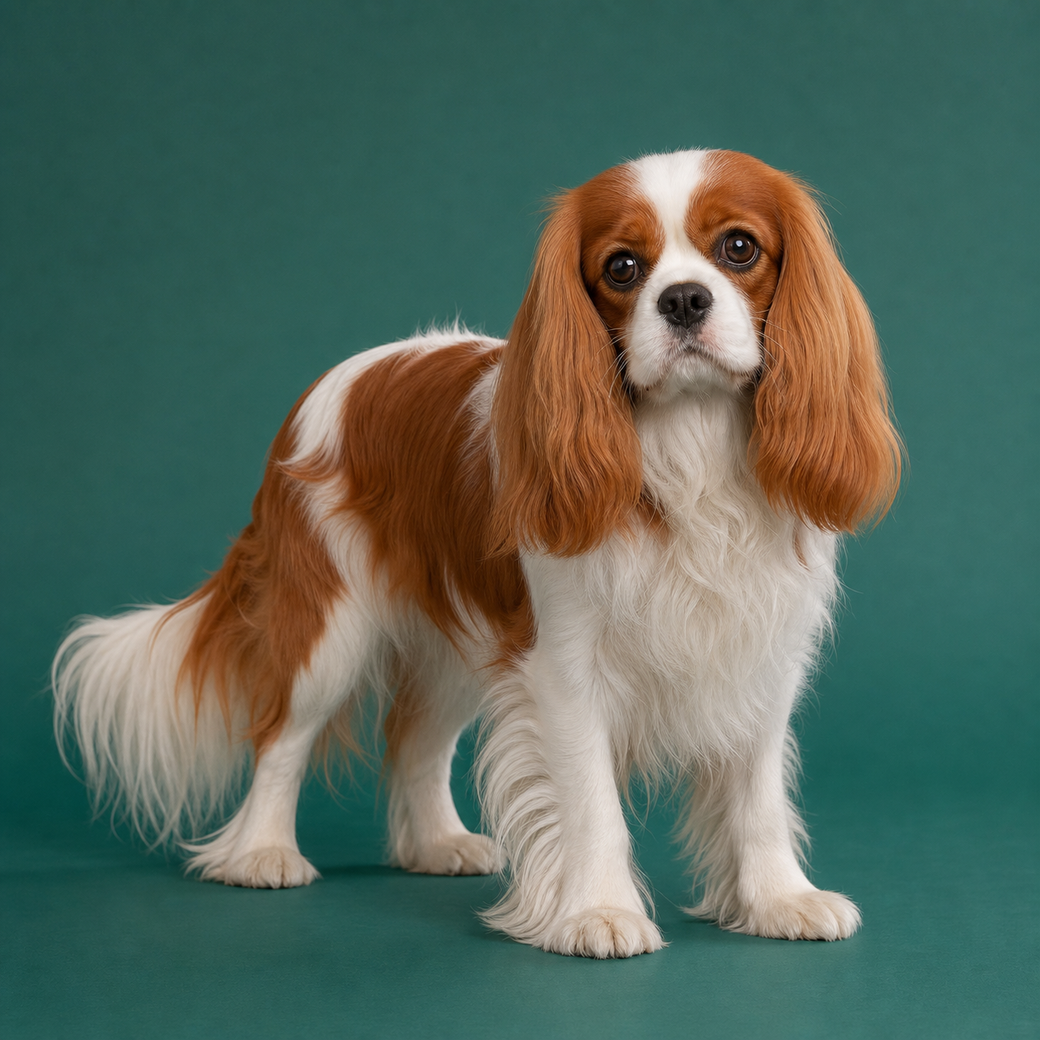
The silky coat wants brushing three or four times a week, with extra attention to the feathering behind the ears and legs where tangles start. No trimming required — the breed is shown natural. Check and dry the long ears weekly. Shedding is real but moderate; the brush catches most of it.
Training
Among the easiest students in the toy group: eager, soft, and food-motivated, they learn on praise and wilt under scolding. Housetraining rewards patience and a fixed schedule. One rule trained into every Cavalier owner: the spaniel chase instinct is intact, so a fenced yard and a leash are lifelong equipment.
Exercise
Adaptable is the breed’s whole athletic philosophy: a daily walk and some play satisfies them, and a longer hike delights them, provided it ends in a lap. Never trust them off leash near roads — a Cavalier in pursuit of something interesting has no road sense whatsoever.
Diet
Two measured meals and honest treat accounting — Cavaliers are gifted beggars with the eyes to close the deal, and extra weight burdens exactly the heart this breed needs protected. Keep a visible waist, especially past age five, and weigh the dog rather than trusting the fluff.
Bred back from the paintings
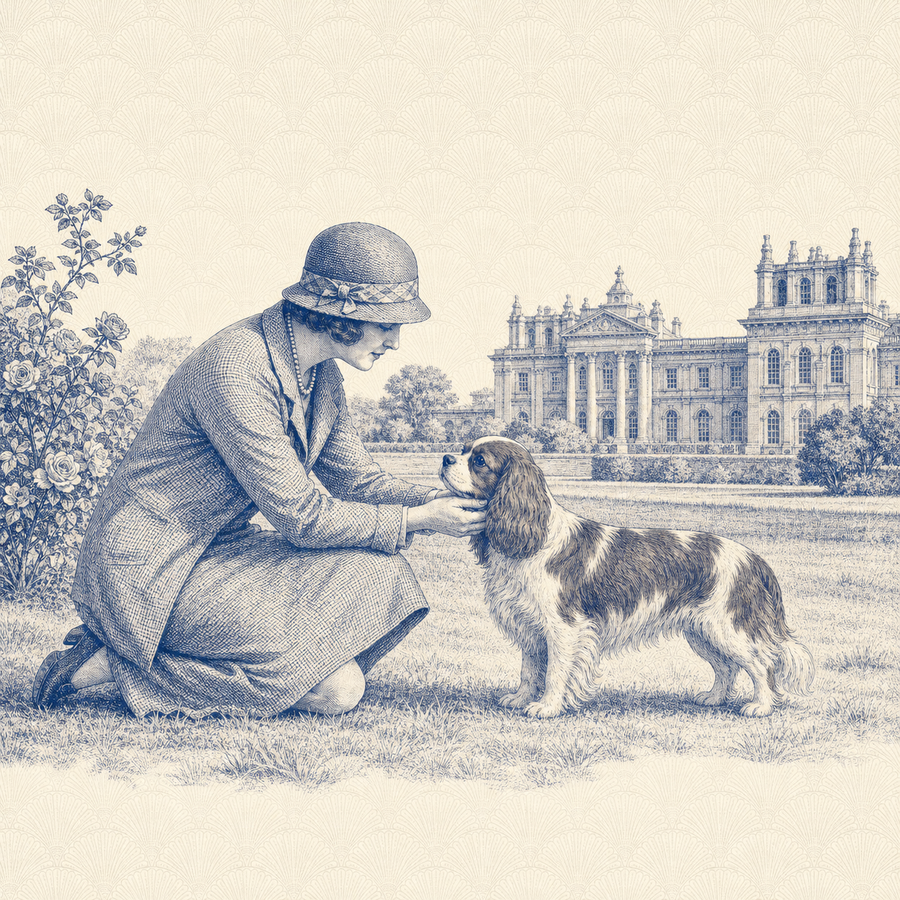
Toy spaniels warmed English laps from Tudor times, and the Duke of Marlborough’s Blenheim estate named the chestnut-and-white variety. The old-type revival of the late 1920s rebuilt the breed and named it for the Cavaliers of the Stuart court; Britain’s Kennel Club listed it separately in 1945, and the AKC recognized the Cavalier in 1995.
Questions, answered
Do Cavalier King Charles Spaniels shed?
Moderately — regular brushing keeps the silky coat and the sofa mostly reconciled. They are not hypoallergenic.
Can Cavaliers be left alone?
Not happily, and not for long. They were bred purely for company; plan for midday visits, a dog walker, or a household where someone is usually home.
Are Cavaliers good apartment dogs?
One of the best — quiet, adaptable, and content with modest exercise, as long as their people are near.
What health problems do Cavaliers have?
Mitral valve disease is the breed’s most serious and most common issue; syringomyelia also occurs. Buy from breeders who test hearts and share the results.