Chesapeake Bay Retriever
The retriever that volunteers for ice water.
In 1807, an English brig bound from Newfoundland foundered off the coast of Maryland, and an American ship called the Canton took everyone off — crew, passengers, and two puppies. The male, a dingy red, was named Sailor; the female, black, was named Canton, for the ship that saved her. Sold in Norfolk for a guinea apiece, the pair proved to be phenomenal duck dogs, and their descendants were bred into the retrievers of the Chesapeake Bay. So the breed histories tell it — and for once, the paperwork largely backs the legend.
Chessies we love
Built for the coldest job
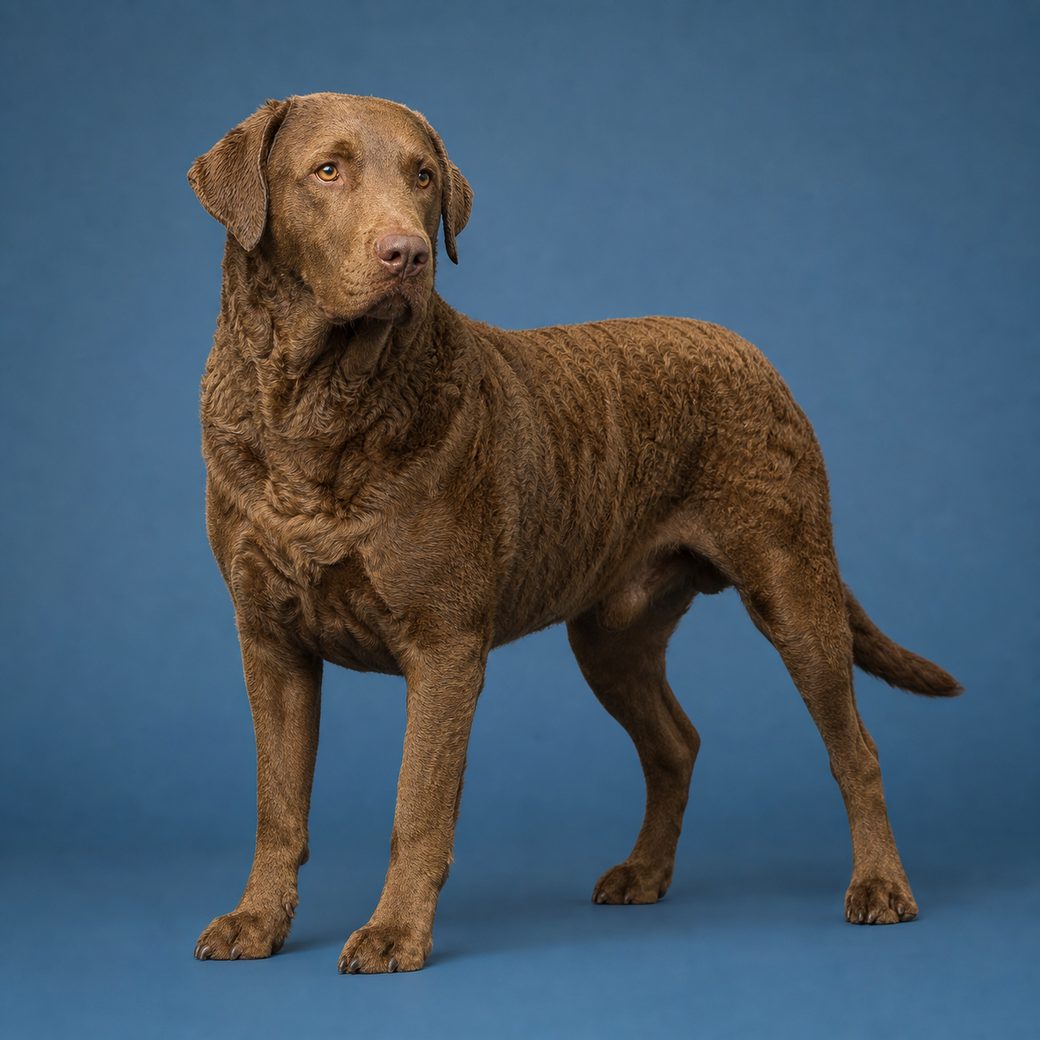
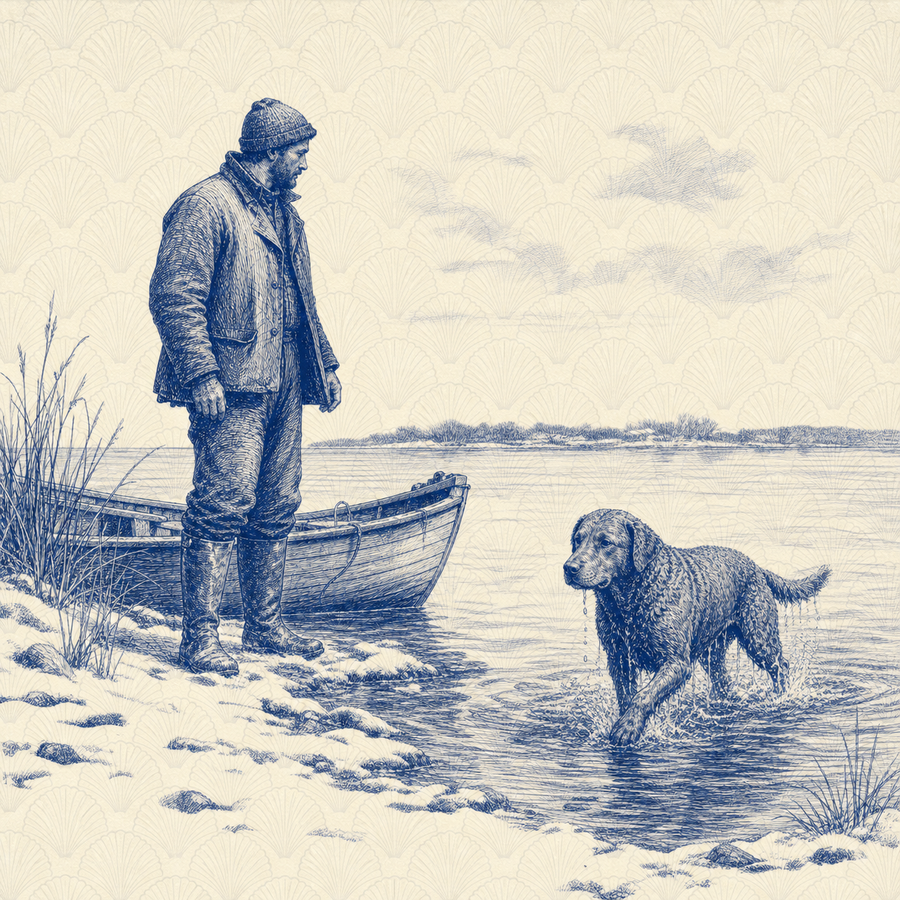
Here is what the Chesapeake was actually built for: market gunning, in the days when a professional hunter might drop a hundred ducks before lunch and the dog retrieved every one — out of November water, through skim ice, hour after hour. The oily, wavy double coat sheds water like a duck’s; the broad chest breaks the ice ahead. The same dogs guarded the boat, the gear, and the day’s haul while their owners sold it, which is where the breed’s famous watchfulness comes from. Nothing about this dog is decorative.
Living with a Chessie means living with the most serious of the retrievers. They love their family deeply and see no urgent need to charm anyone else — this is not a Lab with a wave, and treating them like one disappoints everybody. They are strong-minded, protective, and happiest with owners who lead quietly and introduce the world early. Give them water at every opportunity; swimming is less a hobby than an identity. In return you get a partner of complete, undramatic devotion, tough as the Bay that made them.
Keeping one happy
Grooming
The coat is functional equipment: short, wavy, and oiled for waterproofing, which gives a faint musky scent that owners learn to call character. Brush weekly with a rubber curry, more during spring shedding, and bathe sparingly — too much shampoo strips the oil the coat exists to carry.
Training
Smart and capable, but independent-minded — Chessies were bred to work long days without hand-holding, and they expect their humans to make sense. Train with calm consistency and early, broad socialization; harsh handling breeds resistance, nagging breeds contempt. Channel the retrieve from puppyhood. They remember everything, which cuts both ways.
Exercise
An hour or more of real work daily, and water is the currency: swimming, retrieving from swimming, thinking about swimming. They make excellent hiking and jogging partners in cool weather and are cheerfully indifferent to water temperatures that would cancel most dogs’ afternoons. A bored Chessie self-employs; you will not approve of the business.
Diet
Feed a quality food in two measured meals, scaled to workload — a duck-season Chessie burns far more than an off-season one. Keep them lean to protect hips and elbows, both breed concerns. As a deep-chested dog they carry bloat risk: calm meals, and no hard swimming right after dinner.
The Bay wrote the standard
Watermen along the Chesapeake spent the nineteenth century breeding the definitive cold-water retriever, and they got it right early: the AKC recognized the breed in 1878, first of all the retrievers. Maryland made the Chesapeake Bay Retriever its official state dog in 1964 — less an honor, by local reckoning, than a statement of long-settled fact.
Questions, answered
How is a Chesapeake Bay Retriever different from a Lab?
Temperament, mostly. The Chessie is more reserved with strangers, more protective, and more independent — a one-family working dog rather than everyone’s golden buddy.
Do Chesapeake Bay Retrievers shed?
Moderately year-round, more in spring. The wavy coat also carries natural oil with a faint scent — part of the waterproofing. Not hypoallergenic.
Are Chessies good family dogs?
Devoted and steady with their own family, including kids. The protective streak means early socialization and introductions for visitors matter more than with other retrievers.
Do they really swim in ice water?
Happily — the insulating double coat and the breed’s working history were built around exactly that. Cold that stops other dogs barely registers.