Chinese Shar-Pei
Nearly extinct, now merely rare.
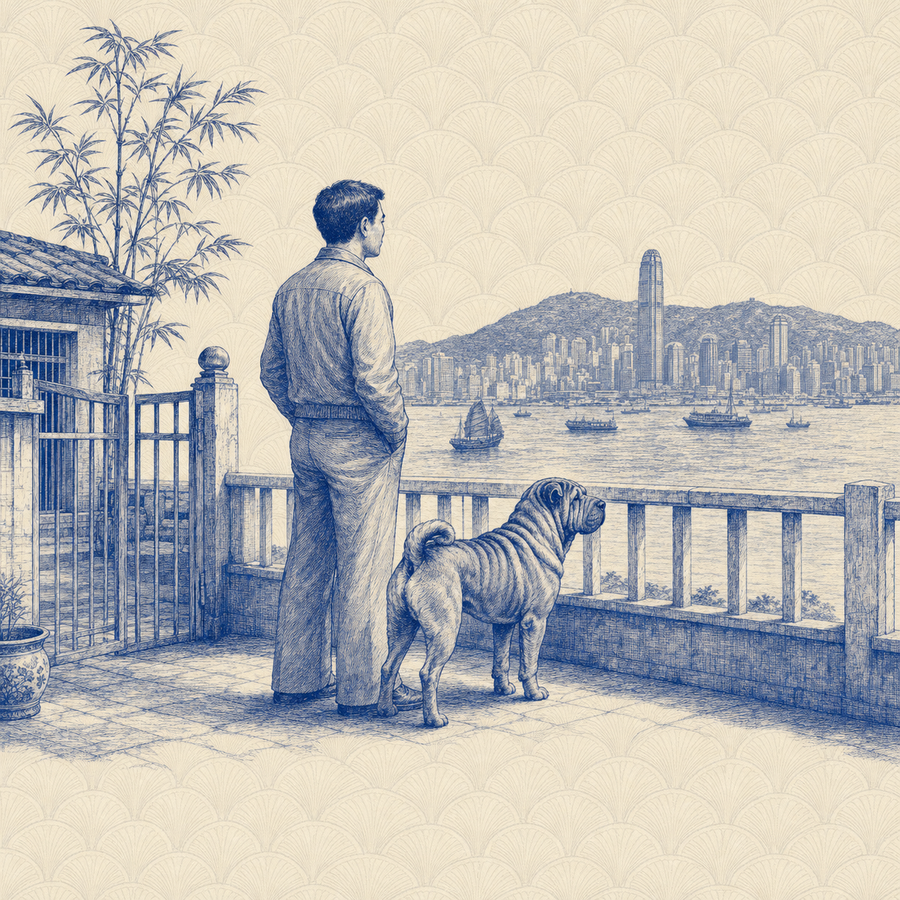
In 1973, a Hong Kong breeder named Matgo Law sent an appeal to American dog fanciers: help save the Chinese Shar-Pei. On the mainland, decades of dog taxes and political upheaval had all but erased the breed; by 1978 the Guinness Book of Records would name it the rarest dog in the world, with an estimated sixty left. The appeal worked better than anyone dared hope. Americans wrote back, dogs crossed the Pacific, and within a decade the world’s rarest breed was napping in suburban living rooms — wrinkled, scowling, and thoroughly unimpressed by the fuss.
Shar Peis we love
Rare, rumpled, and reserved
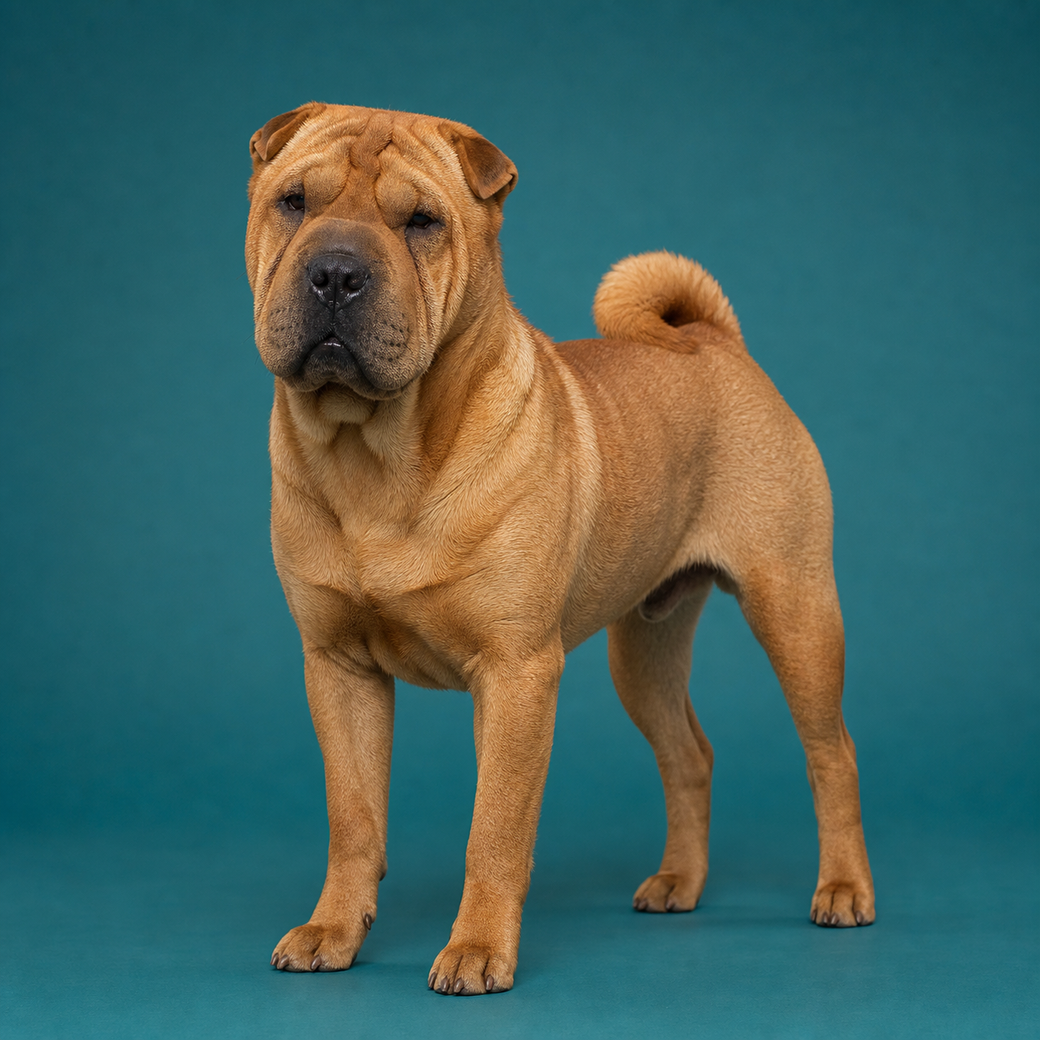
What arrived was unlike anything in the Western studbook. The name translates roughly as “sand skin,” for a short, bristled coat that feels like suede rubbed the wrong way, worn over deep folds that once served as armor — skin loose enough to twist and fight back in. Add the blue-black tongue and the permanent frown, and America was smitten: LIFE magazine put a Shar-Pei on its cover in 1979, and the rescue project briefly became a status-symbol stampede. The dog, characteristically, declined to let any of it go to their head.
The Shar-Pei you actually live with is a quiet, tidy, deeply loyal homebody — bred for centuries to mind a family’s farm, and still taking the job seriously. Expect calm indoors, reserve with strangers, and an independence that reads as feline; this is not a dog that begs for entertainment. The honest costs: the famous folds need real care, the eyes and ears run to trouble, and Shar-Pei fever is an inherited illness worth asking any breeder about directly. Their trust is slow, deliberate, and, once given, total.
Keeping one happy
Grooming
The coat itself is easy — a weekly rubdown, occasional baths, modest shedding. The skin is the project: keep folds clean and dry to head off irritation, and towel them thoroughly after any bath or swim. Watch the eyes, too; entropion, where the lid rolls inward, is a known breed issue.
Training
Confident and independent, a Shar-Pei learns fast and sees little reason to repeat things. The essential curriculum is early, generous socialization — the old guarding instinct needs wide acquaintance with the ordinary world. Keep training calm, consistent, and fair; this breed answers respect with cooperation and force with granite.
Exercise
Modest and dignified: a couple of daily walks and some unhurried patrolling of the yard cover it. Heat is the real caution — the short muzzle and heavy folds vent poorly, so keep summer outings to the cool hours. A watching post and their people nearby complete the program.
Diet
Two measured meals a day, kept lean — extra weight aggravates skin folds and joints alike. Food sensitivities show up in this breed more than most, often as itchy skin, so keep track of what goes in the bowl. Note appetite dips and fevers for your vet; patterns matter here.
Two thousand years, one close call
Effigies of similar guard dogs survive from southern China’s Han dynasty, two thousand years ago, and for centuries the Shar-Pei worked village farms as guardian, hunter, and occasional fighting dog. The twentieth century nearly ended the story on the mainland, until breeders in Hong Kong raised the alarm and the West answered. The AKC recognized the breed in 1992 — a formality, by then, for a dog already saved.
Questions, answered
Are Shar-Pei good family dogs?
Devoted and calm with their own family, reserved with everyone else. Early socialization matters more here than in most breeds.
Do Shar-Pei have health problems?
Several breed-specific ones — skin fold infections, entropion, and Shar-Pei fever among them. Ask breeders about health testing, and budget for the vet.
Do Shar-Pei shed?
Lightly — the harsh coat is short and low-maintenance. The skin under the wrinkles is the real care project.
What does Shar-Pei mean?
Roughly “sand skin,” for the short, bristly coat. The plural, like deer, is simply Shar-Pei.