Dalmatian
The original first responder.
Before fire engines had sirens, they had a dog. In the horse-drawn era, Dalmatians ran with the fire teams — out ahead and alongside, barking the street clear, steadying the horses at the scene, guarding the wagon while the crews worked. It was the family trade: this breed had spent generations working beside horses, with stamina for miles and, oddly, a documented calming effect on them. When motors replaced the horses, the job vanished and the dog stayed. Firehouses kept them on as mascots, which is the polite word for family.
Dals we love
Stamina, with spots
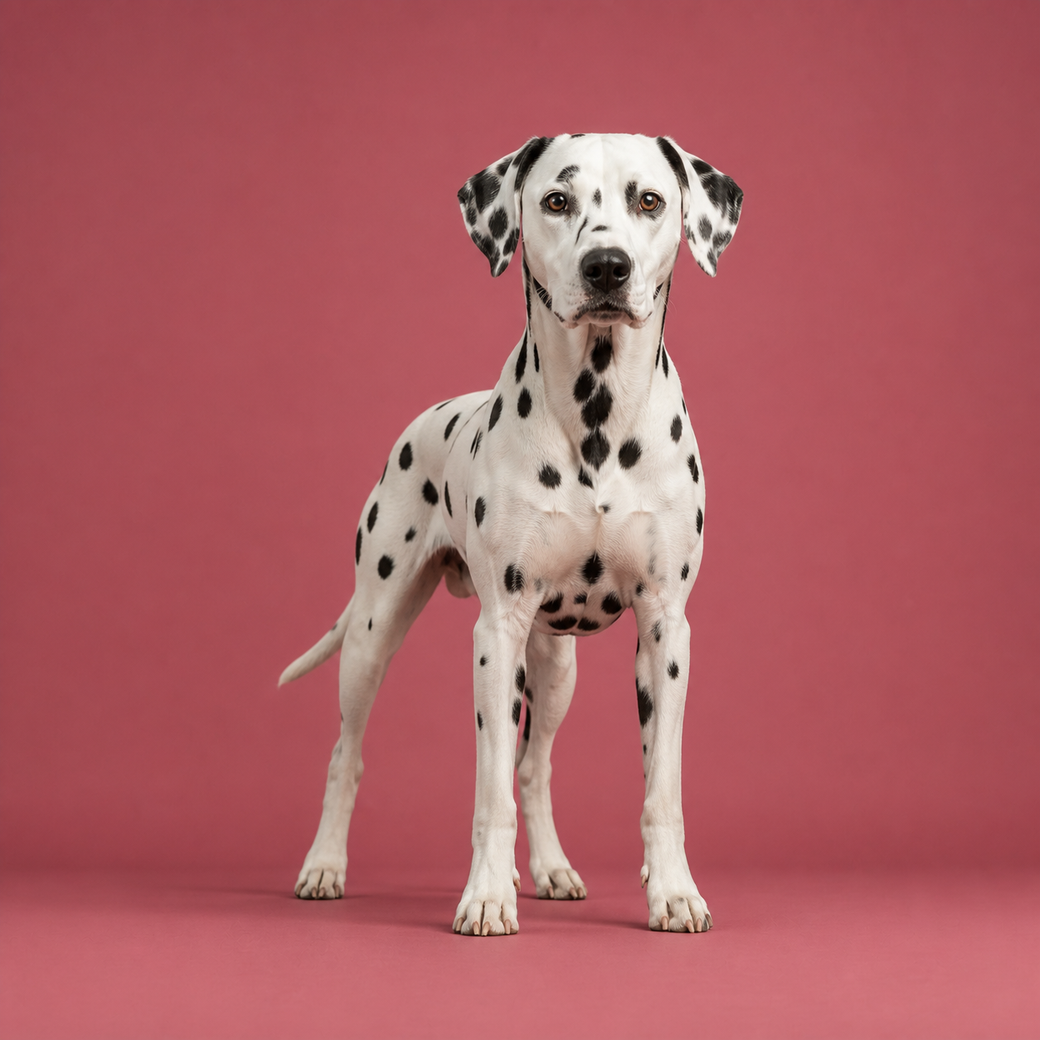
The breed’s literary break began with an unsettling compliment. The novelist Dodie Smith kept Dalmatians — nine at one point, the first of them named Pongo — and one evening a friend looked over the dogs and remarked, “Those dogs would make a lovely fur coat.” Smith kept the sentence, built a villain around it, and in 1956 published “The Hundred and One Dalmatians,” with Pongo’s name going to the hero. Disney did the rest. Few breeds have been so completely defined by their look: the spots made them icons — and, after every film re-release, briefly and regrettably fashionable.
The dog behind the spots is an athlete first. A young Dalmatian has road-trial stamina and expects you to fund it — this is a running partner, not a couch ornament, and an under-exercised one will remodel the house. Two honest notes. The short coat sheds relentlessly, year-round, into everything you own. And deafness runs in the breed — in American studies roughly a quarter are deaf in one or both ears — so buy from breeders who hearing-test their litters. Meet those terms and you get a clownish, devoted, gloriously spotted companion with miles in the tank.
Keeping one happy
Grooming
Deceptively easy-looking: the short, dense coat needs only a weekly once-over with a rubber mitt, but it sheds constantly — stiff little hairs that work into carpet and upholstery. Frequent quick brushings beat occasional heroic ones. Baths only as needed; the coat repels dirt surprisingly well. Nails short, always, for a road dog’s feet.
Training
Clever, watchful, and blessed with a long memory — Dalmatians learn fast and hold grudges against unfair handling, so keep it positive and consistent. Start young: an adolescent with road-dog muscle and no manners is a handful. Socialize early and generously; the old guarding streak makes them reserved with strangers.
Exercise
Plan on an hour or two of genuine work a day: running, hiking, long fast walks, fetch until your arm complains. This breed was built to cover distance for a living, and weekend efforts will not settle the account. A tired Dalmatian is charming; a bored one is expensive.
Diet
The breed’s unusual urinary chemistry is the headline: Dalmatians process purines differently and can form urate stones, so vets often advise moderate-purine diets — go easy on organ meats — and constant fresh water. Two measured meals a day, encourage drinking, and offer frequent chances to relieve themselves. Ask your vet; this one is worth the appointment.
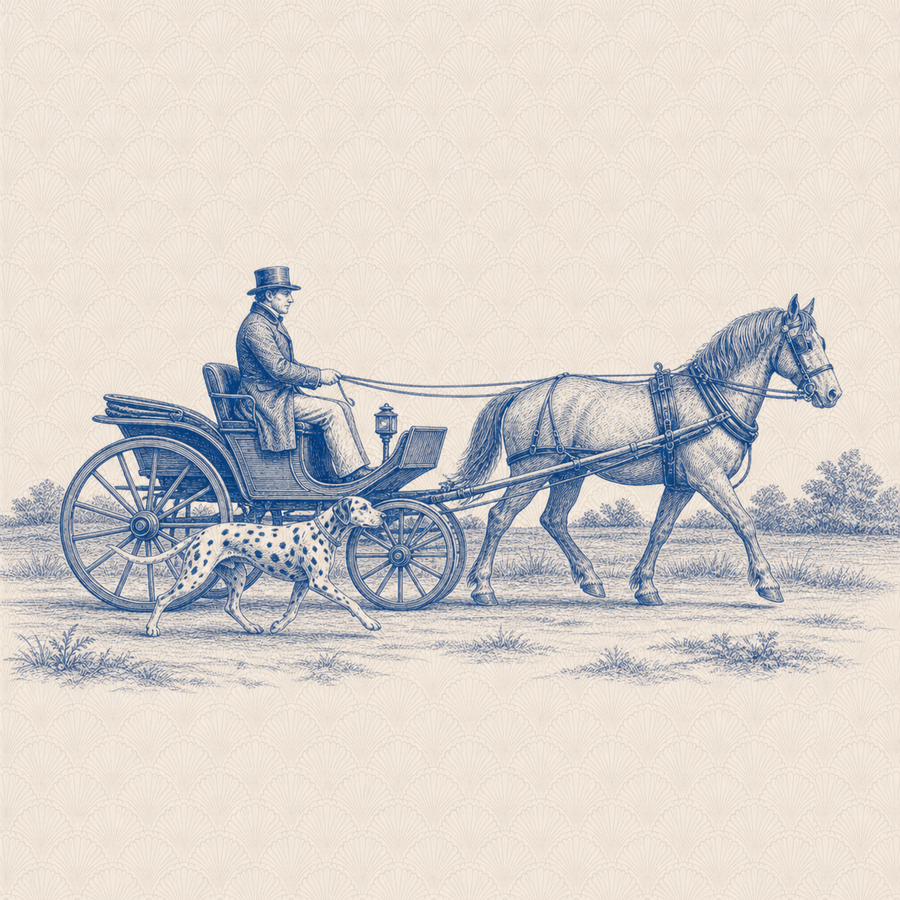
Centuries on the road
The breed takes its name from Dalmatia, on the Adriatic coast of present-day Croatia, though its early road is argued about; a bishop’s letter of 1375 already describes a white hunting dog with black round spots. What is certain is the job: for centuries this was Europe’s carriage escort, trotting guard beside travelers and their horses. When the coaching era ended, the Dalmatian did what working breeds must: changed employers, and kept the uniform.
Questions, answered
Why are Dalmatians associated with firehouses?
They worked with horse-drawn fire teams — clearing the way, calming the horses, guarding the rig — and stayed on as mascots when engines went motorized.
Do Dalmatians shed a lot?
Constantly — short, stiff hairs year-round, despite the tidy-looking coat. Weekly brushing helps; lint rollers help more.
Are Dalmatians good family dogs?
With active families, yes — playful, devoted, and sturdy. They need serious daily exercise and early training to be their best around small children.
Are all Dalmatians born deaf?
No — most hear normally, but the breed carries elevated deafness rates, so reputable breeders BAER-test every puppy. Ask for the results.