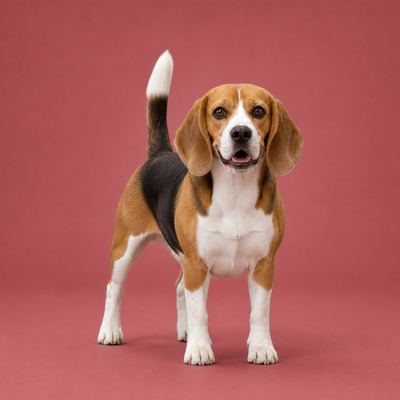
Doberman Pinscher
The security system that loves you back.
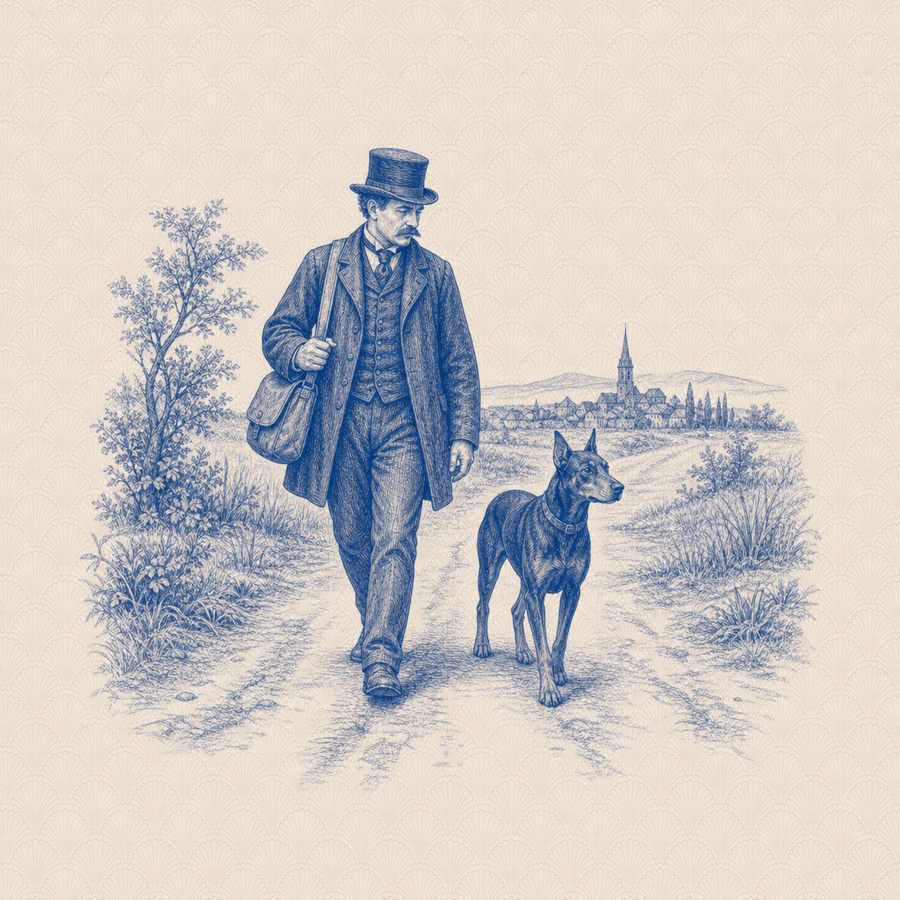
Louis Dobermann had the worst job in Apolda. He collected the town’s taxes door to door, on foot, carrying the money home through the Thuringian countryside — and he moonlighted running the local dog pound, which gave him an idea and the raw material at once. In the closing decades of the nineteenth century he began breeding his escorts: sharp, fearless, loyal dogs who made the rounds survivable. He died in 1894; the Germans named the breed in his honor — payment, you could say, on the one debt Apolda was happy to owe.
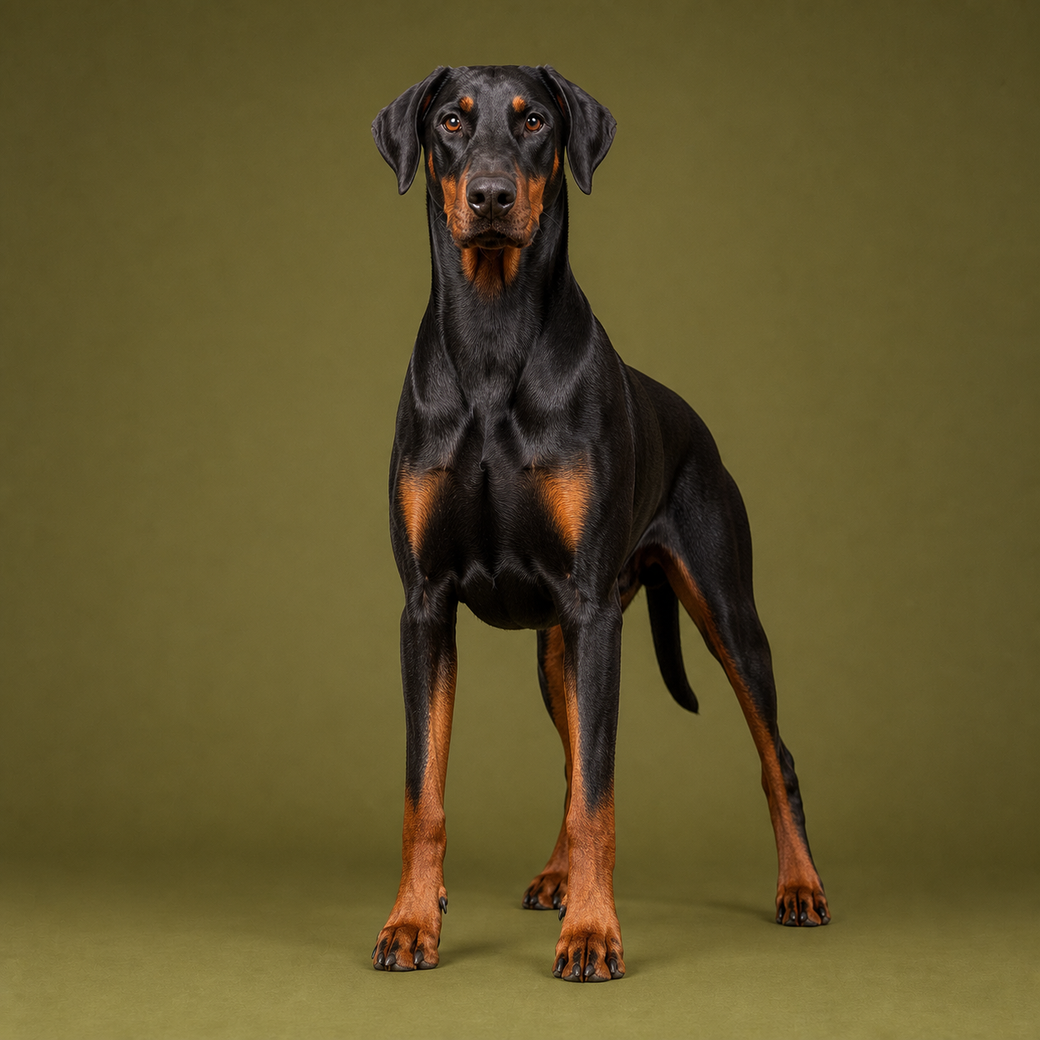
Dobermans we love
Devotion, with a job
The loyalty scaled up. In the Second World War, the Marine Corps took war dogs into the Pacific, and on Guam in 1944 sixty of them went ashore with the liberation force; twenty-five never left. The first killed was Kurt, a Doberman who ranged ahead of the lines and warned of a massive force waiting there, credited with saving the lives of 250 Marines. Fifty years later a bronze of Kurt — ears up, forever on watch — was dedicated over the National War Dog Cemetery. The memorial’s title is the Marine motto, and the breed’s: Always Faithful.
At home, the guard-dog résumé mostly translates to attachment. Dobermans are velcro dogs — leaning, following, sleeping against you — and their working intelligence makes them exhilarating or exhausting depending on what you give it to do. They need daily, serious exercise, early socialization, and an owner consistent enough to be worth taking direction from. The honest entries: they are physically pushy in adolescence, wary of strangers by design, and the breed carries real heart-disease risk, so choose breeders who test for it. Earn their trust and no dog is more completely yours.
Keeping one happy
Grooming
The easiest coat in the working group: short, sleek, and satisfied with a weekly once-over with a grooming mitt. Shedding is modest but steady. Baths occasionally, nails monthly, teeth often. In cold climates, be honest about the thin coat — a Doberman in winter appreciates a jacket more than their dignity admits.
Training
Among the most trainable dogs alive — bred specifically to work with one person and read them constantly. Start obedience and socialization early and keep both running for life; a ninety-pound adolescent with no rules is nobody’s joke. Positive, consistent, structured. They do not need harshness, and they do not forget it.
Exercise
An hour or two daily, and make it count: running, fetch at speed, structured sport — tracking, obedience trials, protection sport for the committed. The body is an athlete’s and the mind never clocks out; shortchange either and they will open their own project file. A worked Doberman is a calm, watchful housemate.
Diet
Feed a quality large-breed food in two measured meals, and keep them lean — extra weight burdens the heart, which this breed most needs to protect. As a deep-chested breed they carry bloat risk: calm mealtimes, no hard exercise right after eating, and learn the emergency signs early.
Sharpened, then civilized
The breed left its German hometown fast: police forces and armies took it up early in the twentieth century, and later breeders softened the original severity into something a family could live with. A half century on, the Germans dropped “pinscher” from the name as no longer apt; America kept it. What survived every revision is the design brief — one dog, one family, nothing gets past.
Questions, answered
Are Dobermans dangerous?
No breed is dangerous by default. Modern Dobermans are bred for stable, people-focused temperaments — what they need is training, socialization, and exercise, like any strong working dog.
Do Dobermans shed?
Modestly but steadily — the short coat drops fine hairs year-round. A weekly once-over keeps it in check. Not hypoallergenic.
Are Dobermans good with kids?
Devoted and protective with their own family, children included, when raised with them — supervise as you would any large, athletic dog.
What health problems do Dobermans have?
Dilated cardiomyopathy is the big one, along with bloat and von Willebrand’s disease. Ask breeders for heart and genetic testing — good ones volunteer it.