English Setter
A gentle expert in standing very still.
Sometime in the 1820s, a sportsman named Edward Laverack acquired two setters from a Carlisle clergyman and spent the next fifty years breeding from them, more or less exclusively, until he had fixed the most elegant bird dog in England. He also wrote the book on it — literally, “The Setter,” 1872 — and dedicated it to his friend Purcell Llewellin. Llewellin then took Laverack’s best dogs, crossed in fresh field-trial blood, and built the rival strain. Show setter and field setter have been arguing the point ever since, and both sides are right: this dog is beautiful, and this dog can hunt.
English Setters we love
The gentleman, off duty
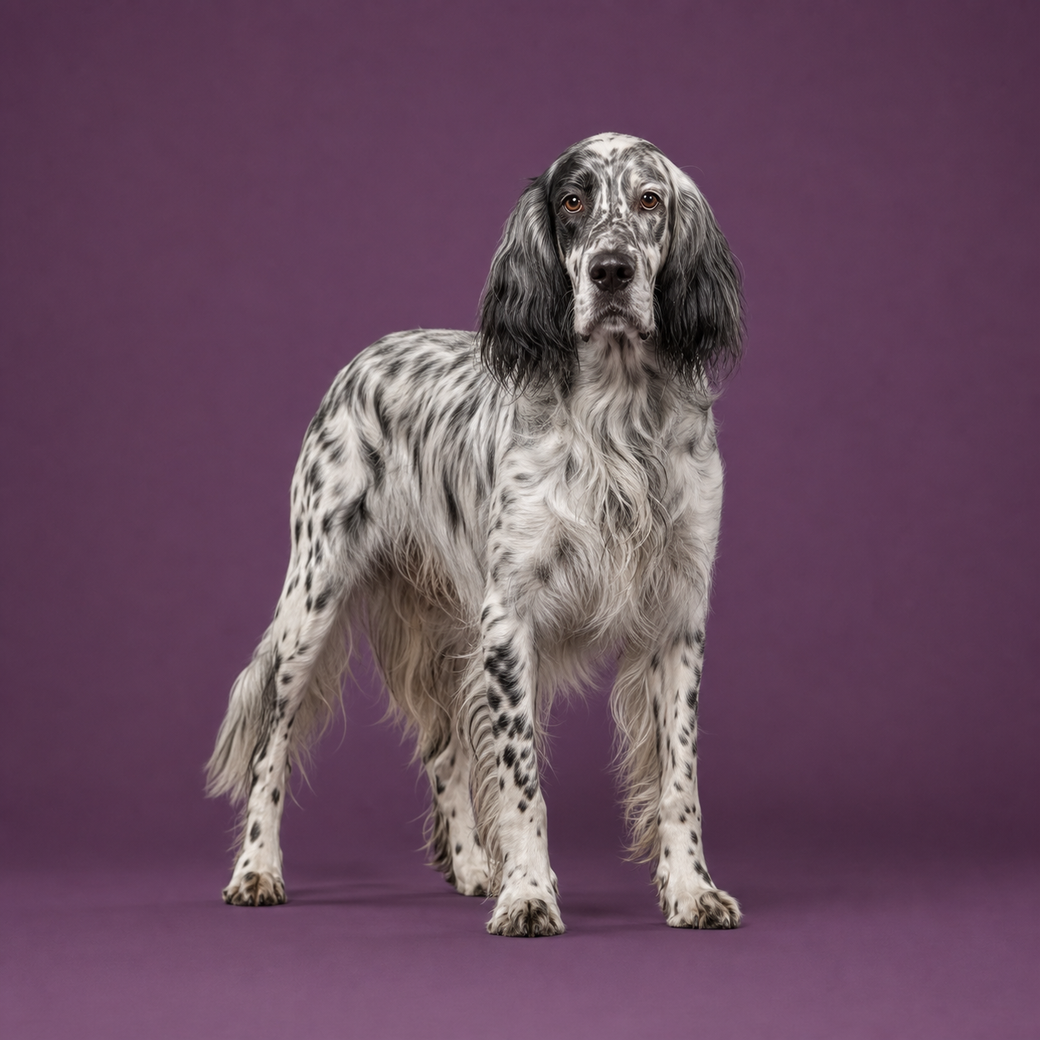
The coat comes with its own vocabulary: setter people say “belton” — borrowed from a Northumberland village — for the flecking that dusts the white coat in blue, orange, lemon, or liver. The dog inside the coat matches the tailoring. The breed’s standing nickname is “the gentleman of the dog world,” and the temperament runs soft, sociable, and faintly amused. Missouri, for its part, maintains a memorial garden to an English Setter: Jim the Wonder Dog, whose 1930s feats of apparent understanding — lore says he could pick out cars by license plate — still draw visitors to Marshall.
At home, much depends on which side of the family you chose. Bench-line setters are famously mellow — happy with a good walk and a long nap on furniture they were technically not allowed on — while field-line dogs carry serious mileage requirements. Both shed, both feather, both need their people badly; separation does not sit well with setters. They are gentle with children, soft under correction, and slow to grow up, staying puppyish well into their third year. Plan on patience, hair, and an unreasonable amount of charm.
Keeping one happy
Grooming
The feathered coat wants brushing two or three times a week with a soft brush and a long-toothed comb, chasing tangles in the armpits and ear fringes before they set. A tidy-up trim every month or so keeps feet and ears neat. Shedding is steady; the comb is cheaper than the vacuum.
Training
A soft breed, in the technical sense: setters remember harsh corrections forever and learn almost nothing from them. Keep training warm, brief, and consistent, and start early — the adolescence runs long. Recall deserves special investment; a bird on the wind outranks most promises ever made to you.
Exercise
An hour a day for a show-line setter; considerably more for a field-bred one, ideally with room to gallop. They are built for a full day’s hunting and pace themselves accordingly — long, easy movement over pure sprint. A fenced field to open up in is the great luxury.
Diet
Two measured meals a day, portioned to work done — a field dog in season eats like an athlete, a fireside setter should not. As a deep-chested breed they carry some bloat risk: calm mealtimes, no hard running right after dinner. Watch the waist under all that feathering.
From the net to the bench
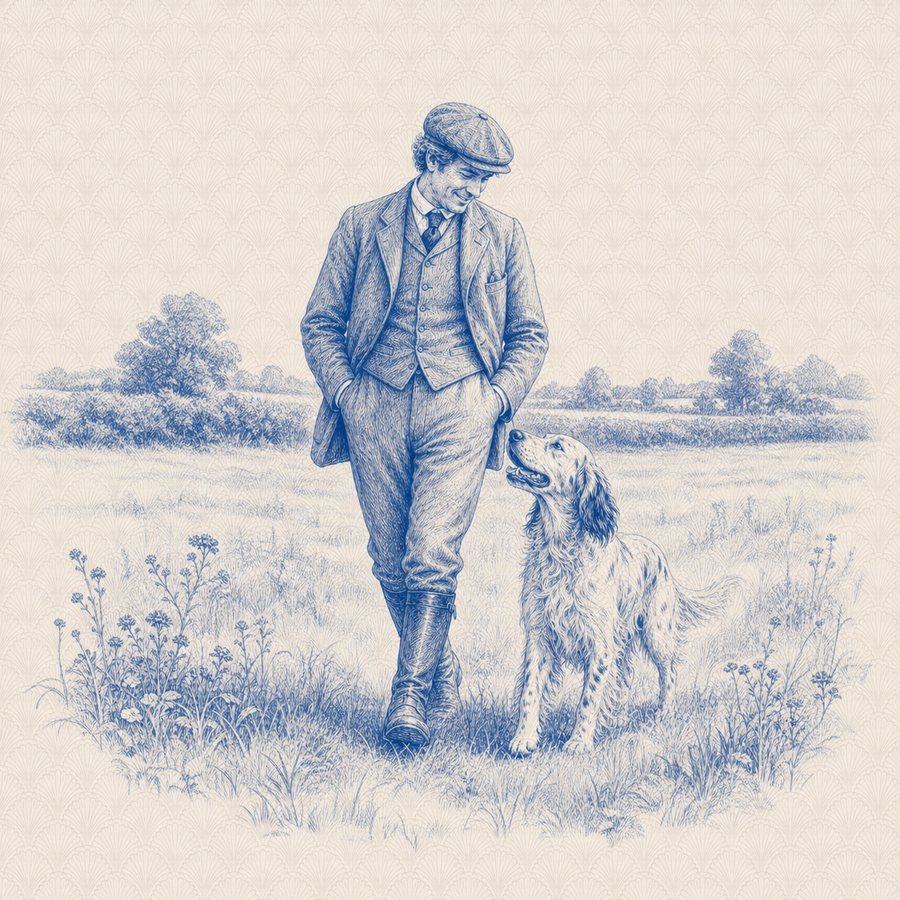
Setting dogs are centuries old: crouching low before birds so hunters could throw a net over covey and dog alike. The gun changed the job; the Victorians refined the dog. When the American Kennel Club opened its studbook in 1878, an English Setter named Adonis was registered as number one — the first dog on the first page of the American registry.
Questions, answered
Are English Setters good family dogs?
Among the gentlest of the sporting breeds — patient with kids, sociable with other dogs, and miserable when excluded from family life.
Do English Setters shed?
Yes — steadily, with feathering that mats without regular brushing. Not hypoallergenic.
What does “belton” mean?
The breed’s flecked coat pattern — blue, orange, lemon, or liver ticking on white. Every English Setter wears some version of it.
Show or field English Setter — which fits my home?
Show (bench) lines are mellower and heavier-coated; field lines are lighter, faster, and need real work. Be honest about your mileage.