Eurasier
Three breeds, blended for calm.
Konrad Lorenz spent a career watching animals more closely than anyone alive — the Nobel Prize confirmed it — and wrote whole chapters on what he wanted from a dog. Late in life, he found her: a fluffy puppy from a German breed then scarcely twenty years old, whom he called Babett. He would praise her character as the finest he had ever known in a dog. Quite an endorsement, considering the breed had been designed — assembled deliberately from three older ones — to be exactly that: the calm, devoted family dog, built from scratch.
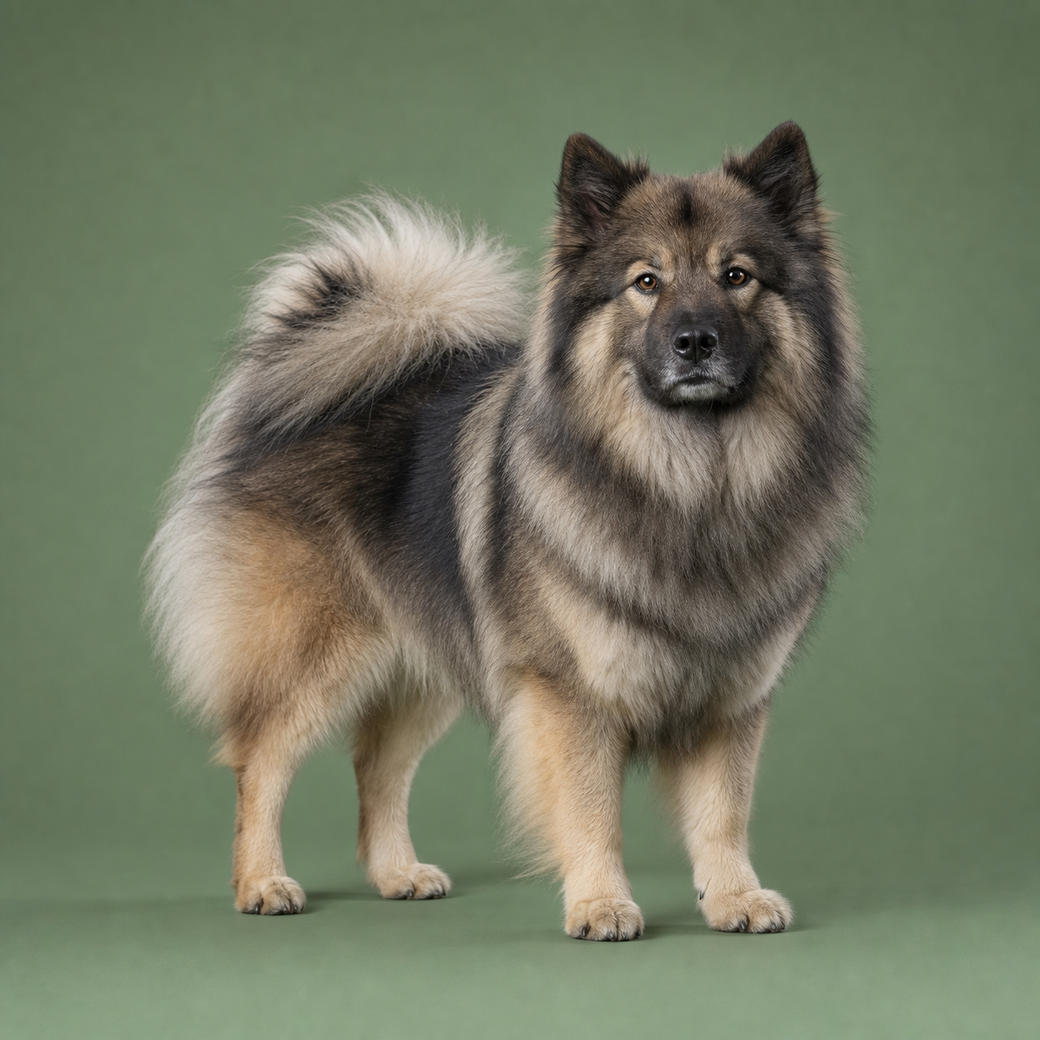
Eurasiers we love
Calm, engineered on purpose
The recipe was written down from the start: take the Chow Chow’s dignity, the Wolfspitz’s steadiness and weatherproofing, and — a later addition — the Samoyed’s friendliness, and select every generation for family temperament above all else. The clubs that steward the breed still run it that way, screening health and temperament with unusual rigor, which is one reason Eurasiers remain scarce outside Europe. The result looks like a plush, medium-sized spitz in fawn, red, grey, or black, and acts like something rarer: a genuinely calm dog who takes the household’s emotional temperature and matches it.
Living with a Eurasier is quiet in a way first-time visitors notice. They bark little, roam the house like a soft-footed auditor, and keep one eye on their people at all times — this is a breed that wants proximity, not performance. Strangers get polite reserve, never a party. The costs are specific: heavy seasonal shedding, a real sensitivity to harsh handling, and genuine unhappiness when left in kennels or long solitary days. They were built to live inside the family, and they hold you to the terms.
Keeping one happy
Grooming
The thick double coat needs a solid brushing once or twice a week, stepped up to daily during the twice-yearly blows, when the undercoat leaves in handfuls. Baths stay rare — the coat sheds dirt on its own. No trimming, no shaving; the plush is structural.
Training
Sensitive is the operative word: Eurasiers learn willingly for people they trust and shut down under shouting or heavy-handed corrections. Keep it calm, consistent, and reward-based, and socialize early so the natural reserve stays polite rather than worried. They see no point in endless repetition — honestly, fair enough.
Exercise
Moderate and companionable: a couple of good walks a day, some play, and inclusion in whatever the family is doing — hiking, errands, supervising the garden. They are not driven athletes and do not pretend to be. What they cannot do is exercise alone in a yard; the company is the point.
Diet
Two measured meals a day of quality food, portioned honestly — Eurasiers are light eaters for a dog this plush, and extra weight hides easily under the coat. Some inherit a picky streak. Run your hands over the ribs monthly and adjust; the fluff will lie to your eyes.
A companion, built to spec
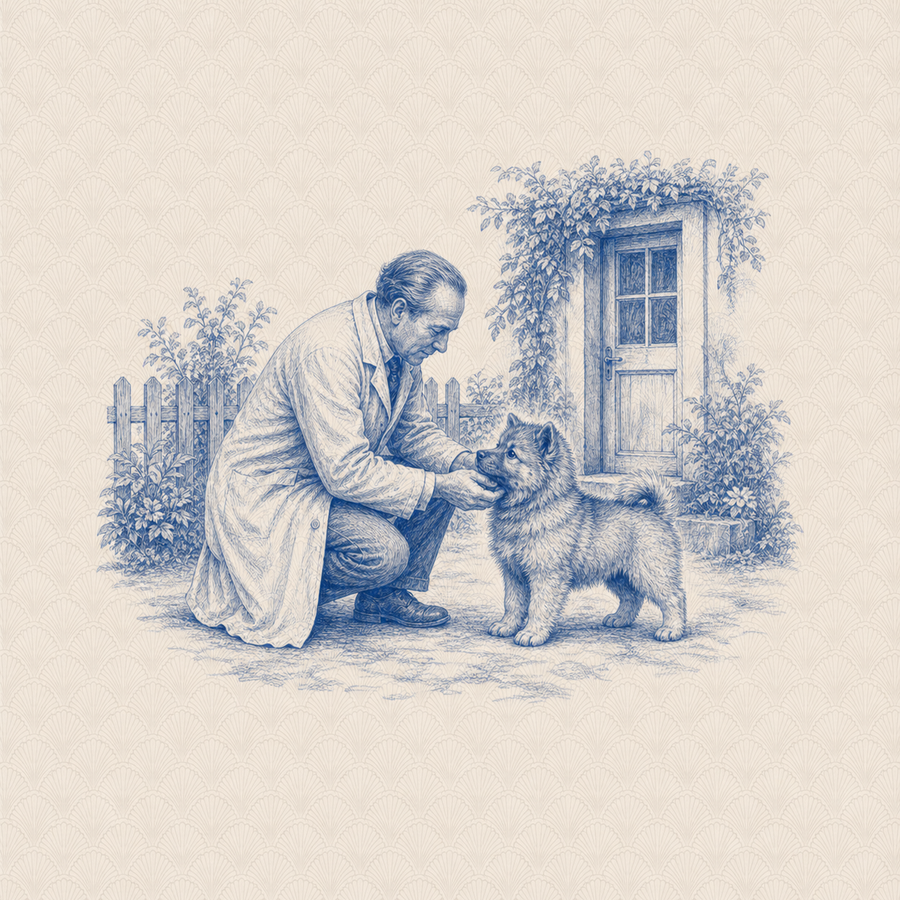
In 1960 in Weinheim, Germany, Julius Wipfel set out to build the ideal household dog, and named his founding cross the Wolf-Chow. A third breed joined the mix in 1972, and with it came a new name — Eurasier, for the dog’s European and Asian roots. The FCI recognized the breed in 1973, remarkably fast, and the experiment became permanent.
Questions, answered
Are Eurasiers rare?
Yes — still uncommon, especially outside Europe. Expect a waiting list and a thorough conversation with a club breeder; that’s the system working.
Do Eurasiers bark a lot?
No — they’re among the quieter spitz breeds, alert but not noisy. A Eurasier who barks usually has a reason.
Do they shed?
Heavily in season — the double coat blows twice a year. Not hypoallergenic.
Can a Eurasier be left alone all day?
Not happily. This breed was designed for close family life and does poorly with long solitary days or kennel stays.