
Finnish Spitz
Finland’s national dog, at full volume.
There is a title in Finland that translates, more or less, to King of the Barkers, and it is awarded competitively. The contestants are Finnish Spitz — small, fox-red hunting dogs whose entire method is the voice: find a grouse in a tree, sit beneath it, and bark, up to 160 times a minute, until the hunter arrives. The best of them yodel, trill, and roll their barks like singers working a phrase. Other countries hold their bird dogs to silence. Finland gave its noisiest one a crown, and then made the breed a national symbol.
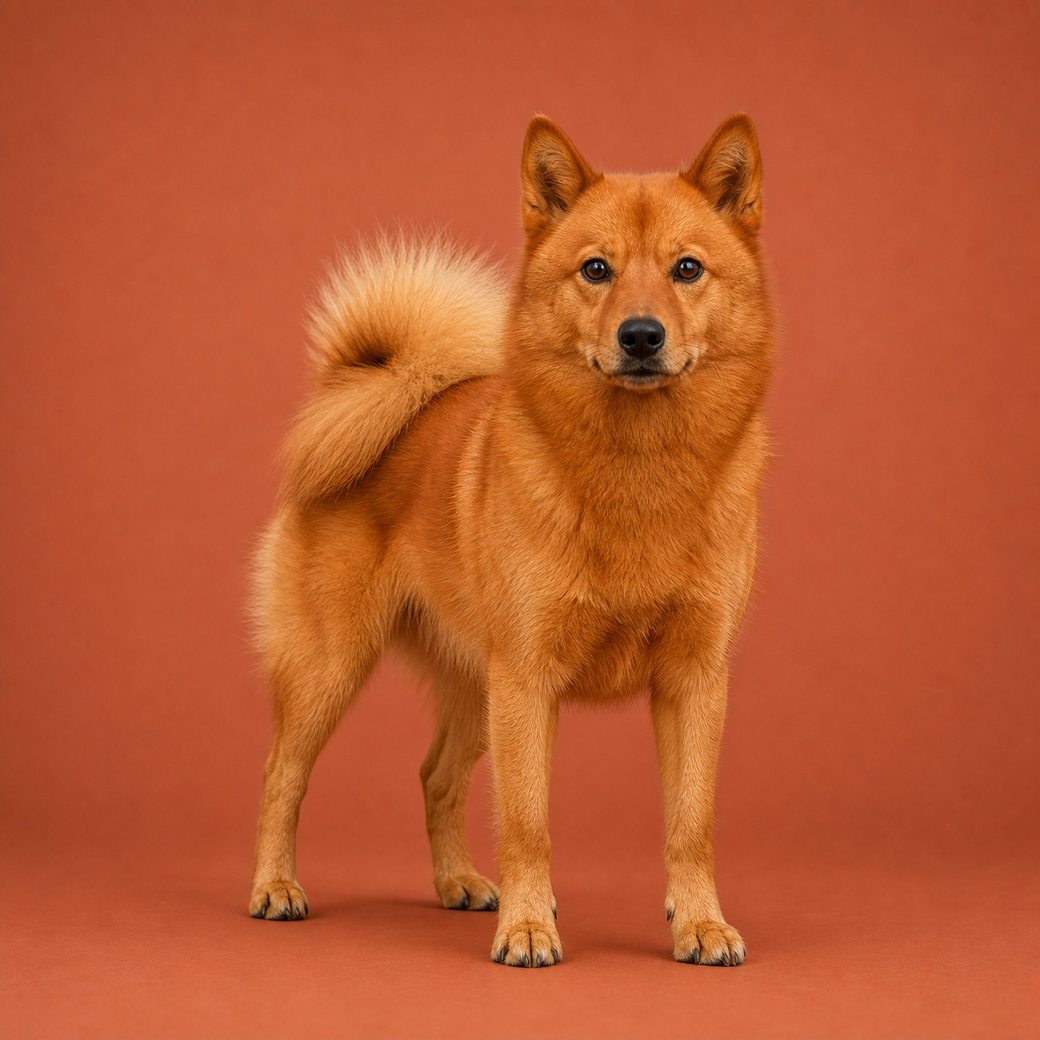
Finnish Spitzes we love
The barking bird dog
The Finns call the breed Suomenpystykorva — the Finnish cock-eared dog — and treat it as a piece of national heritage, which it nearly wasn’t. By the 1880s the old hunting spitz of the north was vanishing into a blur of crossbreeds, until a Helsinki sportsman named Hugo Roos spent thirty years gathering the purest survivors and breeding the type back. What he saved looks like a small fox with opinions: glowing red-gold coat, prick ears, curled tail, and the alert bearing of an animal that has never once been unsure of itself.
Bring one home and the profession comes too. A Finnish Spitz files reports — visitors, squirrels, shifts in the weather’s attitude — and while training can install an “enough,” it cannot delete the instinct. Be honest with your neighbors. Otherwise they keep a cat’s habits: clean, independent-minded, inclined to consider a request before honoring it. With their own family they are playful, gentle with children, and quietly affectionate — devotion with dignity attached. Give the voice an outlet, the mind a puzzle, and the legs a daily run, and the kingdom stays peaceful.
Keeping one happy
Grooming
The dense red coat manages itself for most of the year: a weekly brushing, no trimming, and rare baths keep the glow on. Twice a year the undercoat lets go entirely — comb daily and hold your nerve. Show rules forbid sculpting, which suits a breed that arrives finished.
Training
Independent by design — this dog was bred to work a forest alone and negotiates accordingly. Keep sessions short, upbeat, and worth showing up for; repetition and raised voices both read as bad manners. Teach a quiet cue early, before the barking habit writes its own rules. Patience wins here.
Exercise
Plan on a solid hour a day: brisk walks, off-leash time only in fenced areas, and games that reward the eyes and nose. They were built to range ahead through wild country, so a small yard alone will not do it. Cold weather improves their mood considerably.
Diet
Two measured meals a day suit this trim, efficient northern body — Finnish Spitz carry little spare and should stay that way. They can be deliberate eaters, unmoved by food theater. Skip the buffet strategy: portion, wait, adjust. Treats work best as training currency, counted against the day.
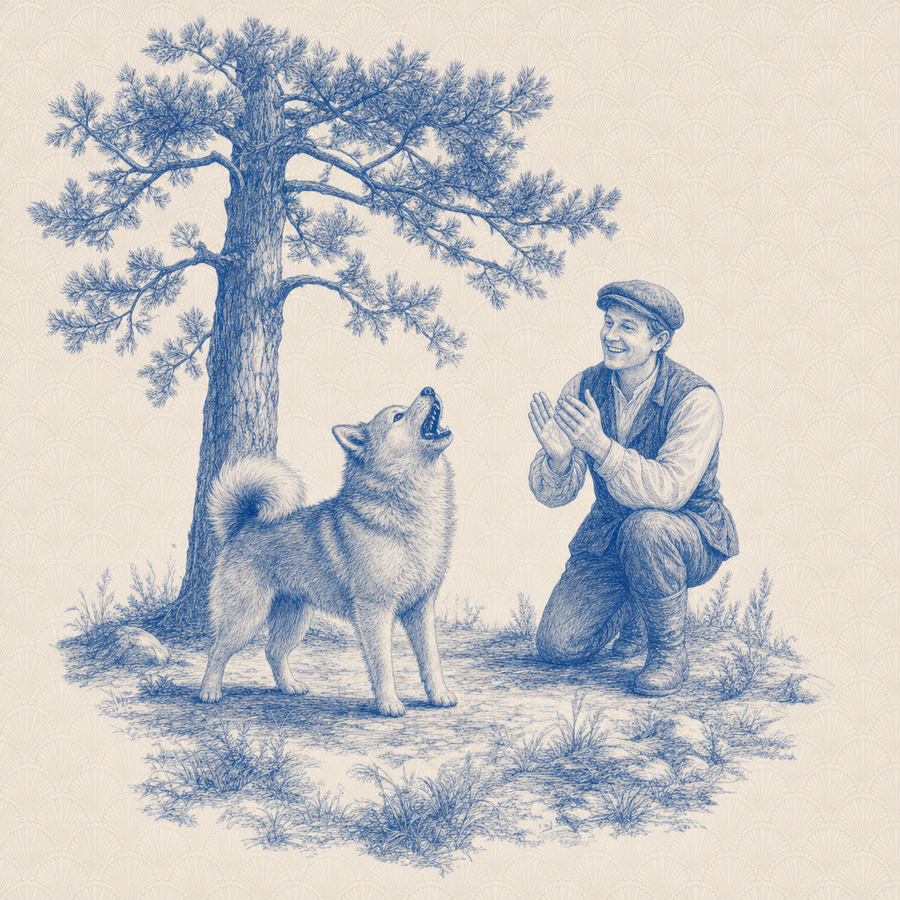
Three thousand years, one near miss
Spitz-type hunting dogs came north with settlers thousands of years ago and became Finland’s specialist for feathered game. Puppies are born dark and redden as they grow, as if the breed itself insists on becoming more Finnish. Finland named it the national dog in 1979; the AKC recognized the breed in 1991. In Finland, the bark still counts as a working credential.
Questions, answered
Do Finnish Spitz bark a lot?
Yes — it’s the breed’s whole profession. Training can moderate it and give it an off switch, but a quiet Finnish Spitz was never on the menu.
Are Finnish Spitz good family dogs?
Very — playful, gentle with kids, and devoted to their people, with a streak of spitz independence and some reserve with strangers.
Do they shed?
Heavily twice a year when the undercoat blows, moderately otherwise. Not hypoallergenic.
Can a Finnish Spitz live in an apartment?
Physically yes, acoustically it depends. Exercise, mental work, and serious bark training make it possible; thin walls make it brave.