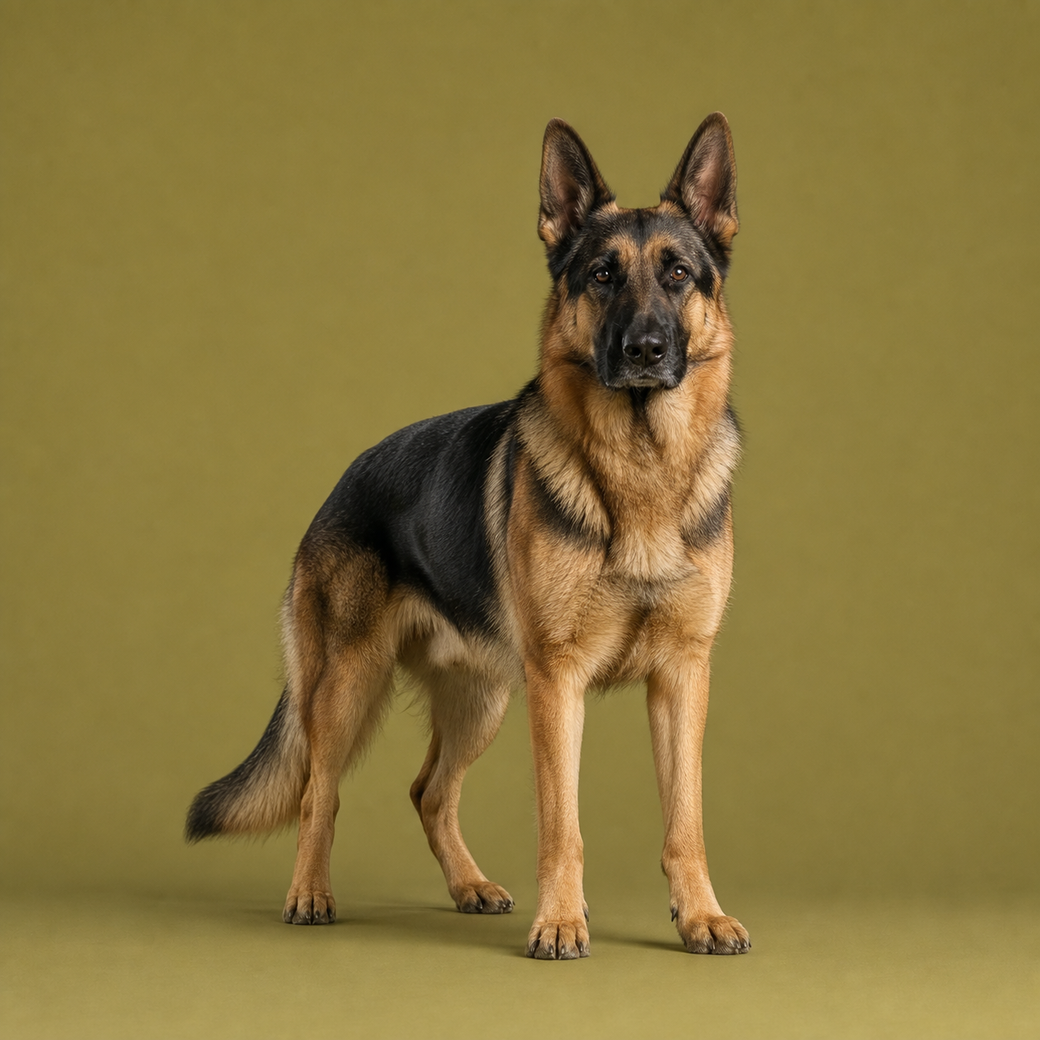
German Shepherd
The dog other dogs get measured against.
In September 1918, an American corporal named Lee Duncan searched a bombed-out kennel in Flirey, France, and found a starving German Shepherd mother with five nursing puppies. He kept one, named him Rin Tin Tin after a French good-luck charm, and brought him home to Los Angeles. Within five years the war orphan was Hollywood’s biggest draw — twenty-seven films, fan mail by the thousands, and a studio nickname, “the mortgage lifter,” for what his pictures did to Warner Bros.’ books. Very few dogs have rescued a movie studio. It is telling that everyone believed a German Shepherd could.
Alsatians we love
Capability, with a soft spot
The breed was barely twenty years old when it conquered Hollywood, and it began as one man’s fixation. In 1899, a German cavalry officer named Max von Stephanitz saw a herding dog at a show, bought him on the spot, renamed him Horand von Grafrath, and declared him the first German Shepherd Dog — then spent decades breeding to a single motto: utility and intelligence. It worked past all reason. Police work, military service, guiding the blind, search and rescue — wherever a job for dogs exists, this breed holds a chair.
All that capability comes home with the dog. A German Shepherd needs employment — training, real walks, problems to solve — or they will appoint themselves to security and worry the perimeter. They bond deeply, guard naturally, and treat strangers with formal reserve, which early socialization keeps polite. The shedding is constant, with two heavy seasonal blows. And because popularity invited careless breeding, hips and elbows deserve real scrutiny — choose breeders who test. Done right, this is the great all-arounder: watchful, devoted, and calmer than their résumé suggests.
Keeping one happy
Grooming
The double coat sheds daily and blows twice a year — a thorough brushing two or three times a week is the honest minimum, daily in season. Baths only occasionally; the coat self-cleans better than it gets credit for. Invest in the good vacuum early. Nails, ears, teeth on schedule.
Training
Among the most trainable animals alive, which is a responsibility: whatever you teach, they learn, including the things you taught by accident. Start socialization and basic work early, keep it structured and fair, and give the adult dog a discipline — obedience, scent work, agility. An educated shepherd is a settled one.
Exercise
Two hours a day of combined body and brain work is the fair target: walks, running, fetch with rules, training games. Under-exercised shepherds invent assignments, and their assignments involve your fence line. Grow puppies gently — big joints mature slowly, and early restraint pays off for a decade.
Diet
Feed a quality large-breed food in two measured meals, and keep them lean for life — every extra pound taxes joints the breed already worries about. Deep chests carry bloat risk: calm mealtimes, no hard exercise right after eating. Large-breed puppy formula matters; fast growth is false economy.
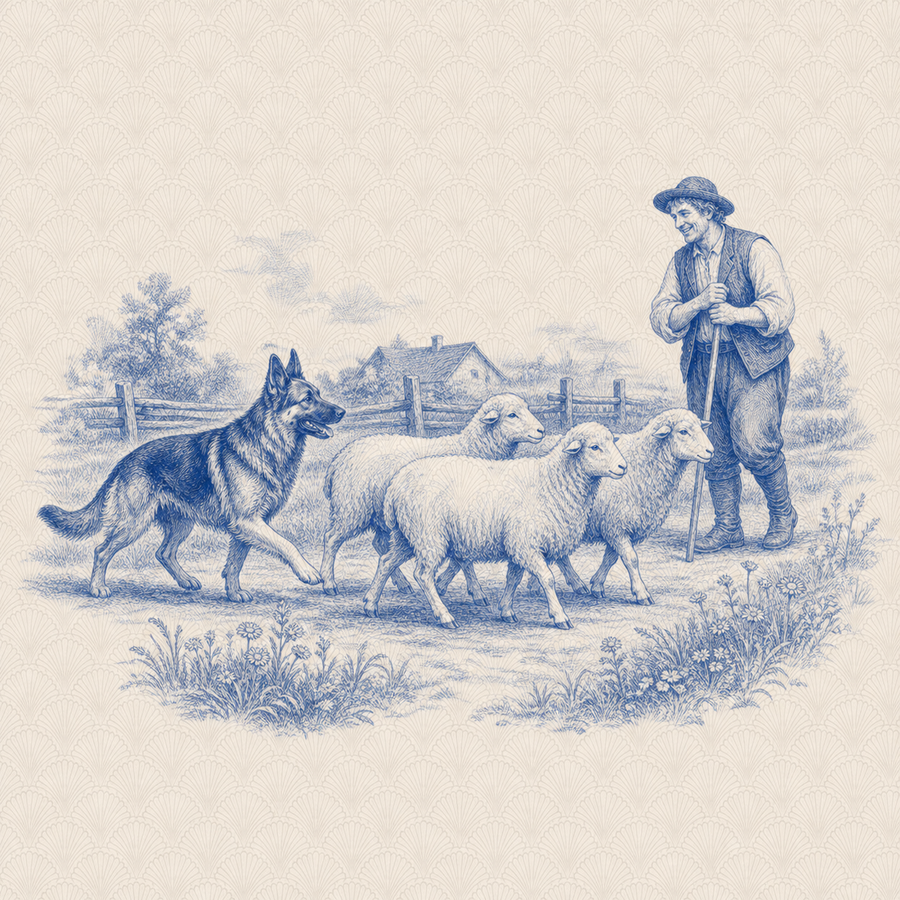
From sheepfold to every front line
Standardized from German herding stock at the very end of the nineteenth century, the breed proved itself in the First World War as messenger, sentry, and ambulance dog on both sides. Anti-German feeling ran so high that Britain renamed the breed the “Alsatian,” a fig leaf that lasted until 1977. The AKC had recognized the breed back in 1908. The jobs never stopped coming.
Questions, answered
Do German Shepherds shed a lot?
Constantly, with two heavier seasonal blows. Owners call them “German shedders” for a reason — budget for brushing and a good vacuum.
Are German Shepherds good family dogs?
Excellent with their own family, including kids, when socialized and exercised. They take the family seriously — sometimes more seriously than the family does.
How long do German Shepherds live?
Typically 9–13 years. Sound breeding, lean weight, and joint care push the odds toward the long end.
Are German Shepherds aggressive?
Well-bred, well-socialized shepherds are confident and reserved, not aggressive. Poor breeding and boredom, not the breed, cause most problems.