Giant Schnauzer
The largest beard in law enforcement.
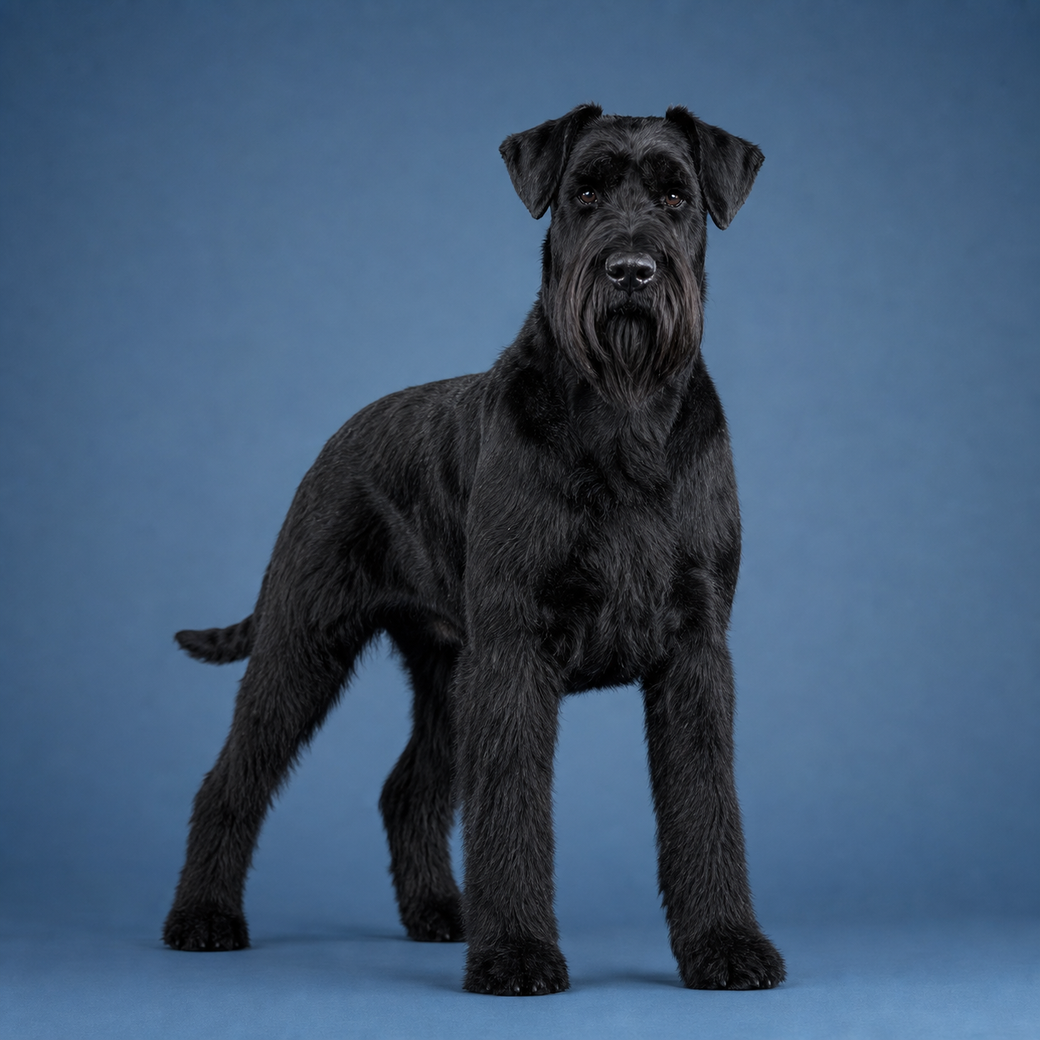
On a February night in 2025, a Giant Schnauzer named Monty stood under the Madison Square Garden lights and finally heard the words. He had been to Westminster twice before and come agonizingly close; this time the judge pointed at him — Best in Show, the first Giant Schnauzer ever to take it. His co-owner once summed him up as “bold, cocky and fun,” which is close to the breed standard in three words. Monty retired that night at five, having gotten the big one. His breed had been reporting for work, in one uniform or another, for well over a century.
Employment, strongly preferred
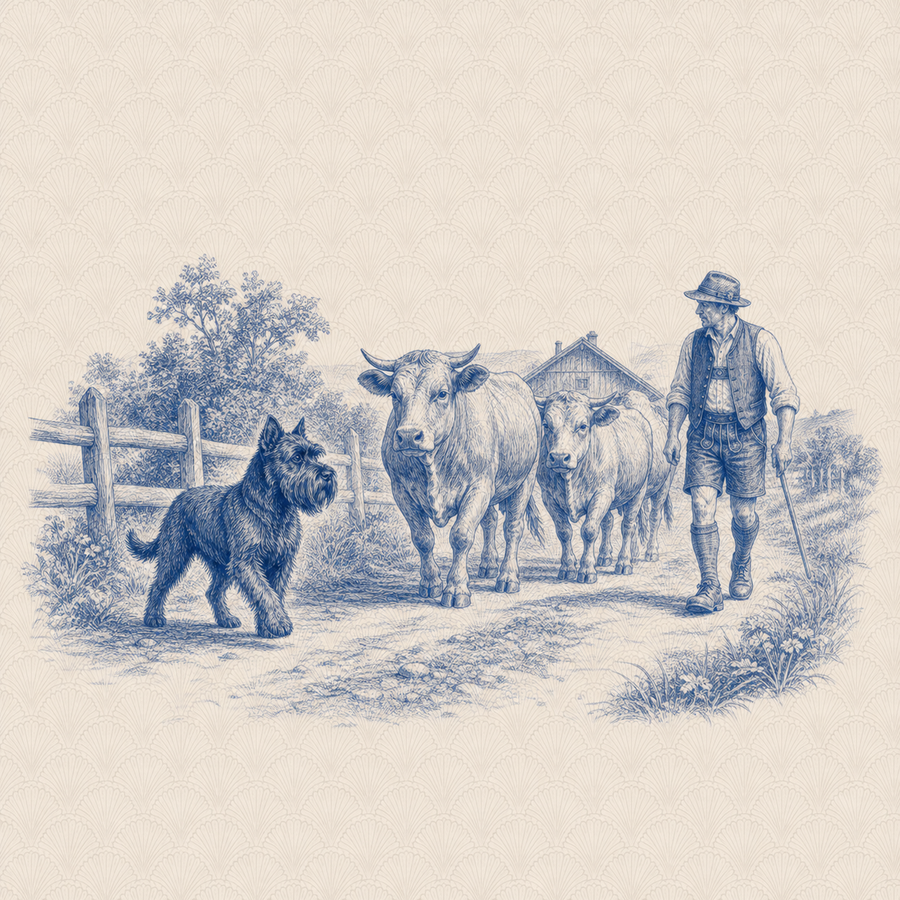
The résumé started with cattle. Bavarian farmers wanted a bigger, tougher version of the standard schnauzer to drive stock along the road, and when railroads took over the droving, the dogs took city jobs — guarding breweries, butcher shops, and stockyards around Munich, where money moved and thieves circled. Around the First World War, Germany discovered the breed took to police training brilliantly, and the Riesenschnauzer — the “giant schnauzer” — added security and military work to the file. The beard and eyebrows read as comedy. The work history reads as anything but.
That history is the owner's manual. A Giant Schnauzer is a powerful, brilliant working dog who bonds hard, watches everything, and needs both a physical and an intellectual payroll — this is not a large lapdog with facial hair. Under-employed, they freelance: patrolling, alarm-barking, remodeling. Well-employed — running, training, dog sports, a family to shadow — they are devoted, playful, and impressively steady. They suit experienced, active owners who enjoy being taken seriously by their dog. The territorial streak is standard; the loyalty, once issued, is total.
Keeping one happy
Grooming
The wiry double coat sheds lightly but demands service: brush two or three times a week, keep the coat hand-stripped or clipped every couple of months, and rinse the beard often — it files a report on every meal and water bowl. The reward is a strikingly low-shed household.
Training
A serious student who needs a serious curriculum: obedience first, then more — agility, scent work, protection sport, anything with structure. They learn fast, test boundaries on a schedule, and respect consistency over volume. Socialize early and broadly; a guarding breed this smart should meet the world young.
Exercise
Plan on an hour or two of vigorous daily work — running, hiking, swimming, hard play — plus genuine mental employment. This breed was built for full shifts. A walked-but-bored Giant is still a bored Giant, and a bored Giant is a large committee of bad ideas.
Diet
Feed a quality large-breed food in measured meals, grow puppies slowly, and keep adults athletic-lean — the joints and the work ethic both depend on it. Deep chest, real bloat risk: calm mealtimes, rest after eating, and know the emergency signs. Budget the training treats honestly.
Cattle roads, breweries, police files
Bavarian farmers built the biggest schnauzer to drive cattle; by 1900 the dogs were guarding Munich's breweries, butcher shops, and stockyards. Just before the First World War, the breed came to national attention in Germany as a police dog, a career it never really left. Giants reached America in the 1930s, and the breed's national club formed in 1962.
Questions, answered
Are Giant Schnauzers hypoallergenic?
They are among the lower-allergen breeds — the wiry coat sheds very little — but no dog is truly 100% hypoallergenic. Spend time with one first.
Are Giant Schnauzers good family dogs?
For active, experienced households, yes — deeply loyal and playful. They are a lot of dog, and small children plus guarding instincts need adult management.
How big do Giant Schnauzers get?
Roughly 55 to 85 pounds and up to about 27.5 inches at the shoulder — giant compared to other schnauzers, mid-large among working breeds.
How much exercise do they need?
An hour or two of real work daily, physical and mental. This is a working breed in earnest, not a weekend athlete.