Great Dane
Not Danish. Not fierce. Definitely not small.
When Iwao Takamoto sat down in 1969 to design a cartoon dog, he did his homework first — he sought out a breeder of prize-winning Great Danes and took careful notes on the ideal: the straight back, the strong chin, the sturdy legs. Then he drew the reverse. “I decided to go the opposite and gave him a hump back, bowed legs, small chin and such,” he said later. “Even his color is wrong.” The result was Scooby-Doo, the most famous Great Dane who never existed — and a backhanded tribute to how magnificent the genuine article actually is.
Enormous, and gentle about it
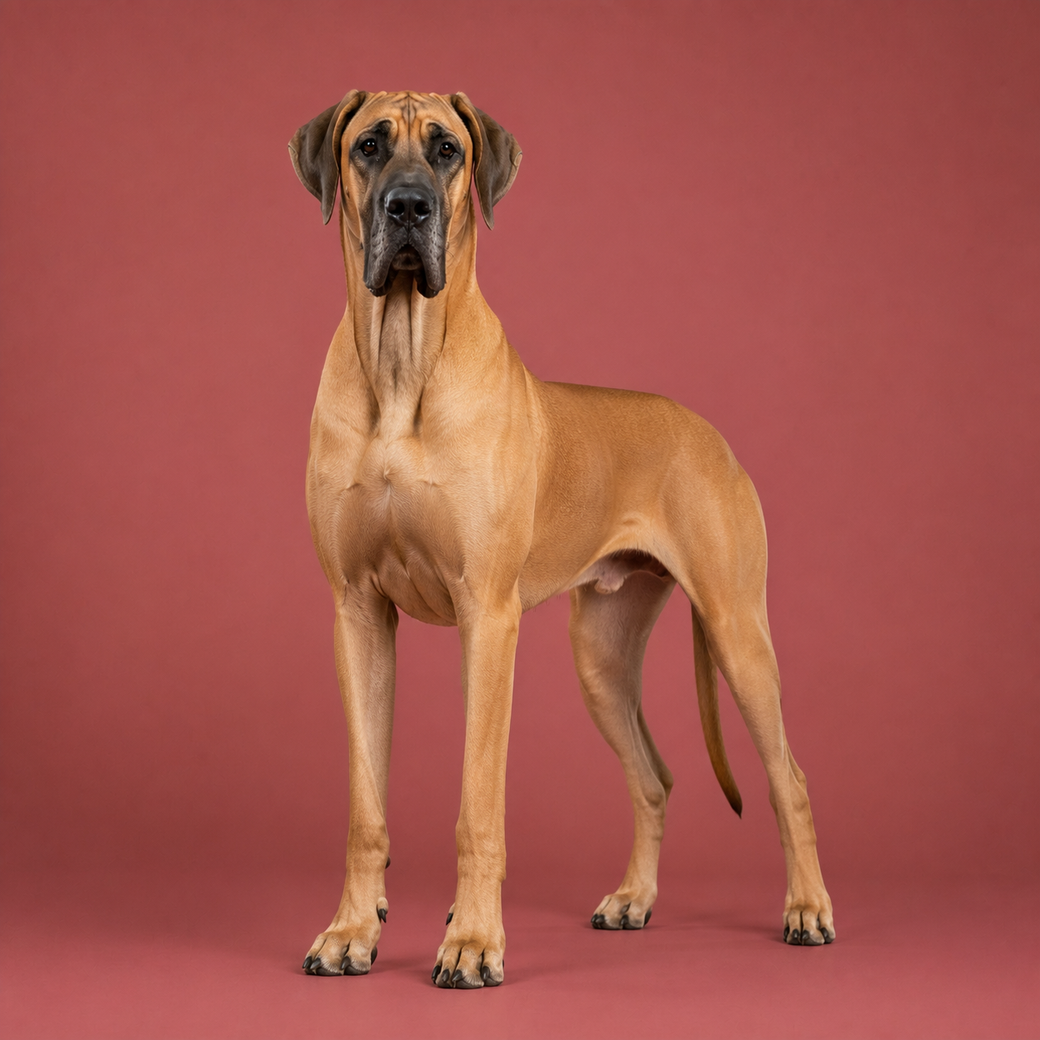
The genuine article holds records. The tallest dog ever measured was a Great Dane named Zeus, of Otsego, Michigan — 44 inches at the shoulder when Guinness World Records made it official in 2011, and taller than his people when he stood up. The AKC calls the breed the “Apollo of Dogs,” and the grandeur has old paperwork: German nobles kept the best of their boarhounds as Kammerhunde, chamber dogs in ornate collars, sleeping in the royal bedchamber as living security against assassins. The modern Dane has kept the presence and reassigned the loyalty — to whoever holds the leash.
Living with one is a lesson in scale. Counters are not high ground, the sofa is negotiable and then gone, and a happy tail clears a coffee table in one pass. Yet Danes are famously easy housemates — moderate exercisers, champion leaners, convinced that lap privileges scale with love rather than with size. The honesty owed: giant dogs live giant-short lives, seven to ten years, and the health vigilance is real. Budget for big beds, bigger food bills, and a vet who knows the breed. What you get back is a presence nothing else in dogs quite matches.
Keeping one happy
Grooming
The short coat is the easy part: a weekly once-over with a rubber mitt, an occasional bath, and moderate shedding a good vacuum absorbs. The real maintenance is everything else at scale — nails every few weeks, ears checked, drool towels stationed, and a proper orthopedic bed for all those hours of napping.
Training
Start immediately, while the puppy is smaller than you: a Dane learns sit, settle, and loose-leash manners easily at three months and enforces its own opinions at a hundred-plus pounds. They are soft-tempered, eager students who wilt under harshness. Socialize widely and early — a startled giant helps no one.
Exercise
Moderate, and gentler than the size suggests: a couple of brisk daily walks plus some play covers it. Protect the growing years — no forced running or jogging partnerships before eighteen months or so, while the big joints are still under construction. Grown Danes nap professionally between outings; let them.
Diet
Feed a large-breed formula in two or three calm, measured meals — never one giant one — with quiet rest before and after eating, because deep-chested breeds carry serious bloat risk; learn the emergency signs early. Grow puppies slowly on food made for giants. Sound joints are worth more than fast size.
The boarhound that went to court
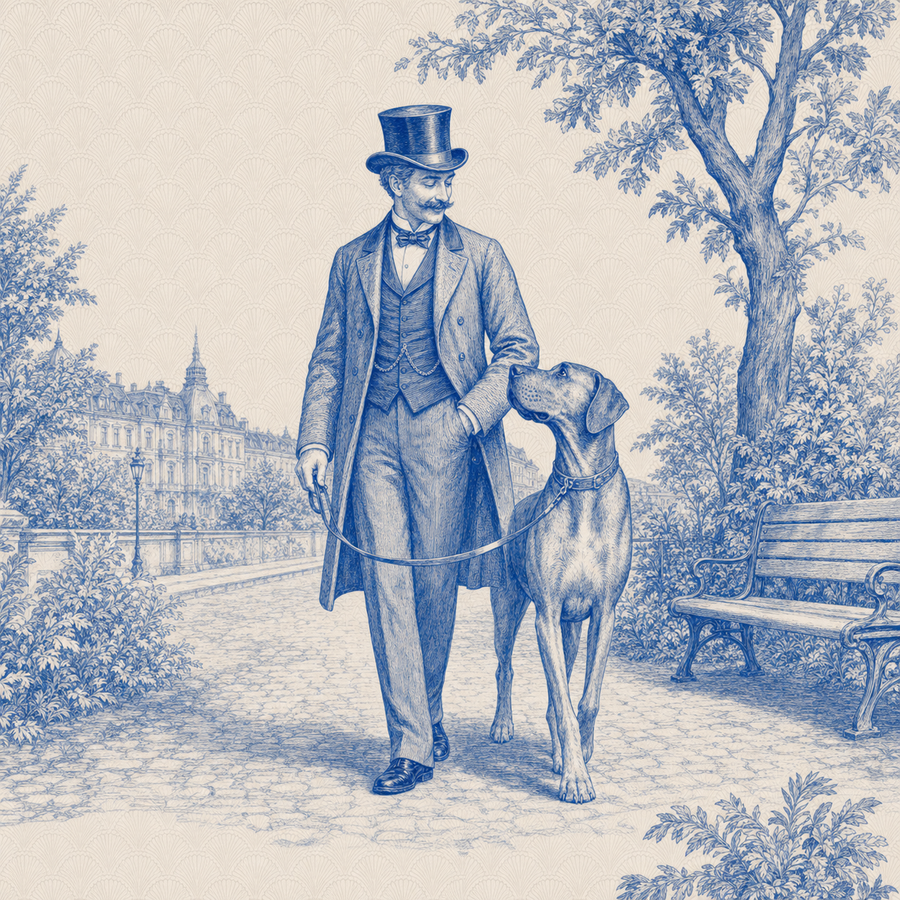
Despite the name, the Great Dane is thoroughly German — a catch dog bred to seize wild boar and hold on, descended from mastiff-and-hound crosses the Germans long called the Englische Dogge. In 1878 a Berlin committee renamed the breed Deutsche Dogge, claiming it for Germany, and fanciers refined ferocity into grandeur. How an English-named dog perfected in Germany ended up “Danish” remains a mystery nobody has satisfyingly explained.
Questions, answered
How long do Great Danes live?
Typically 7–10 years — the hard bargain of giant breeds. Careful breeding, lean weight, and bloat awareness stretch the good years.
Are Great Danes good apartment dogs?
Surprisingly workable — they are calm and quiet indoors with a couple of good daily walks. The furniture negotiation is the real estate issue.
Are Great Danes good with kids?
Gentle and patient as a rule — the supervision issue is sheer physics, since a friendly lean can level a toddler.
What is bloat, and why does everyone mention it?
A sudden, life-threatening twisting of the stomach that giant, deep-chested breeds are prone to. Calm measured meals and rest around mealtimes lower the risk; sudden distress means the vet, immediately.