Greyhound
Forty-five miles an hour, mostly asleep.
Tucked into the Book of Proverbs is a short list of things that are “comely in going” — that move beautifully. A lion. A he-goat. A king. And, in the King James translation of 1611, a greyhound: the only dog breed named anywhere in the Bible. Modern scholars suspect the original Hebrew meant something else — a strutting rooster, possibly, or a war-horse — but the King James translators, working in a country besotted with coursing, looked at “comely in going” and knew exactly which animal that was. Four centuries on, it remains very hard to argue with the identification.
Gentleness at speed
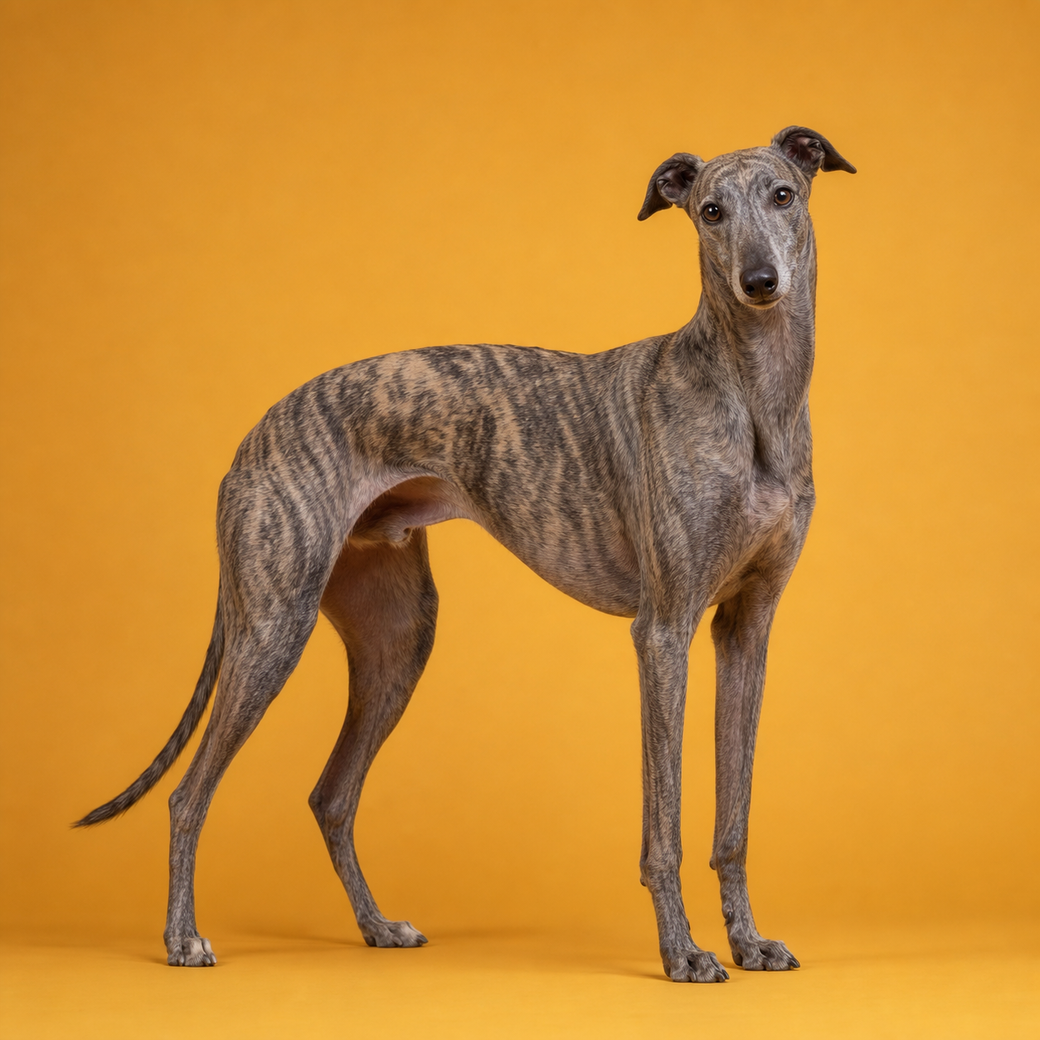
The modern chapter is stranger than the ancient ones. In 1920, a mechanical rabbit on a rail opened the first circular greyhound track, in Emeryville, California, and racing boomed into a national industry — then spent decades collapsing under its own conscience, state by state, until Florida’s voters shut down the sport’s heartland in 2018. Today only West Virginia still races. The breed’s second act belongs to the adoption movement, which walks retired racers off the track and into living rooms by the thousands — dogs with racing tattoos in their ears and no idea what a staircase is.
The couch potato reputation is the truth, not the joke. Greyhounds are sprinters: two easy walks and the occasional flat-out gallop in a fenced field settle the day’s athletic business, and the remaining hours are invested in world-class napping. They are quiet, clean, gentle to the point of shyness, and startlingly polite. The sensitivities are real — thin skin, no padding for hard floors, a genuine objection to cold, hence the famous coat wardrobe — and the prey drive means the leash stays on outside a fence. They may be the easiest large dog there is to live with.
Keeping one happy
Grooming
About as easy as dogs get: a short, thin coat that sheds lightly and stays presentable with a weekly rubber-mitt once-over. The cautions are skin-deep, literally — greyhound skin tears easily, so check after rowdy play — plus routine nails and teeth. In winter, the coat wardrobe is function, not fashion.
Training
Sensitive is the operative word: greyhounds fold under harsh handling and blossom with quiet, food-forward patience. Retired racers know a kennel schedule but not a house — stairs, mirrors, and glass doors are new curriculum, taught kindly. No greyhound’s recall outruns their eyes; manage motion with fences and long lines instead.
Exercise
A sprinter’s program: a couple of twenty-minute walks daily, plus a real gallop once or twice a week inside secure fencing. That is honestly the whole requirement — the engine was built for bursts, not marathons. Afterward they fold themselves onto the softest available surface and begin recharging for the next one.
Diet
Feed a quality food in two measured meals, and expect a leaner frame than most pets carry — visible ribs on a greyhound are correct, not concerning. Deep chests bring bloat risk, so keep meals calm with rest around exercise. Many retired racers also need a standing dental program; track life was hard on teeth.
The oldest silhouette in dogs
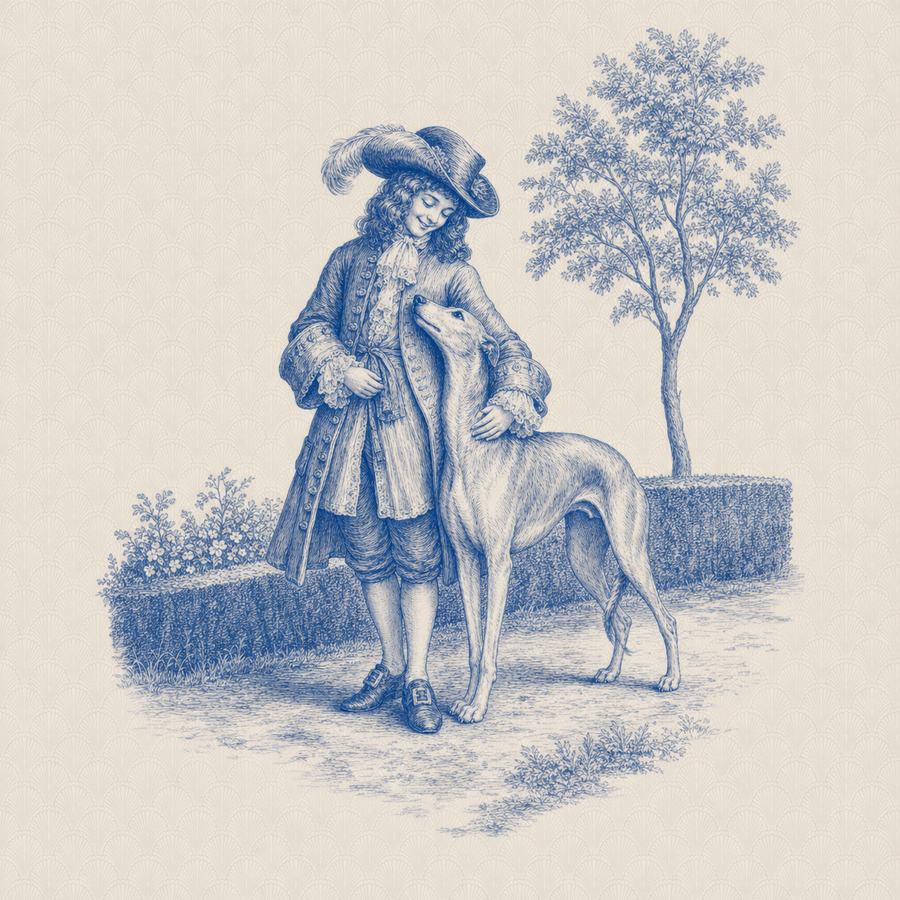
Slender coursing hounds appear on Egyptian tomb walls thousands of years old — whether the greyhound descends from them or merely resembles them is argued, but the silhouette and the job were set early: see, chase, catch. English nobility refined the breed for coursing, and for centuries owning one was effectively a class privilege. The studbooks of the 1880s made it official in America; the adoption movement made it a housemate.
Questions, answered
Do greyhounds need a lot of exercise?
Less than almost anyone expects — a couple of daily walks plus an occasional sprint in a fenced area. They are sprinters, and champion nappers between.
Are greyhounds good apartment dogs?
Among the best big-dog candidates: quiet, calm, clean, and content to lounge — provided the walk schedule is honored.
Can greyhounds live with cats?
Some can, many cannot — the chase instinct is strong and individual. Adoption groups cat-test their dogs; ask for a cat-safe match.
Why do greyhounds wear coats?
Thin skin, short fur, and almost no body fat — they genuinely feel the cold. A winter coat is basic equipment, not costume.