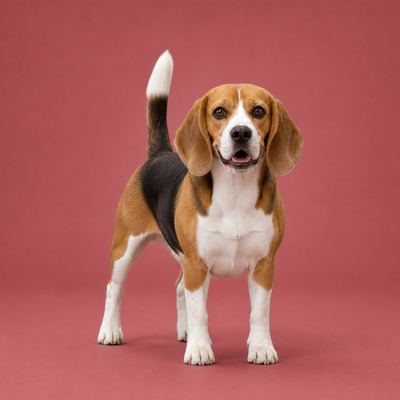
Keeshond
The dog that picked a side in a revolution.
In the 1780s the Dutch had a revolution brewing, and the revolution had a dog. The Patriot rebels who rose against the House of Orange rallied behind Cornelis de Gyselaer — “Kees,” to his countrymen — and made his kind of dog their emblem: the keeshond, literally Kees’s hound, a plush gray spitz as unpretentious as the cause. Then the Patriots lost. Keeping the rebels’ dog turned suddenly unwise, and the breed all but vanished from public life — surviving quietly on the canal barges where it had always earned its keep. Politics forgot the Keeshond. The bargemen never did.

Keeshonds we love
The people’s dog, still
Look at the face first, because the face is the résumé. A Keeshond wears “spectacles” — fine dark lines running from the corner of each eye toward the ears, set off by pale shadings — and the breed standard requires them, as though good humor were a conformation point. It reads true. Behind the glasses is a watchdog who never graduated to guard: a Keeshond announces visitors thoroughly, then greets them like returning family. This was never a hunter, a herder, or a fighter — companionship and alarm-raising were the whole portfolio, and they remain the breed’s two great talents.
Living with one is a study in cheerful surveillance. Your Keeshond will know where every member of the household is at all times, will choose the room with maximum sightlines, and will take separations personally — this is a breed that needs to be with its people, not near them. They are gentle with children, quick to learn, and genuinely funny. The bills come due in two currencies: bark, because announcing is the job, and fur, which leaves that magnificent double coat in serious seasonal drifts. Neither is negotiable. Most owners pay gladly.
Keeping one happy
Grooming
That silver-and-black cloud wants a thorough brushing twice a week, down to the skin with a pin brush — and daily patience during the twice-yearly blows, when the undercoat departs in drifts. Never shave a double coat; it insulates in both directions. Between blows, they stay surprisingly clean on their own.
Training
An eager, soft-natured student who wilts under harsh handling and blooms under praise — keep it positive, short, and sociable. Housetraining and manners come quickly; the real project is the voice. Teach a reliable “quiet” early, while the announcements are still charming, and thank your neighbors later.
Exercise
Moderate and companionable: a brisk walk or two a day, some play, and they are satisfied — this is a spitz bred for company, not mileage. Mind the heat under all that coat; summer exercise belongs to mornings and evenings. What they cannot skip is time with you.
Diet
An easy keeper in every sense: two measured meals of a quality food, portioned honestly, because the coat hides weight gain until it is well established. Run your hands over the ribs weekly rather than trusting your eyes. Count the treats — that hopeful spitz smile is a negotiating tactic.

Nearly lost, then beloved again
For generations the breed worked as watchdog and companion on Dutch barges and farms, too ordinary for studbooks. By the 1920s it was scarce even at home, until Baroness van Hardenbroek made its revival her project — the Dutch breed club formed in 1924, England took the breed up soon after, and the AKC registered it in 1930. The people’s dog finally got its papers.
Questions, answered
Do Keeshonden shed a lot?
Yes — steady shedding plus two dramatic seasonal blows a year, when the undercoat comes out in handfuls. Not remotely hypoallergenic.
Do Keeshonden bark a lot?
They are natural announcers — alert barkers rather than nuisance barkers, but the distinction takes training. Teaching “quiet” early makes all the difference.
Are Keeshonden good family dogs?
One of the best-suited spitz breeds for family life — affectionate, gentle with kids, and happiest in the middle of the household.
Can a Keeshond live in an apartment?
Yes, with daily walks and bark training — they are medium-sized and calm indoors. The coat and the voice are the considerations, not the energy.