Labradoodle
Bred for one job. Hired by the whole world.
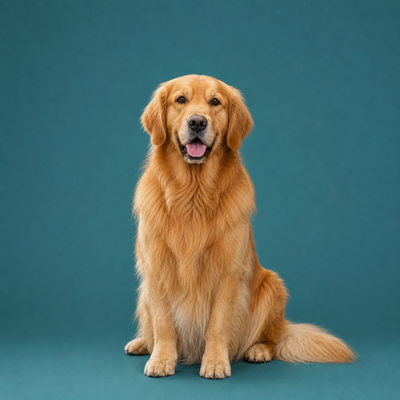
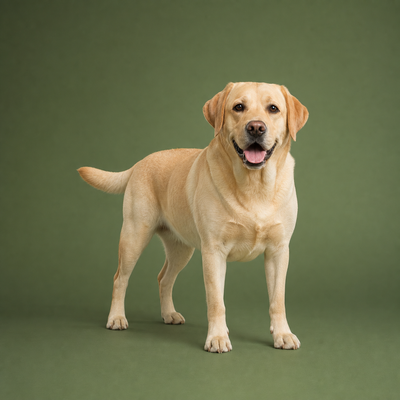
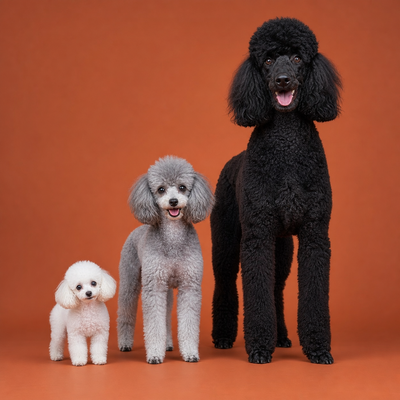
The most consequential dog of the late twentieth century was bred to solve one family’s problem. In 1989, Wally Conron of the Royal Guide Dog Association of Australia had a request he could not fill: a blind woman in Hawaii needed a guide dog, and her husband was allergic to dog hair. Conron crossed a Labrador with a Standard Poodle, and one puppy of the resulting three — Sultan — had the coat and the temperament both. Sultan flew to Hawaii and guided for a decade. The other two puppies, nobody wanted. So Conron invented a word.
A bet on two breeds
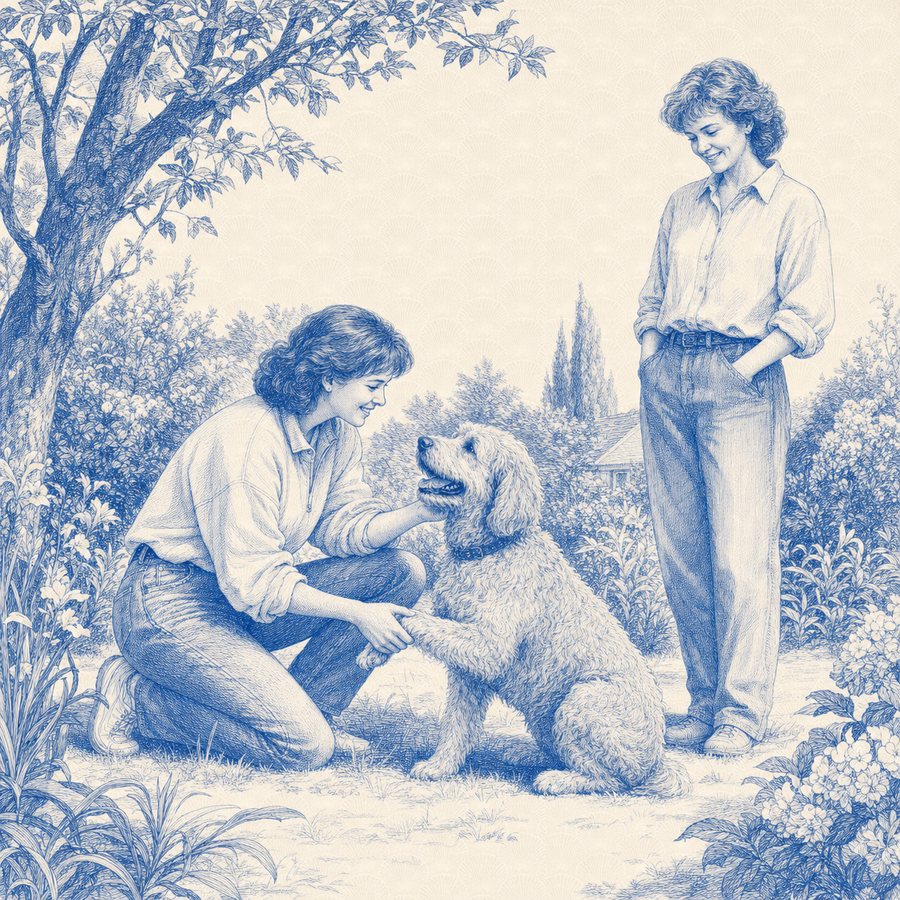
The word worked too well. “Labradoodle” was coinage as marketing — a catchy name to get unwanted crossbred puppies placed — and it detonated: within a decade the doodle was a global phenomenon, and seemingly every breed with a syllable to spare was being crossed with a poodle. The inventor watched the puppy farms and hereditary problems trailing the fashion and said so, memorably, in 2019: “I opened a Pandora’s box and released a Frankenstein’s monster.” The first family to live with one, for the record, saw no monster — only the dog that gave a mother her freedom back.
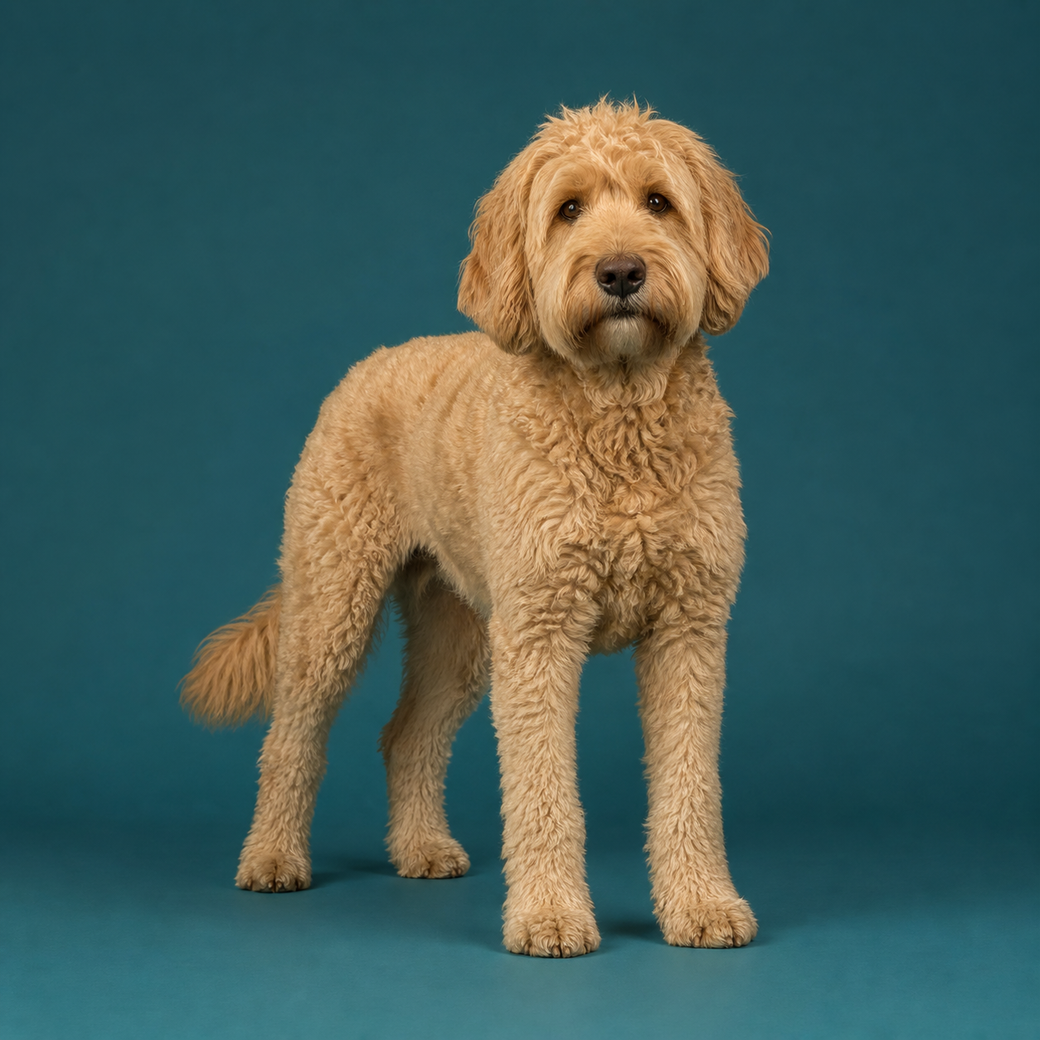
Which brings us to the honest part: a Labradoodle is a bet, not a breed. There is no registry, no standard, and no guarantee — coats in a single litter can range from poodle-curly to labrador-shedding, and “hypoallergenic” is a hope, not a promise, so allergic households should spend real time with the actual dog first. What the cross delivers most days is a friendly, clever, athletic companion who needs an hour of proper exercise and a busy brain. Meet both parents, vet the breeder ruthlessly, and the odds tilt well in your favor.
Keeping one happy
Grooming
Low-shedding is not low-effort: the wavy coat traps what it drops and mats close to the skin, so brush to the skin two or three times a week and book a clip every couple of months. Coats vary hugely — some nearly poodle, some nearly lab — so let the dog set the schedule. Dry those ears after every swim.
Training
Two eager working parents make this one of the more forgiving dogs to train: quick, food-motivated, and delighted by your approval. Start young, keep it positive, and give the retriever mouth legal outlets — carried toys, fetch, jobs. Left unemployed, a clever doodle designs an enrichment program of their own, using your possessions.
Exercise
Plan on an hour a day of genuine movement — walks as the baseline, with swimming very often the favorite, inherited from both sides of the family. Add mental work: scent games, puzzle feeders, training with variety. Sizes run miniature to standard, so scale the mileage to the dog, not the label.
Diet
Feed the individual, not the name — a miniature and a standard share little but branding. Two measured meals a day, treats counted against an appetite that skews strongly Labrador, and a visible waist as the fixed goal. Bigger puppies do best growing slowly on a large-breed formula; sound joints outrank early size.
One litter, then the deluge
After the first litter came the wave: breeders across Australia and North America took up the cross through the 1990s, and the “Australian Labradoodle” emerged as a separate project — a multi-generation line that folds in other breeds, cocker and Irish water spaniel among them. No kennel club recognizes any of it; there is no standard and no studbook. The name, at least, is now permanent English.
Questions, answered
Are Labradoodles hypoallergenic?
No dog is guaranteed hypoallergenic, poodle cross or not — coats and dander vary even within a litter. Allergy-sensitive homes should spend time with the specific dog before committing.
Do Labradoodles shed?
Some barely, some like a Labrador — it depends which coat a puppy inherits. Low-shedding coats trade hair on the floor for serious brushing and regular clipping.
What is an Australian Labradoodle?
A separate multi-generation breeding project that can include breeds beyond the Labrador and Poodle. A standard Labradoodle is the simple first cross. Neither has kennel-club recognition.
Are Labradoodles good family dogs?
Usually an excellent fit — friendly, playful, and patient — provided the household can supply daily exercise, training, and real grooming. Ask to meet both parents; temperament is heritable.