Maltese
The original lapdog, with the poetry to prove it.
Sometime in the first century, the Roman poet Martial sat down to praise a friend’s little dog, and did not hold back. Issa, he wrote, was more playful than Catullus’s famous sparrow, purer than the kiss of a dove. Her doting owner, Publius, dreading that death might part them, had her portrait painted — a likeness so exact, the poet swore, you could not tell painting from dog. History kept no record of Publius beyond the poem. The dog it kept: small, white, silky, adored past all reason. The Maltese, in other words, fully operational two thousand years ago.
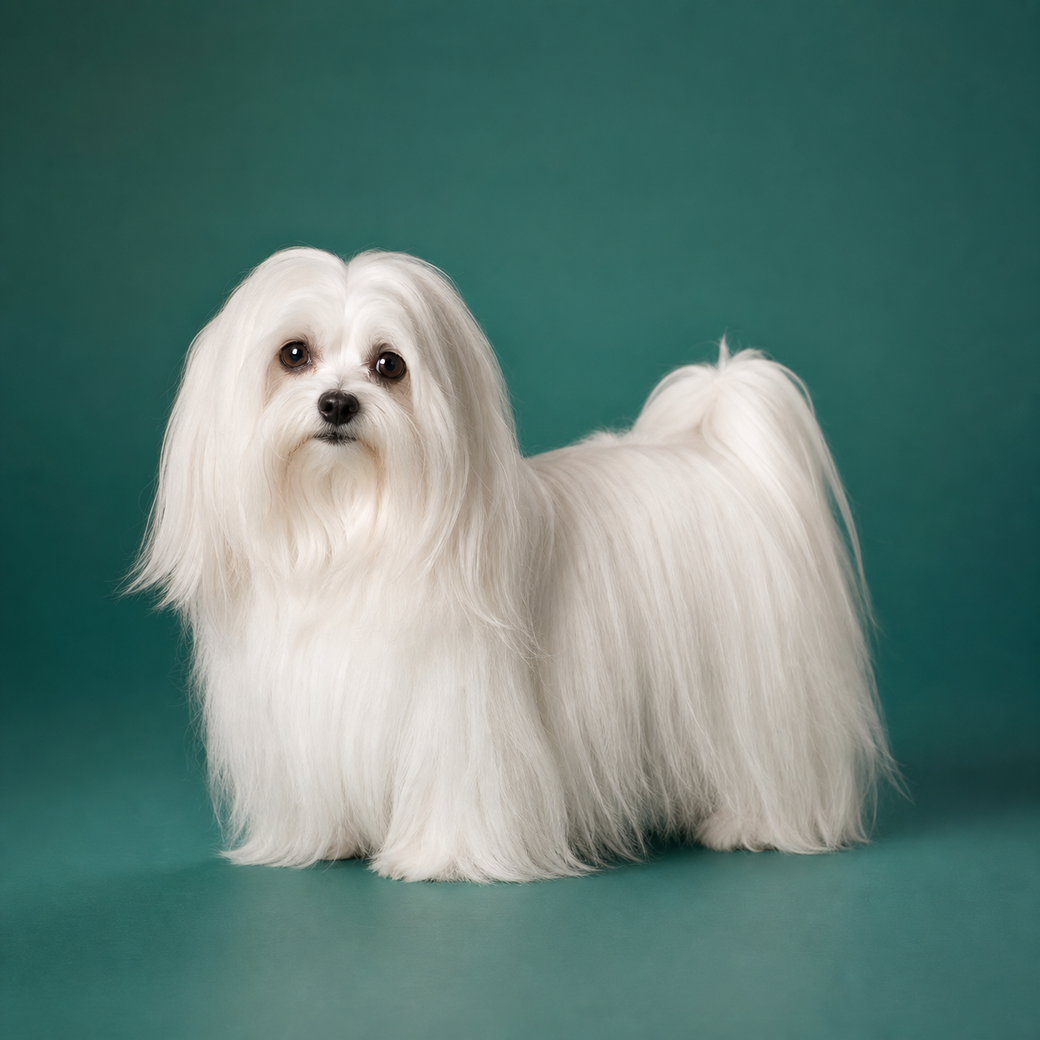
Antiquity’s favorite companion
No breed has better ancient press. Greek writers knew the tiny dog of Melita and marveled at its smallness; Aristotle’s contemporaries were comparing it to martens. The AKC — not an institution given to poetry — opens its own account with “Ye Ancient Dogge of Malta” and observes that the breed “has been sitting in the lap of luxury since the Bible was a work in progress.” A career that long changes a dog. The Maltese was never asked to herd, hunt, or guard; the entire job, refined across millennia, was to be magnificent company. The specialization shows.
What surprises new owners is the spine. Under the white silk is a genuinely fearless little dog — brisk, playful into old age, and convinced of their standing — who will appoint themselves your permanent escort. They are gentle, portable, and nearly shed-free, which explains the long reign. The honest ledger: that coat wants real upkeep, housetraining asks patience, and a bored or over-coddled Maltese becomes a committed barker. They are also breakable — four to seven pounds is not roughhousing equipment. Treat them as a dog rather than an ornament, and the ancient charm does the rest.
Keeping one happy
Grooming
The silky white coat mats quickly at full length: gentle daily brushing, regular baths, and face-washing to manage tear staining. Many companion homes keep a short trim and spare everyone the tangles — the elegance, remarkably, survives the haircut. No undercoat means minimal shedding, and small teeth need serious, lifelong dental care.
Training
Bright, willing, and people-focused — a Maltese trains beautifully with soft hands, tiny treats, and short cheerful sessions. Housetraining is the famous sticking point: be consistent and patient, and consider a fixed routine non-negotiable. Socialize early, and train the confidence, not the size; a coddled Maltese invents dragons.
Exercise
Modest needs, cheerfully exceeded: a couple of short walks and real play sessions cover it, and much of the day’s mileage happens indoors, trotting your hallways. They enjoy more than they require. In hard weather, a Maltese will happily accept games in the kitchen as a full substitute.
Diet
Small meals, measured strictly — at four to seven pounds, an extra biscuit is a percentage event. Feed a quality small-breed food twice daily, keep training treats rice-grain small, and mind the teeth: dental trouble is this breed’s tax collector. Skip table scraps entirely; the pleading is theater.
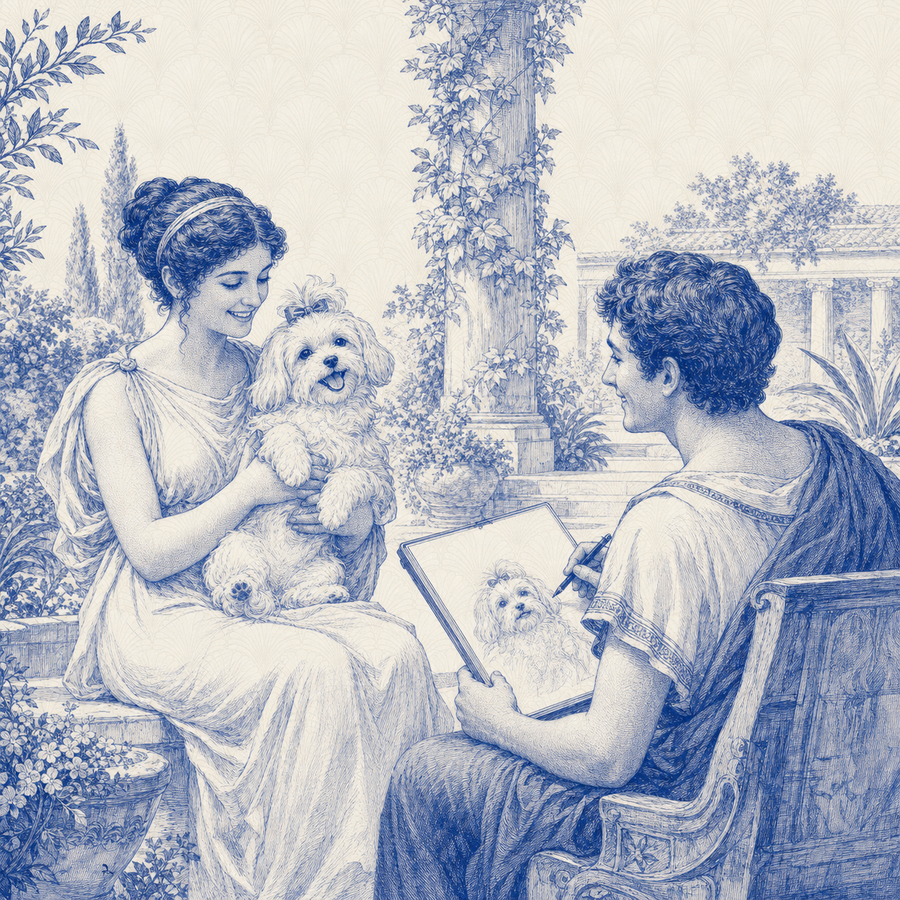
Twenty centuries in the lap
The breed is named for the Mediterranean island whose harbors moved silk, spice, and — ancient writers suggest — very small white dogs around the classical world. Ships carried them everywhere; laps received them. Through empires, courts, and show benches, the assignment never changed: companion, full stop. The Maltese was among the AKC’s earliest breeds, registered from 1888, and has rarely left the ribbons since.
Questions, answered
Are Maltese hypoallergenic?
One of the better choices for allergy-sensitive homes — no undercoat, minimal shedding — though no dog is truly 100% hypoallergenic. Meet the dog first.
Do Maltese shed?
Barely. The single silky coat drops very little hair; the grooming work is preventing tangles, not managing shed.
Are Maltese good with kids?
Affectionate but fragile — best with gentle older children. At four to seven pounds, rough play and careless feet are genuine hazards.
How long do Maltese live?
Typically 12–15 years, and many go longer — with sound teeth and a lean diet, this is one of the longest-running companion breeds.