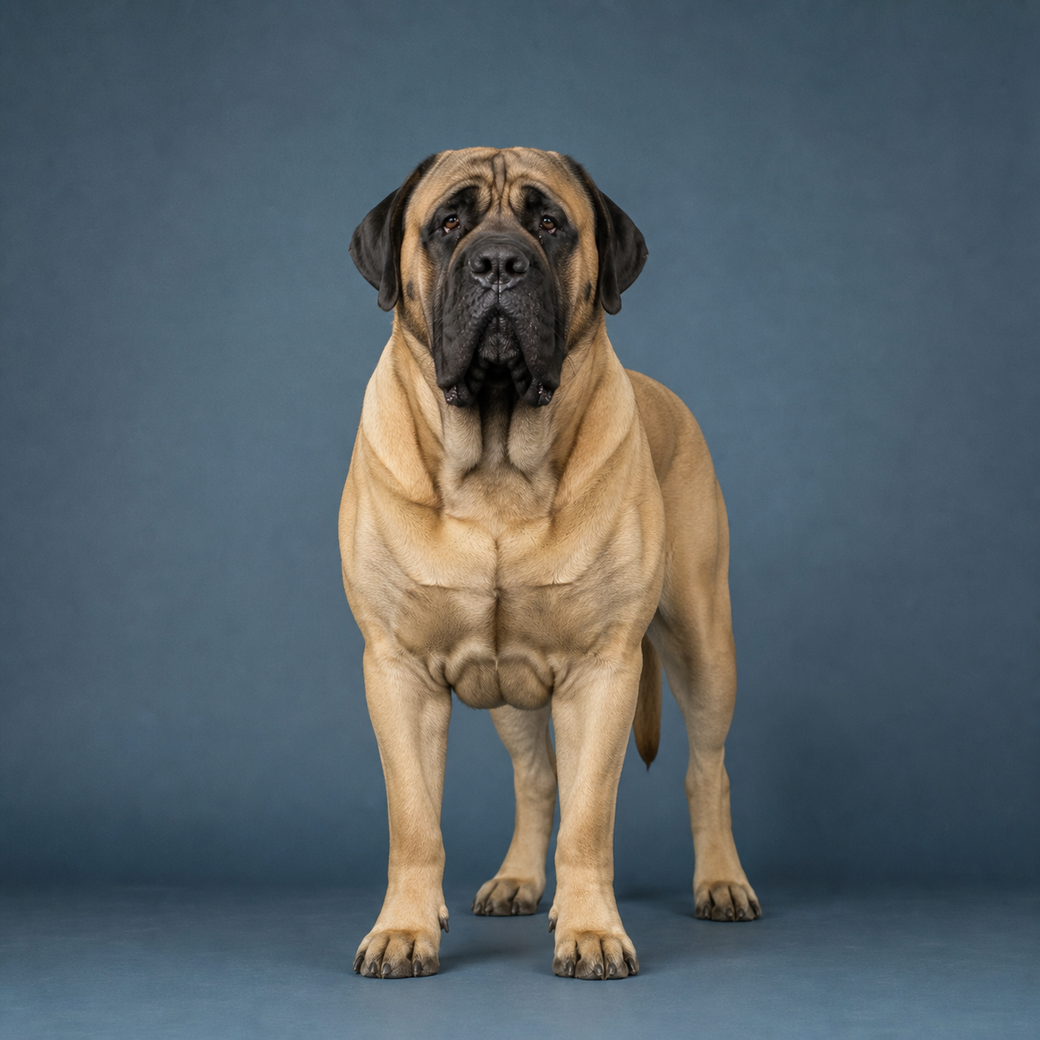
Mastiff
The biggest dog ever recorded was one of these.
Two dogs came ashore from the Mayflower in 1620, and the big one was a Mastiff. The Pilgrims’ own journals record the pair — a Mastiff and a spaniel, brought by a passenger named John Goodman — and tell how, in that first hard January, Goodman and a companion got lost in the winter woods and spent the night huddled with the dogs until morning showed them home. It was a very Mastiff assignment: be enormous, be calm, be there. Four hundred years on, the job description has barely changed — except that the wilderness is now your living room.
Mastiffs we love
A very large soft spot
The press clippings run longer than most nations’. Classical accounts describe enormous British war dogs that so impressed the Romans they shipped them home for the arena — stories the breed’s historians still argue over — and modern DNA work backs the older claim underneath: the Mastiff is a British original. The tape measure keeps the legend honest. In 1989, a London Mastiff named Zorba entered the Guinness book as the heaviest and longest dog ever recorded — well over 340 pounds, and eight feet three inches from nose to tail. Nobody has seriously threatened either mark since.
Living with one is a lesson in scale. Mastiffs are low-key to the point of furniture — a couple of walks, a slow patrol of the yard, then hours of ambient supervision from the largest available surface. They love their family wholesale, lean like scaffolding, and drool with real commitment; the wise keep a towel by the door. The guarding instinct runs quiet and deep: no theatrics, just calm placement between you and whatever seems unfamiliar. The hard part is the arithmetic — giant dogs live short lives, and every year counts double.
Keeping one happy
Grooming
The coat is the easy part: short and dense, wanting a weekly once-over with a rubber curry, stepped up during seasonal sheds. The real grooming is facial — keep the wrinkles and jowls clean and dry, and station cloths where experience suggests. Nails monthly, begun in puppyhood, while disagreement is still theoretical.
Training
Train the puppy the way you want the two-hundred-pound adult to behave — leash manners, calm greetings, and household law all set easiest while they are portable. Mastiffs are intelligent and surprisingly soft; harsh corrections buy you nothing but stubbornness. Wide early socialization keeps the natural watchfulness from hardening into suspicion.
Exercise
A mile or two of unhurried walking a day suits an adult, split into sessions and scheduled around the heat — all that mass holds warmth. Go easy through puppyhood: growing giant-breed joints are protected by restraint, not mileage. Grown Mastiffs are champion loungers who still appreciate a slow tour of the property.
Diet
Feeding a giant is mostly restraint: measured meals twice a day, a visible waist, and puppies grown deliberately on a large-breed formula — sound joints are worth the wait. As a deep-chested breed they carry real bloat risk, so keep mealtimes calm and skip exercise right after eating. Learn the warning signs early.
From Agincourt to the brink and back
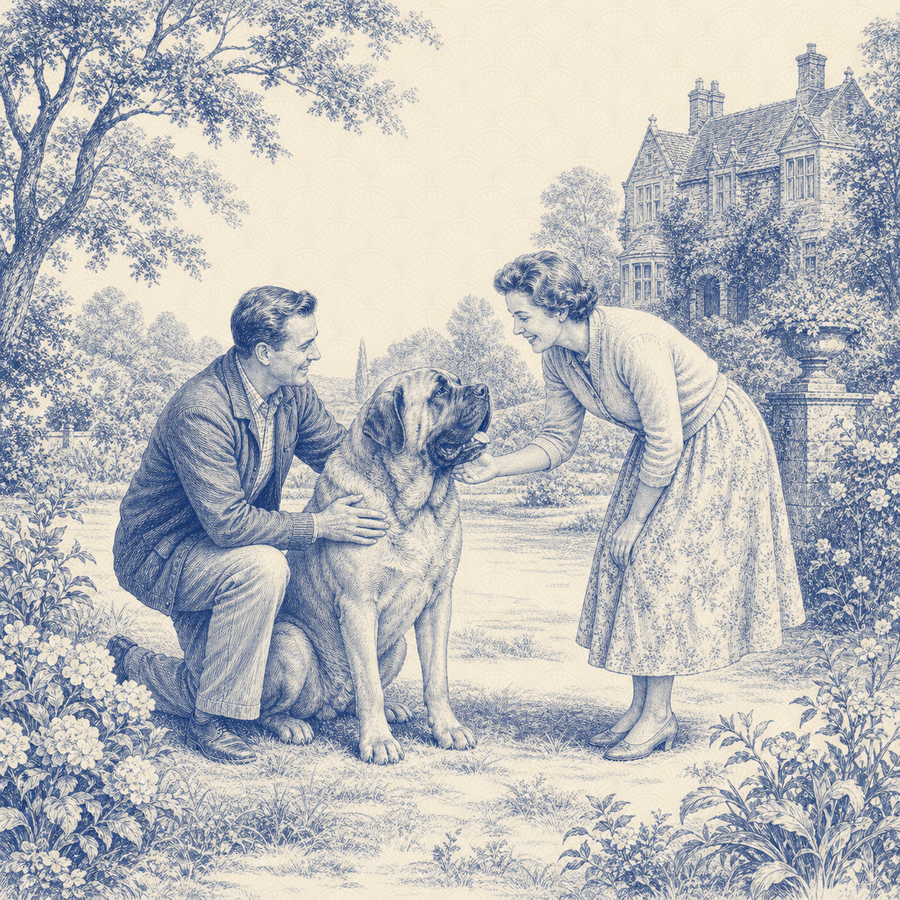
English lore anchors the breed at Lyme Hall, home to a strain of Mastiffs said to descend from a female who stood guard over her wounded knight at Agincourt in 1415. Centuries of estate guarding followed, and the AKC recognized the Mastiff in 1885. The World Wars nearly erased the breed in England; North American fanciers sent stock back across the Atlantic to rebuild it.
Questions, answered
How much do Mastiffs drool?
A lot, honestly — after drinking, before dinner, and whenever they shake. Mastiff people keep towels in every room and a sense of humor everywhere.
Are Mastiffs good with kids?
Famously patient and gentle with their own family’s children — the supervision is about sheer size, not temperament. A friendly lean can level a toddler.
How long do Mastiffs live?
Typically 6–10 years — the breed’s hardest bargain. Good breeding, lean weight, and joint care make each year count.
Can a Mastiff live in an apartment?
Better than you would guess — they are calm and quiet indoors. The honest obstacles are stairs, elevators, and square footage, not energy.