Morkie
Two terrier-sized egos in one small coat.
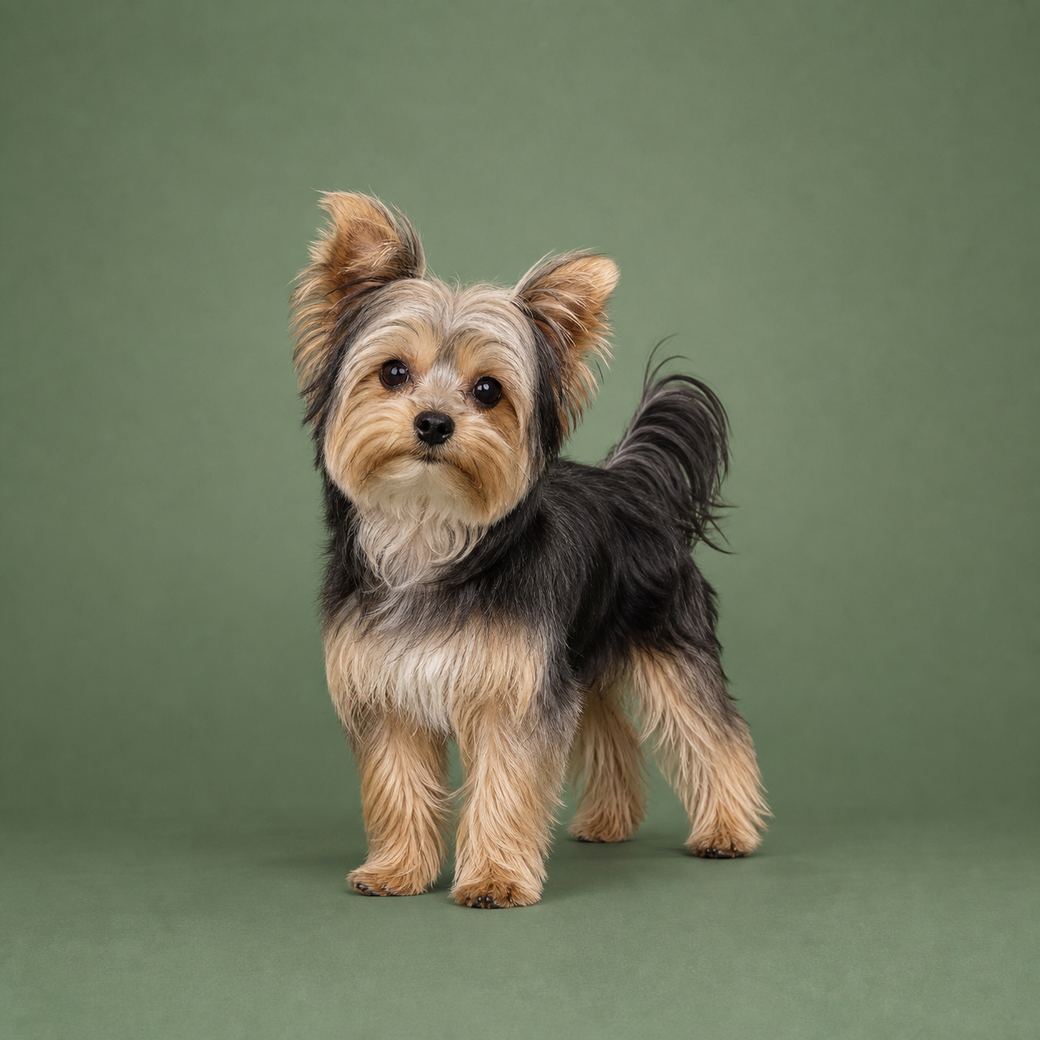
The Morkie is what happens when the toy-dog boom of the 1990s and 2000s met two of the most confident little breeds going and decided they should be one dog. Maltese on one side, Yorkshire Terrier on the other — both bred for centuries to sit in laps and rule from them — crossed into a single companion that rarely tips four to eight pounds and never, not once, thinks of itself as small. City apartments took to them fast: portable, devoted, and loud enough to announce every delivery in the building. What the Morkie lacks in size it makes up in opinions.
Small dog, tall order
Meet the parents, because the Morkie inherits its whole personality from them. The Maltese brings the silky white glamour and the velcro attachment; the Yorkshire Terrier brings the swagger, the terrier spark, and a conviction that it is much larger than the evidence suggests. The result is a bright, bold, intensely bonded little dog — and, like every cross, an unpredictable one: coat, size, and temperament vary litter to litter, because no standard exists to hold them to a type. There is no such thing as a guaranteed Morkie. There is only the Morkie in front of you.
That bond is the whole appeal and the whole caution. Morkies attach hard and dislike being left, which tips easily into separation anxiety and a bark that carries. They can be stubborn about housetraining — a small-dog classic — and they do not suffer rough handling, which makes them a better match for gentle older kids than for toddlers. Give one company, patient training, and a firm no to being carried everywhere like an accessory, and you get a funny, fierce, wholly devoted companion who happens to fit in a tote bag.
Keeping one happy
Grooming
The long, fine, low-shedding coat mats without regular attention — brush several times a week and plan on professional trims. Many owners keep a Morkie in a short “puppy cut” for sanity. Watch the eyes (the Maltese side tears and stains) and keep the small mouth’s teeth brushed; tiny jaws crowd and decay easily.
Training
Smart and capable, but with a terrier’s independent streak and a small dog’s suspicion that rules are for larger animals. Keep it positive, consistent, and short, and treat housetraining as a long project rather than a weekend one. Early socialization tempers the yappy, wary edge into something closer to poised.
Exercise
Modest — a couple of short walks and some indoor play meet the need, which makes them genuine apartment dogs. The energy is real but small-batch. Do not skip the walks entirely, though: a Morkie with nowhere to put its spark becomes a barker, and thin walls have opinions of their own.
Diet
A quality small- or toy-breed food, measured carefully, is the program — at four to eight pounds, a few extra treats are a meaningful percentage of the dog. Feed on a schedule to steady blood sugar, which very small dogs can drop, and ask your vet about dental-friendly food for that crowded little mouth.

The lapdog, doubled
The Morkie is a companion cross of the late-twentieth-century toy-dog craze — Maltese over Yorkshire Terrier, two ancient lapdog breeds combined for a small, devoted city dog. Like other designer crosses it carries no kennel-club standard and no studbook; a Morkie is a mix, not a breed, and its traits vary accordingly. What it inherits reliably is the parents’ shared certainty that a lap is a throne.
Questions, answered
Do Morkies shed?
Very little — both parent coats are low-shedding. The trade is grooming: the fine coat mats fast and needs regular brushing or a short clip. Not guaranteed hypoallergenic, though.
Do they bark a lot?
Often, yes. Both parents are alert and vocal, and Morkies announce things. Training and exercise help; silence is not the breed’s strong suit.
Are Morkies good with kids?
Better with gentle older children. They are tiny and dislike rough handling, so toddlers are a mismatch more for the dog’s safety than the child’s.
How big do they get?
Small — usually four to eight pounds. Size varies by litter, since there is no breed standard, but few Morkies get large.