Norwegian Elkhound
Six thousand years of Norwegian job security.
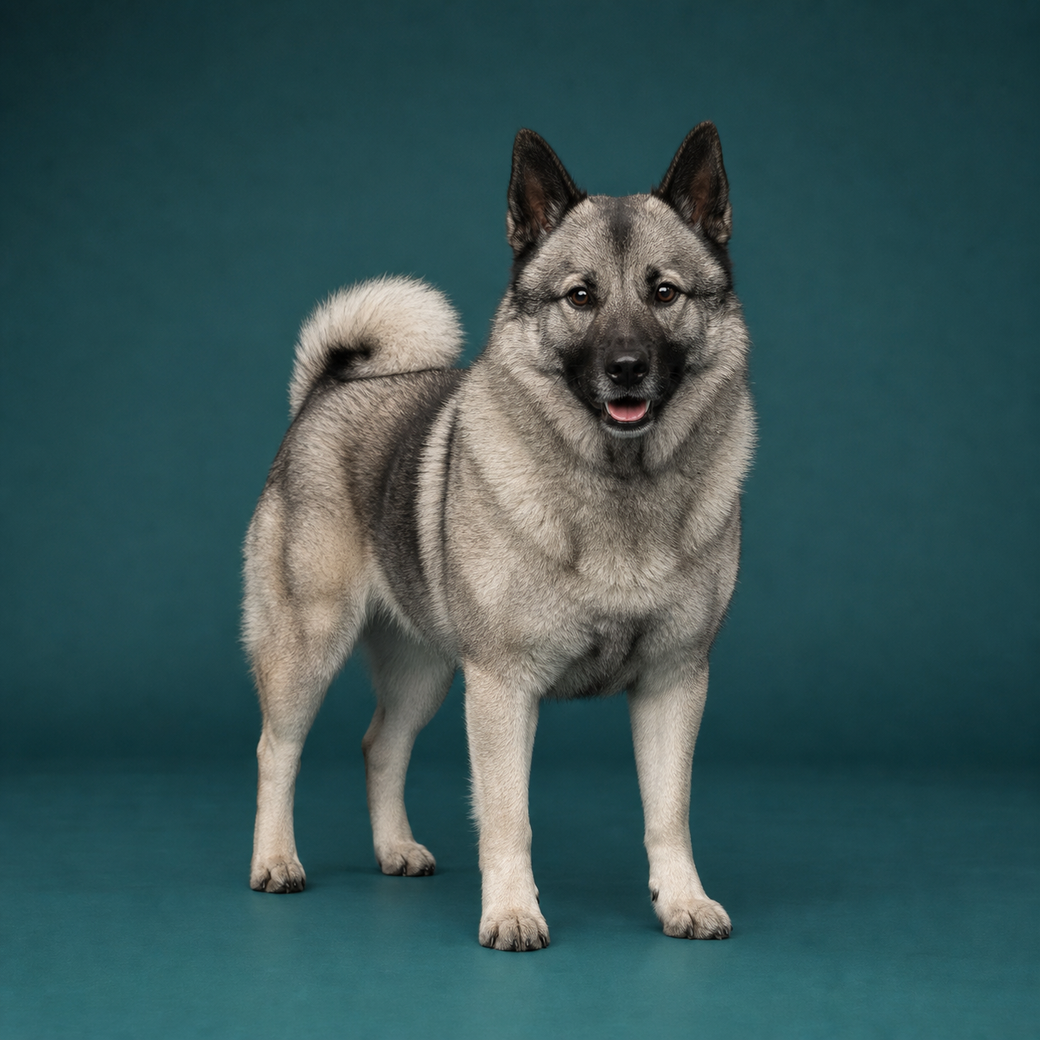
In a cave at Viste, on Norway’s western coast, archaeologists found the skeletons of dogs among human remains dated to somewhere between 5000 and 4000 BC — and two of them were judged to be “of definite Elkhound type.” Take the hedge seriously: type is not pedigree, and several thousand years leaves room for argument. But stand a modern Norwegian Elkhound on a rock above a fjord — gray coat, curled tail, wolf-adjacent silhouette — and the argument starts to feel academic. This is what a dog looks like when a hard country has been editing it since before the pyramids.
Bred by the weather
The signature job survives on modern hunts. An Elkhound tracks moose silently, sometimes for hours, then holds the animal at bay in a performance of calculated annoyance — circling, darting in and out, dodging hooves — while barking steadily to call the hunter in; the moment the moose moves off, the dog goes quiet and follows. It is brave, patient, self-directed work, and it explains the breed entirely. Tradition also puts dogs like these on Viking farms and ships; the record is thinner than the lore, but nobody who has hunted behind one doubts the nerve’s lineage.
At home they are a northern classic: sturdy, cheerful, and genuinely friendly — not a sharp guard dog, just an alert one with a big voice and no hesitation about using it. The independence is structural; a dog bred to make decisions a mile from the hunter will consider your instructions thoughtfully. They need real daily exercise, cool weather or accommodations for the lack of it, and people who admire self-possession. The silver-gray coat sheds prodigiously. In exchange: a hardy, funny, deeply loyal companion built to outlast weather, fashion, and most excuses.
Keeping one happy
Grooming
The weatherproof double coat needs brushing a couple of times a week, escalating to daily during the great seasonal sheds, when the pale undercoat comes away in clouds. Otherwise the breed is famously clean — dirt falls away dry, odor stays minimal — so baths are rare. Never shave a double coat; it works in both seasons.
Training
Recalibrate from obedient to collaborative. Elkhounds are smart, food-motivated, and independent by design — they learn quickly and comply when it makes sense to them. Keep sessions short and honest, reward well, and start a quiet cue early; the hunting bark has centuries of professional standing. Recall around wildlife stays aspirational.
Exercise
An hour or more of real activity daily: brisk walks, hikes, hard play in a fenced yard — and snow, when available, is the favorite amenity. A bored Elkhound is a loud one. Mind the heat in summer; that Arctic coat means early mornings and shade through the warm months.
Diet
Bred for hard work on lean rations, the Elkhound runs an efficient metabolism and gains weight easily in softer circumstances. Two measured meals a day, treats counted honestly, and a visible waist as standing policy — the coat hides thickening early, so trust the scale rather than the silhouette.
Norway’s dog, since before Norway
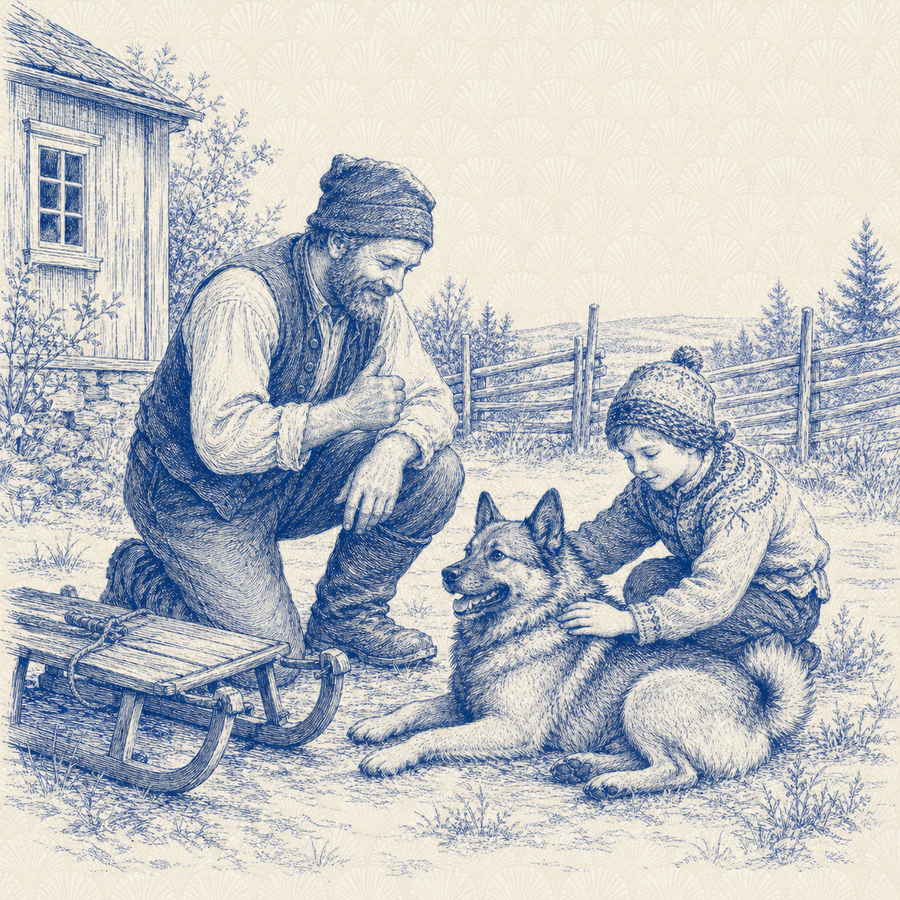
For millennia the all-purpose dog of Norwegian farms — moose hunter, watchdog, herder, sled hand — the Elkhound entered the formal record when Norway’s earliest dog shows benched the type in 1877. The name elghund means moose dog; the English translation simply missed. The AKC registered its first Elkhounds in 1913, and the breed’s American parent club was formally admitted in 1935.
Questions, answered
Do Norwegian Elkhounds shed a lot?
Heavily — constant light shedding plus two major seasonal blows. The consolation: the coat is naturally clean and nearly odor-free.
Do Elkhounds bark a lot?
Yes — barking is literally the breed’s job, developed to hold moose at bay and call in hunters. Training softens it; expect a vocal dog regardless.
Are Norwegian Elkhounds good family dogs?
Very — friendly, sturdy, and patient with kids, without the sharpness of the guard breeds. They do best with active households.
Can an Elkhound handle a hot climate?
They manage with care — shade, water, early walks, air conditioning. The coat was engineered for Scandinavia, not for summer.