Old English Sheepdog
There is a working dog under there. Probably.
In the mid-sixties, Paul McCartney bought his first pet: an Old English Sheepdog puppy he named Martha. She had the run of his London house, and in 1968 she got something better — a song on the White Album. Listeners spent years assuming “Martha My Dear” was about a woman, and McCartney eventually had to clarify: “it’s actually a dog, and our relationship was platonic, believe me.” He also credited Martha with softening John Lennon, who let his guard down around her. Not bad for a sheepdog. Then again, softening people is what this breed does.
The shaggiest job in show business
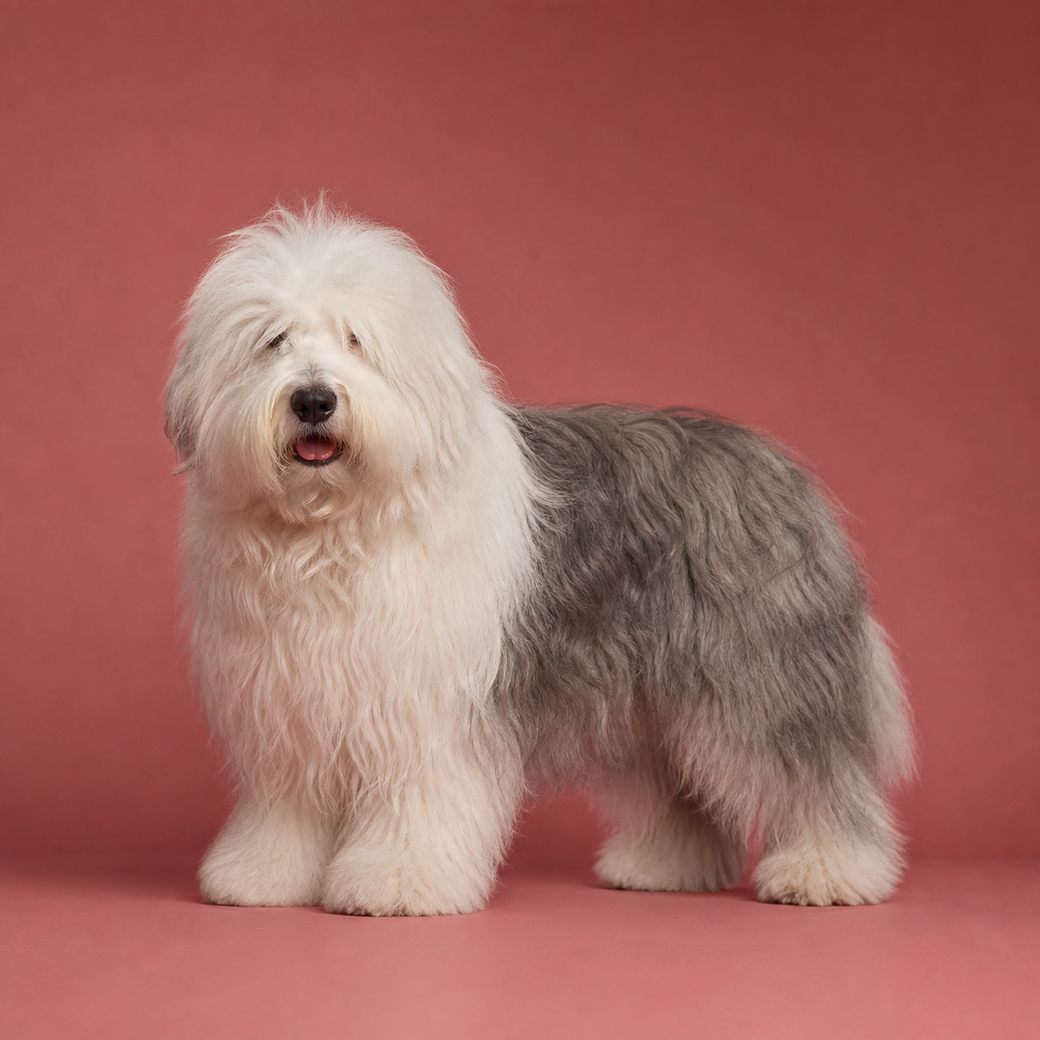
Britain, meanwhile, had already made the breed a household face: since 1961, an Old English Sheepdog has fronted advertising for Dulux paint, so reliably that generations of Britons simply call the breed “the Dulux dog.” The casting works because the dog is a walking exaggeration — the AKC standard describes “the archetypical shaggy dog,” with the peek-a-boo hairdo and a distinctive bear-like shuffle of a gait. Underneath the slipcover is a big, capable herder’s frame, and underneath that, a temperament of unusually cheerful stability.
The honest part first: the coat is a part-time job. Hours of brushing every week, mats that form overnight, and a beard that transports water across the house. In exchange you get one of the great family clowns — mellow, sociable, patient with children they may occasionally try to herd, gently bumping stragglers back toward the group. They are athletes in disguise who need real daily exercise, and house dogs by conviction who need their people close. Nobody owns one casually. Nobody seems to regret it either.
Keeping one happy
Grooming
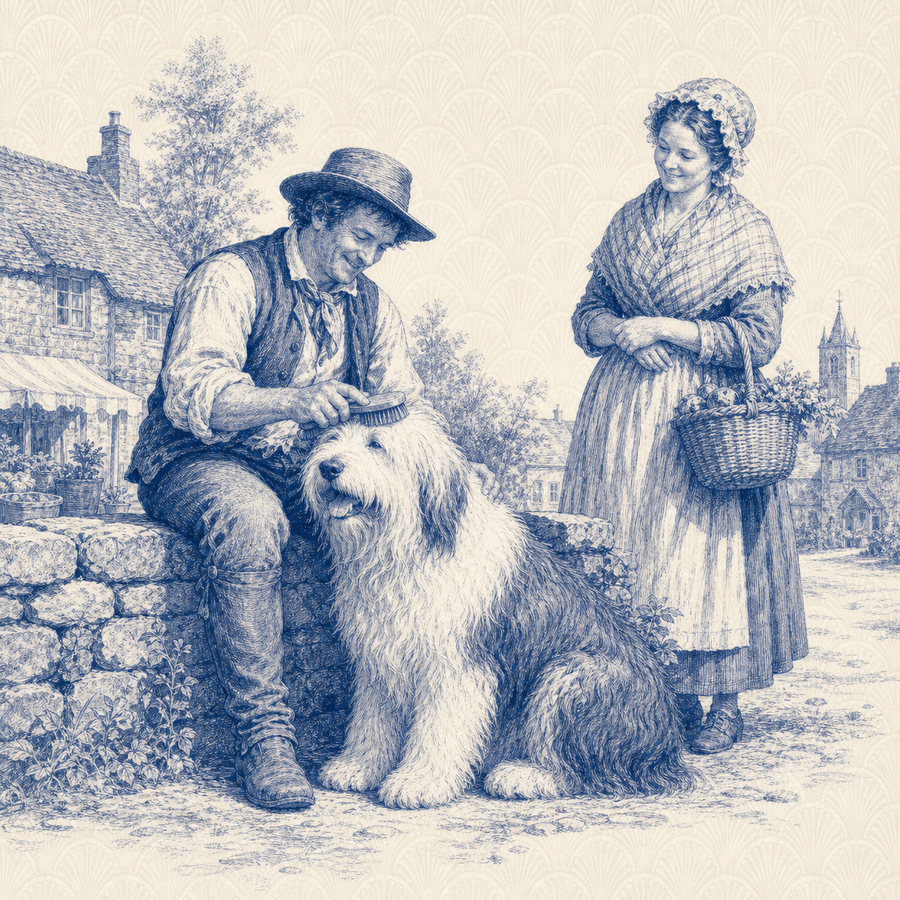
Budget three to four hours a week, honestly counted: line-brushing to the skin, because surface passes leave hidden mats that felt up fast. Many pet homes keep a shorter puppy cut, which is sensible and still charming. Check ears weekly under all that hair, and keep the rear end trimmed tidy.
Training
An agreeable, clever student with a herder’s memory and an entertainer’s timing — expect correct answers delivered with flourishes. Keep sessions upbeat and varied; drilling bores them into improvisation. Socialize early, and teach a rock-solid recall before adolescence, when sixty-plus pounds of enthusiasm starts testing which rules were suggestions.
Exercise
An hour a day of walks and play suits most adults — they are sturdier athletes than the silhouette suggests, happy to hike, herd, or romp in snow. Mind heat seriously: that coat insulates in both directions, so summer exercise happens early, late, or briefly. Indoors, they settle like furniture.
Diet
Feed two measured meals and keep a genuinely lean frame — under that much coat, weight gain hides until it is a joint problem, and hips are a known breed concern. As a large, deep-chested dog they carry some bloat risk: calm mealtimes, and no vigorous play right after eating.
Drover’s dog, national treasure
The breed earned its keep in the West of England as a drover’s dog, walking cattle and sheep to market. Lore holds the docked tail marked a tax-exempt working dog — historians squint, but the “Bobtail” nickname stuck. First shown at Birmingham in 1873, to a judge who found the entries so poor that only a second place was offered, the breed recovered nicely: AKC recognition came in 1888.
Questions, answered
Do Old English Sheepdogs shed?
Yes — and the bigger job is the coat itself, which mats without hours of weekly brushing. Many owners keep a shorter clip. Not hypoallergenic.
Are Old English Sheepdogs good with kids?
One of the breed’s best qualities — patient, playful, and protective, though they may gently herd small children. Supervise around toddlers purely on account of size.
Can Old English Sheepdogs see through all that hair?
Yes — the fall of hair over the eyes filters light rather than blocking it, and many owners tie it up anyway. Vision is fine.
How much grooming does an Old English Sheepdog need?
Three to four hours a week brushed to the skin, or a professional grooming schedule and a shorter cut. There is no low-maintenance version.