Papillon
Painted by masters, underestimated ever since.
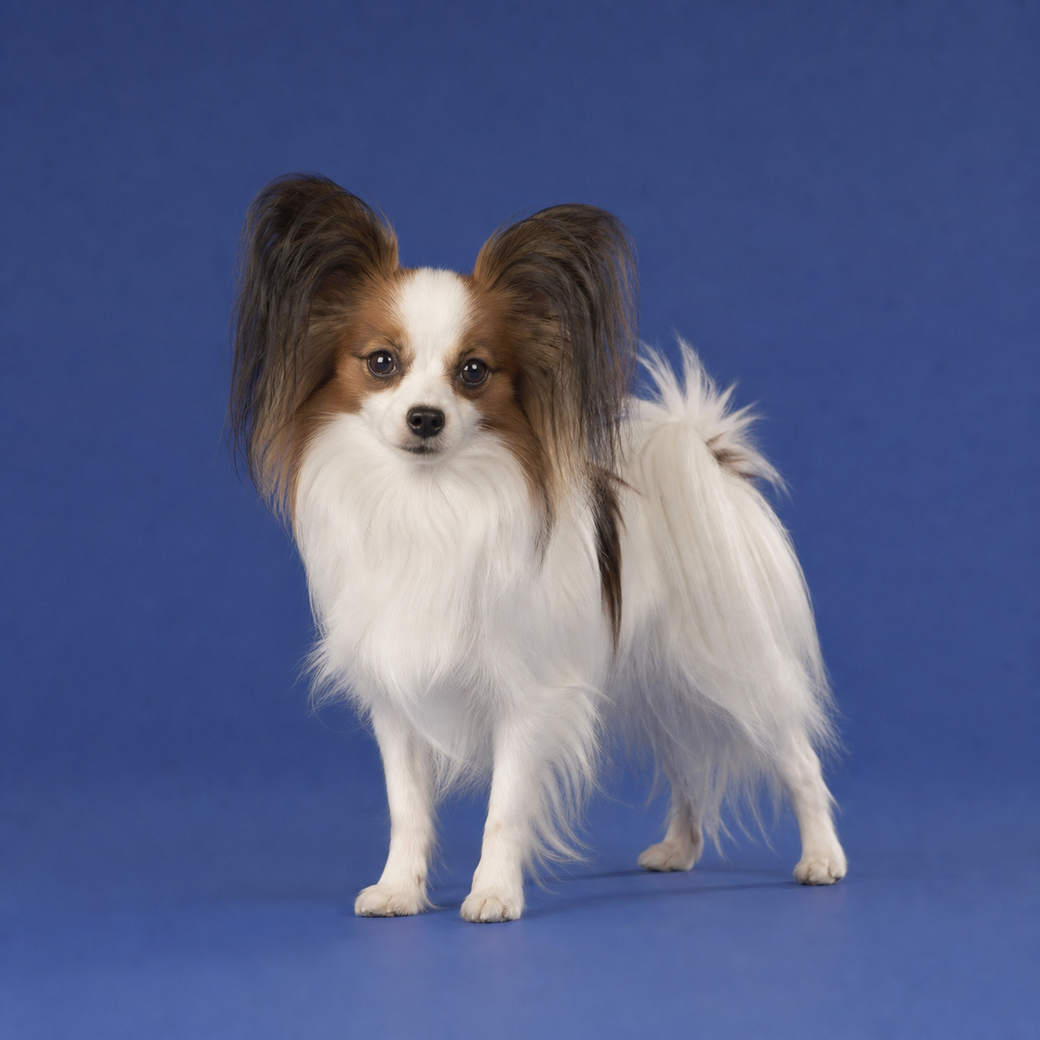
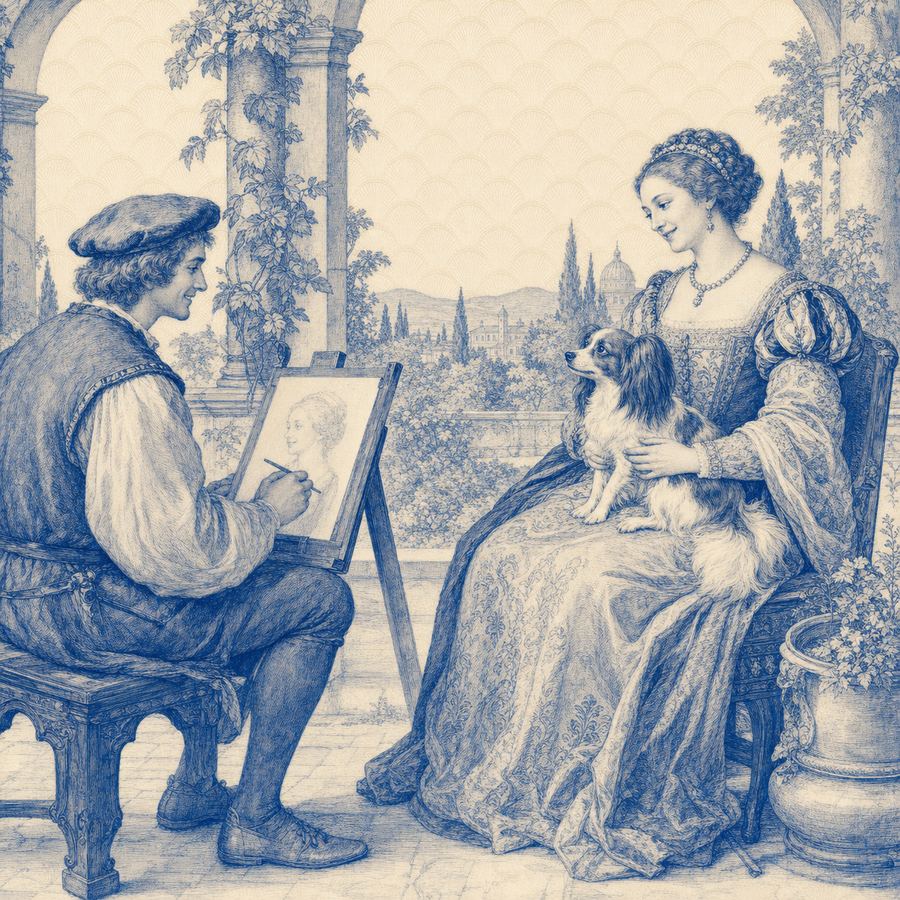
Start with the paintings. From the early 1500s on, a small spaniel with a plumed tail keeps turning up in the laps of European portraiture — Titian painted them, and Watteau and Fragonard after him, beside duchesses and dauphins, always alert, always somehow in charge of the sitting. For four centuries this was the court dog of the Continent, and eventually the ears told the story: bred upright and fringed, they spread like wings until the French named the whole breed for them. Papillon — butterfly. What the portraits never quite capture is that the butterfly is, cheerfully, a hawk.
The brain under the fringe
The show world learned this the hard way. In 1999, an eight-year-old Papillon named Kirby — Ch. Loteki Supernatural Being, on the official paperwork — beat more than 2,500 dogs to Best in Show at Westminster, the first of his breed to do it, having already taken the World Dog Show in Helsinki. The wins surprised nobody who knew the dogs: papillons are routinely ranked among the brightest of all toy breeds, and they run agility and obedience like small border collies with better ears. The beauty is real. It is also, functionally, a decoy.
Daily life with a papillon runs on that intelligence. They learn routines instantly — including the ones you did not mean to teach — and they need genuine occupation: training games, agility, an appreciative audience. This is a sturdy, weatherproof little dog rather than a trembling ornament, happy to hike miles or manage an apartment, though the watchdog instinct arrives with full commentary. Fine bones mean toddlers and big, rowdy dogs call for supervision. Given work and company, they may be the easiest of the toys to live with: portable, durable, permanently interested.
Keeping one happy
Grooming
Deceptively easy for something this decorative: a single coat with no undercoat, slow to mat, needing just a couple of brushings a week with attention to the ear fringes and culottes. No trimming required, and shedding is moderate. The real regimen is dental — small mouths crowd, so brush the teeth faithfully.
Training
As easy as it gets in the toy ranks — papillons are quick, biddable, and visibly pleased with themselves when they nail it. Channel the brains early into tricks, agility foundations, or obedience before they channel themselves into barking. Keep it positive; sensitivity runs right alongside the smarts. Housetraining wants small-dog consistency.
Exercise
More than the average toy: a couple of good walks plus real play and thinking work, daily. Papillons excel at agility and will happily out-hike their size class. Indoor games count on bad days, but the brain must be exercised as faithfully as the legs, or it schedules its own programming.
Diet
Small portions, measured honestly: an eight-pound athlete gains on remarkably few extra calories, and training-heavy households must count treats against dinner. Feed a quality small-breed food on a regular schedule, mind tiny-puppy blood sugar in the early months, and keep kibble sized for a small, crowded mouth.
From court laps to agility rings
The dwarf spaniels of Renaissance courts spread through Italy, France, and Belgium, wherever royalty kept laps. Lore holds that Marie Antoinette carried her little spaniel to the guillotine — a story historians doubt and papillon people retell anyway. The upright-eared fashion took over in the late nineteenth century and renamed the breed; the AKC registered its first papillon, a mite named Joujou, in 1915.
Questions, answered
Are papillons smart?
Exceptionally — routinely ranked at the top of the toy breeds and near the top of all breeds. They excel at agility and obedience, and they expect material.
Do papillons shed?
Moderately — a single coat with no undercoat, so there is less hair than the fringe suggests. Not hypoallergenic.
Are papillons good with kids?
Good with gentle, older children. They are sturdy for a toy but still fine-boned — rough play is the risk, not temperament.
Can a papillon live in an apartment?
Beautifully, provided the exercise and brain-work happen daily. The barking is the item to train early.