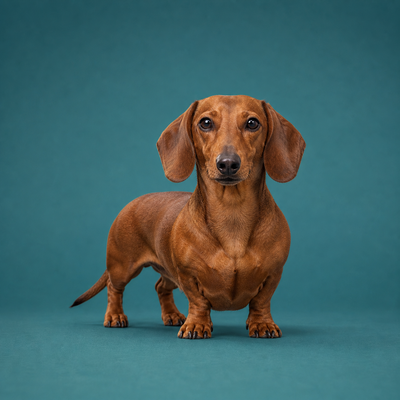
Pekepoo
Royal blood on one side, straight A’s on the other.
Consider the arranged marriage: one parent spent centuries as a palace companion in China, carried through life and firmly convinced that was the natural order; the other is dogdom’s famous overachiever, a curly-coated retriever with a résumé. American breeders made the match in the 1950s — decades before anyone said “designer dog” — hoping the cross would keep the little aristocrat’s devotion while borrowing the lower-shedding coat and a somewhat more negotiable temperament. The result, where it works, is a small, cottony companion who takes their lap duties seriously. Whether it works is a question every litter answers separately.
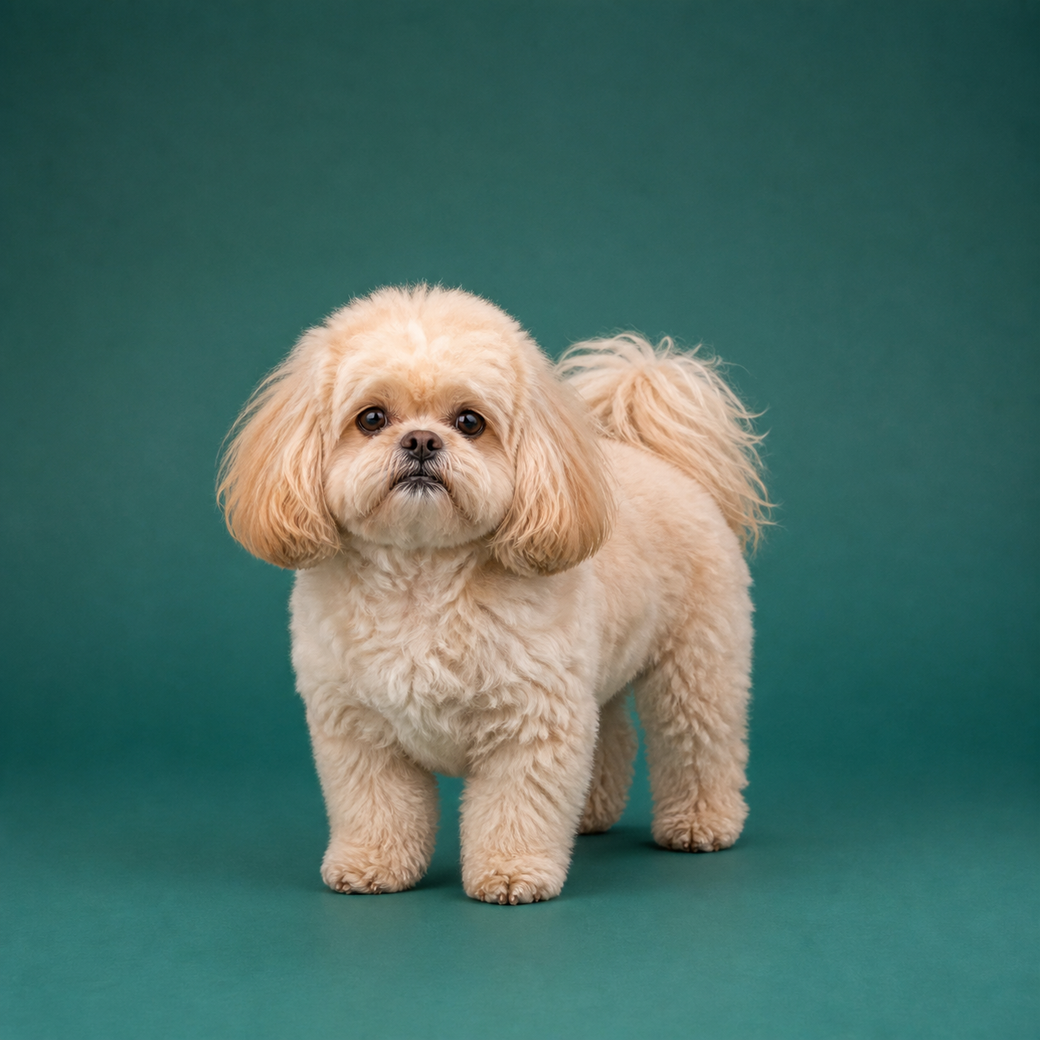
Small dog, standing appointment
Honesty first, because crosses demand it: the Pekepoo is a recipe, not a breed, and no registry holds it to a standard — which puts everything on the two dogs who made your puppy. Most land between four and twenty pounds, with a soft, wavy coat in nearly any color. It is one of the older poodle crosses going, quietly remade for seventy years while flashier mixes came and went, and the appeal has never changed: a companion-sized dog whose whole job is you.
Living with one is a small, warm conspiracy. Pekepoos attach hard to their people, monitor the household from the best cushion, and treat strangers as unconfirmed rumors until formally introduced — early socialization matters. Energy runs low; opinions do not, because the Pekingese side negotiates. Two honest notes: many inherit a shortened muzzle, which makes heat and hard exertion genuine hazards, and that soft coat mats with enthusiasm. They suit gentle households and patient laps far better than rowdy toddlers. In exchange, the devotion is total.
Keeping one happy
Grooming
The cottony coat is the commitment: brush every day or two to stay ahead of mats, with a trim every couple of months. Keep the face tidy — light coats show tear stains, and a quick daily wipe handles it. Check the drop ears weekly. Shedding is light; upkeep is not.
Training
Clever from the Poodle side, self-governing from the Pekingese side — expect a quick student who occasionally tables the motion. Keep sessions short, gentle, and generously paid; harsh corrections buy you nothing but a grudge. Socialize early and often, because small watchful dogs invent suspicions when the world stays unfamiliar.
Exercise
Modest and pleasant: a couple of short daily walks plus indoor play covers it. The caution is real, though — flat-faced dogs overheat quickly, so walk in the cool hours, skip the summer midday entirely, and let them set the pace. Puzzle toys cover the clever half of the pedigree.
Diet
Toy portions, measured honestly — a few extra treats are a meaningful percentage of a dog this size, and extra weight burdens a small frame and a short airway alike. Two meals a day, treats counted against the total, and fresh water always. Small dogs run on small margins.
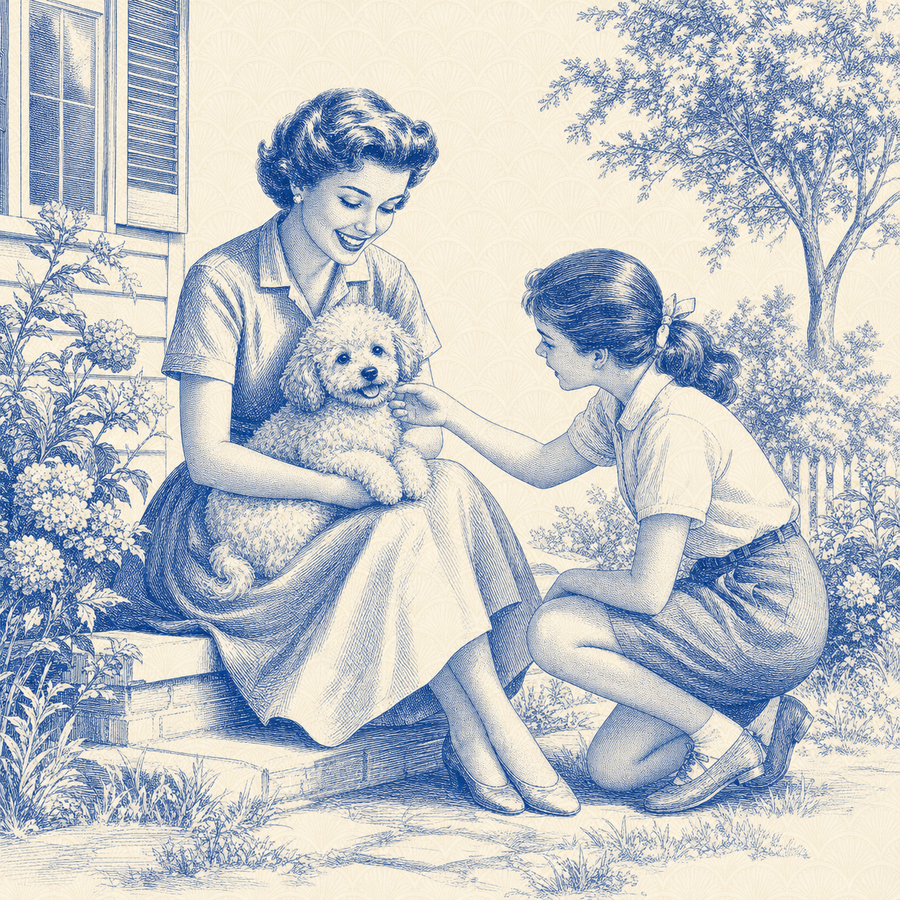
An early experiment, still running
The cross dates to 1950s America — among the earliest deliberate poodle mixes, bred a full generation before the doodle wave, mostly in hopes of a lower-shedding companion for allergy-sensitive homes. No kennel club recognizes it, no standard governs it, and seventy years on it persists the way good ideas do: quietly, litter by litter, one devoted lap dog at a time.
Questions, answered
Are Pekepoos hypoallergenic?
Often gentler on allergies thanks to the Poodle parent, but no dog — poodle cross or not — is guaranteed hypoallergenic. Spend time with the actual puppy before betting on it.
How big do Pekepoos get?
Usually somewhere between four and twenty pounds, depending on whether the Poodle parent was toy or miniature. Meeting both parents is the best forecast available.
Are Pekepoos good with kids?
Better with gentle older kids. They are small, self-serious dogs who dislike rough handling — supervise around little ones.
How long do Pekepoos live?
Commonly 12–15 years. Small, well-bred crosses tend to be long-lived, and the Pekepoo is no exception.